In January 2025, the order of cremation bookings changed the length of funerals in Cheongju, South Korea. Yonhap reported that Mokryeon Park, the city’s only cremation facility, could handle 22 bodies a day. During an influenza surge accompanied by a sharp rise in pneumonia-related deaths, its schedule filled three days ahead. Some families could not obtain a slot after the customary three-day funeral and had to extend the rites to a fourth day.
Waiting spread through several facilities. At Cheongju Medical Center, all nine funeral rooms were occupied, and three bodies remained in storage until rooms became available the following day. Another funeral hall had kept all six rooms in continuous use since late December; some families waited a day before beginning funeral proceedings. Families unable to book locally considered paying more to use a crematorium in neighbouring Sejong, but it too had no availability.
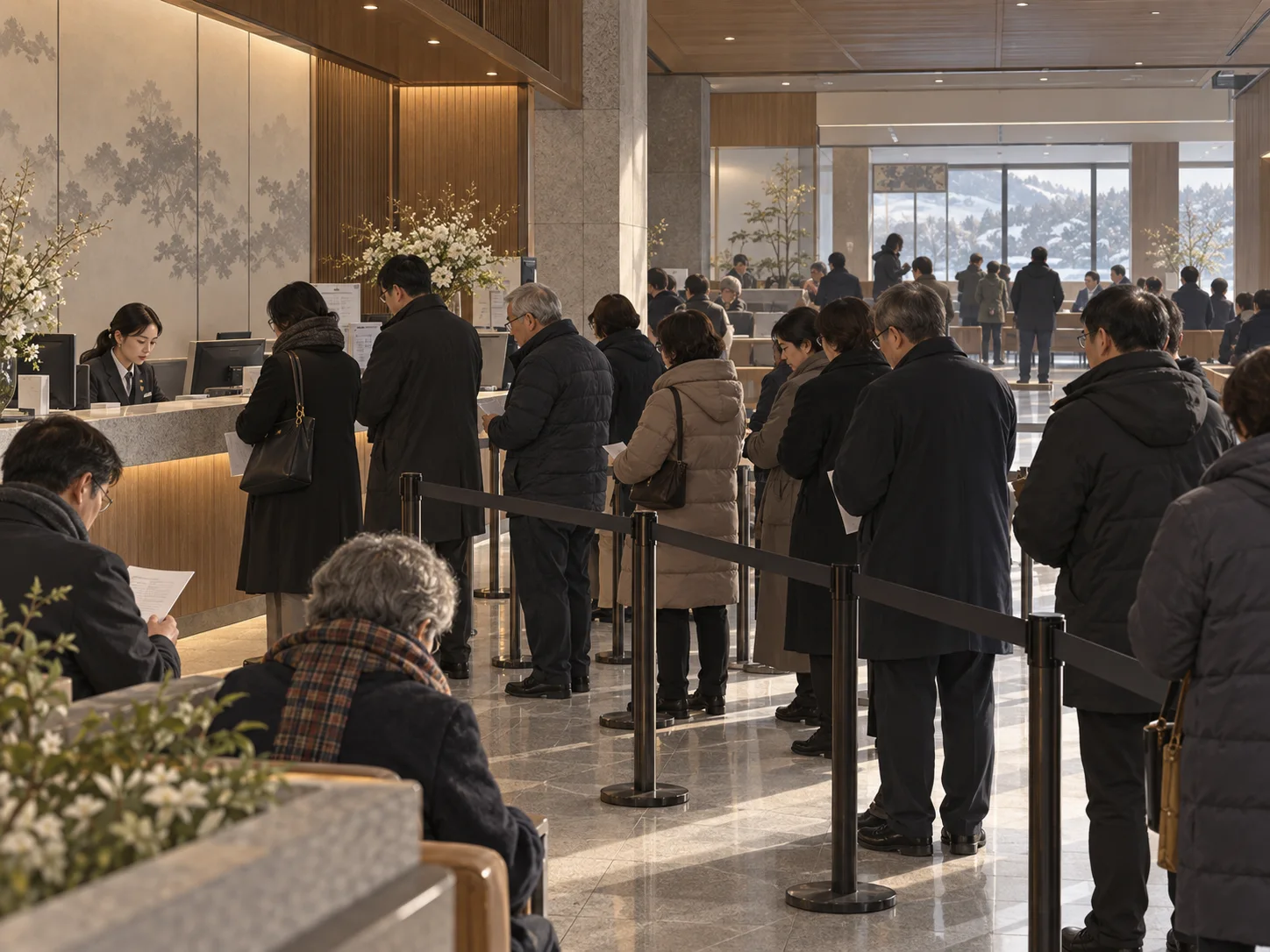
This was not a visible line of people in a corridor. It was an ordered wait governed by a reservation calendar. Behind the daily capacity of 22, funeral rooms, mortuary storage and family schedules became linked bottlenecks. A single day spent waiting for a slot became the fourth day of the funeral itself.