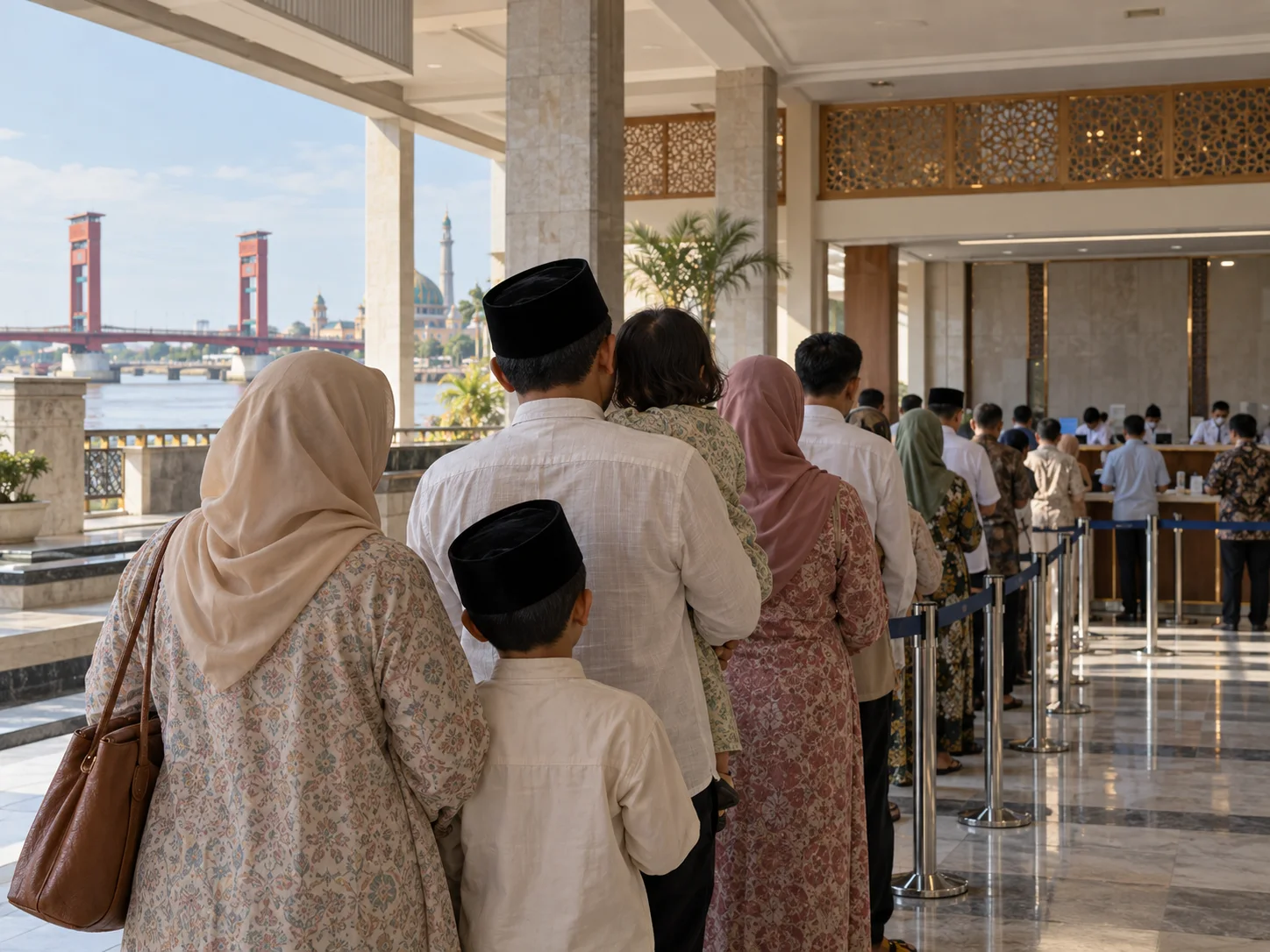
On 21 March 2024, dozens of people were already waiting at Palimo Market in Palembang, South Sumatra, two hours before Bank Indonesia’s mobile cash van arrived at about 9 a.m. They wanted to exchange used notes for fresh banknotes in several denominations. When service began, residents queued in strong heat while fasting for Ramadan.
Demand came from more than the practical value of cash. At Eid al-Fitr, Indonesians commonly give holiday allowances known as THR to relatives and people around them. Crisp notes help turn that transfer into a carefully presented festive gift. The central bank brought the service to a market rather than requiring everyone to visit a permanent branch, but a limited place and time still produced an order before the vehicle arrived.
The exchange did not increase the face value of anyone’s money. Yet people arrived two hours early. The physical newness of a banknote carried a meaning that its denomination could not express, and the arrival time of a mobile bank became the start of the queue.