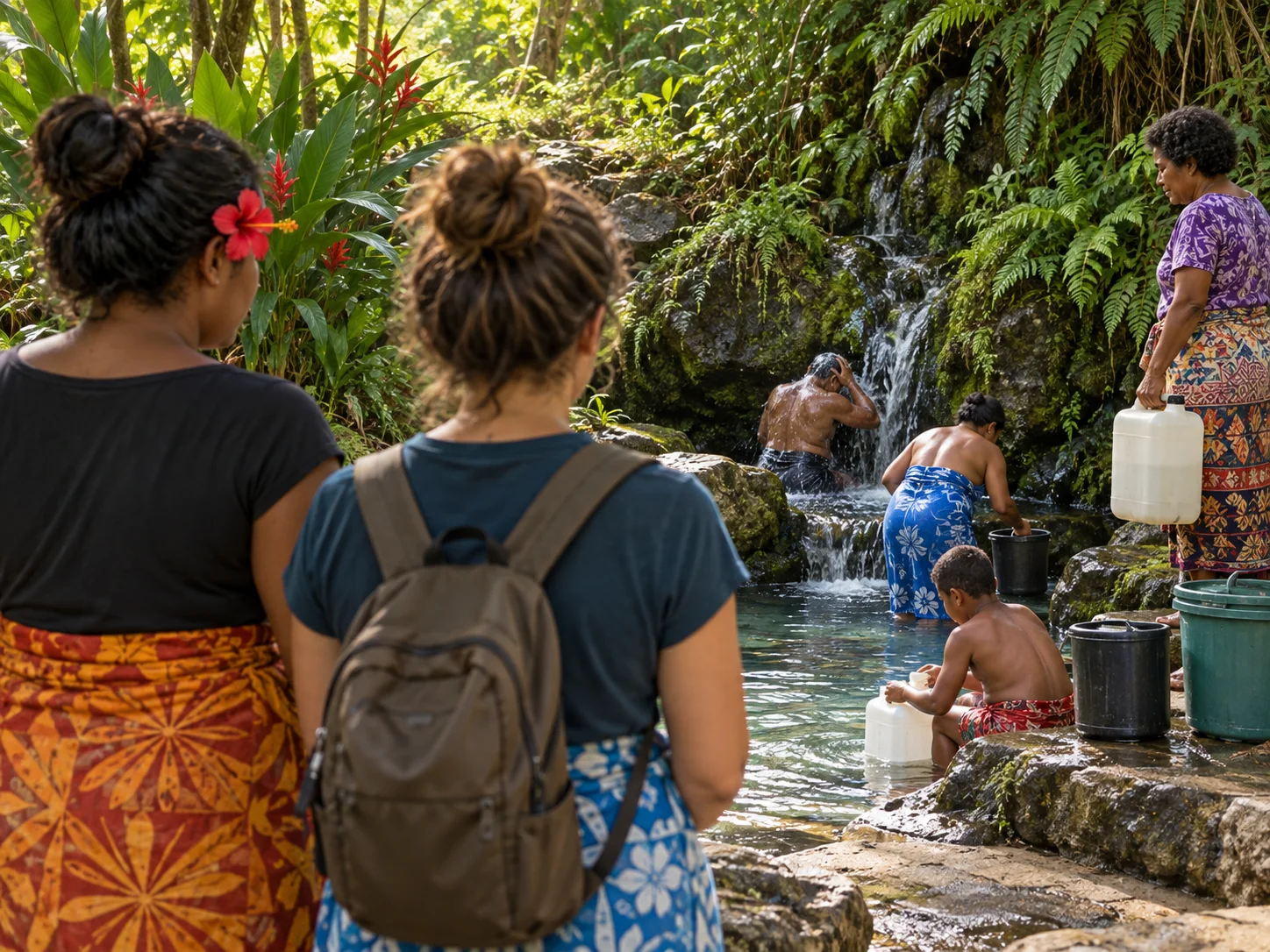
Before dawn, crowds gathered along the unsealed roads leading to Natadradave, a village of only about twenty-seven families in Fiji’s Tailevu province. They were heading for a spring that had acquired a reputation for healing after 2016. At the height of the pilgrimage, thousands arrived by day and night, and queues stretched for kilometres. The waiting had an order. Ambulances and patients on stretchers went first, followed by sick visitors able to walk; healthy people collecting water came afterward. Two concrete pipes fed a shallow bathing pool, while PVC channels helped visitors fill containers.
The sudden traffic transformed the village’s infrastructure. Government work added concrete paths, toilets, a mobile-phone tower and better roads. Villagers did not charge for access, although they accepted food donations. Claims of miraculous cures remained scientifically unproven, and an expert quoted in the report was sceptical. Yet the water travelled far beyond Fiji: more than 500 travellers carrying bottles were stopped by New Zealand customs between 2016 and May 2017. The queue at two modest pipes therefore reached into public health, road building and border control. A settlement of twenty-seven families had become the end point of a route built from illness, testimony and belief.