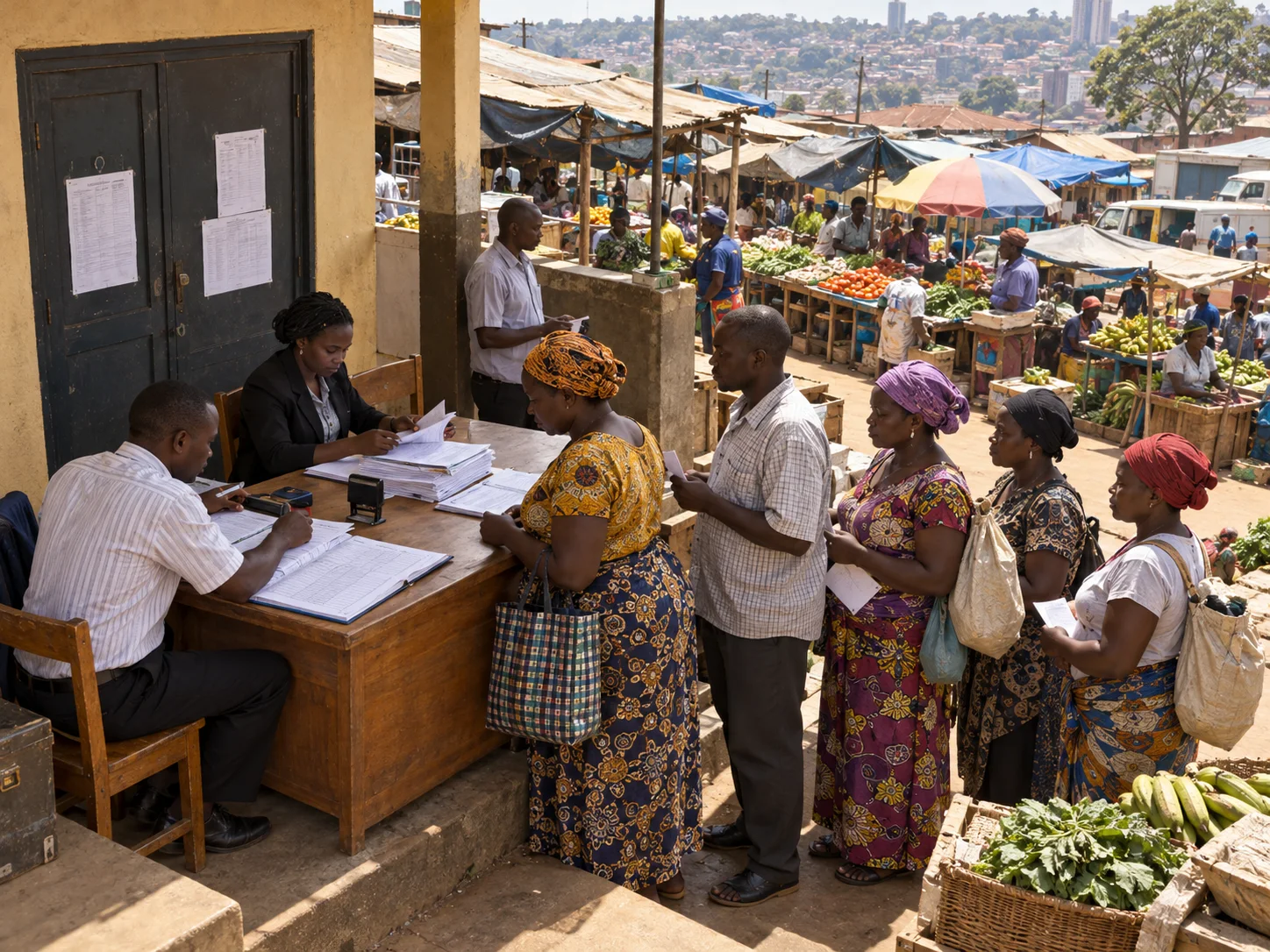
At 7 a.m. on a Sunday, a queue began to build in central Kampala—not for something being sold, but for the receipt that allowed a person to sell. Daily Monitor described the scene in 2015 at the city’s new Street Market Day. Participation cost 10,000 Ugandan shillings. By 8 a.m., traders offering adult and children’s clothing, electronics, stationery, airtime, bags and hats had spread along the road. One clothes vendor said she needed to arrive before seven to secure a good position.
The Kampala Capital City Authority had designated a stretch from Barclays Bank on Kampala Road to Luwum Street for the weekly market and closed it to ordinary traffic each Sunday. Street vendors, often associated with eviction and confrontations with enforcement officers, could for that day enter a regulated arrangement: pay the user fee, receive a ticket and occupy the road as a marketplace. More than 800 people registered on the first day, according to a city spokesperson.
The object at the head of this queue was therefore neither food nor admission to entertainment. It was administrative permission—proof that, for one day, selling on this particular street was authorized. Arriving early could improve a trader’s chance of securing a useful pitch, but officials said anyone who paid the fee could take part. The line converted a contested informal livelihood into a temporary civic institution. Its receipt was small; the change it represented was as wide as the roadway that officials had cleared for the market.