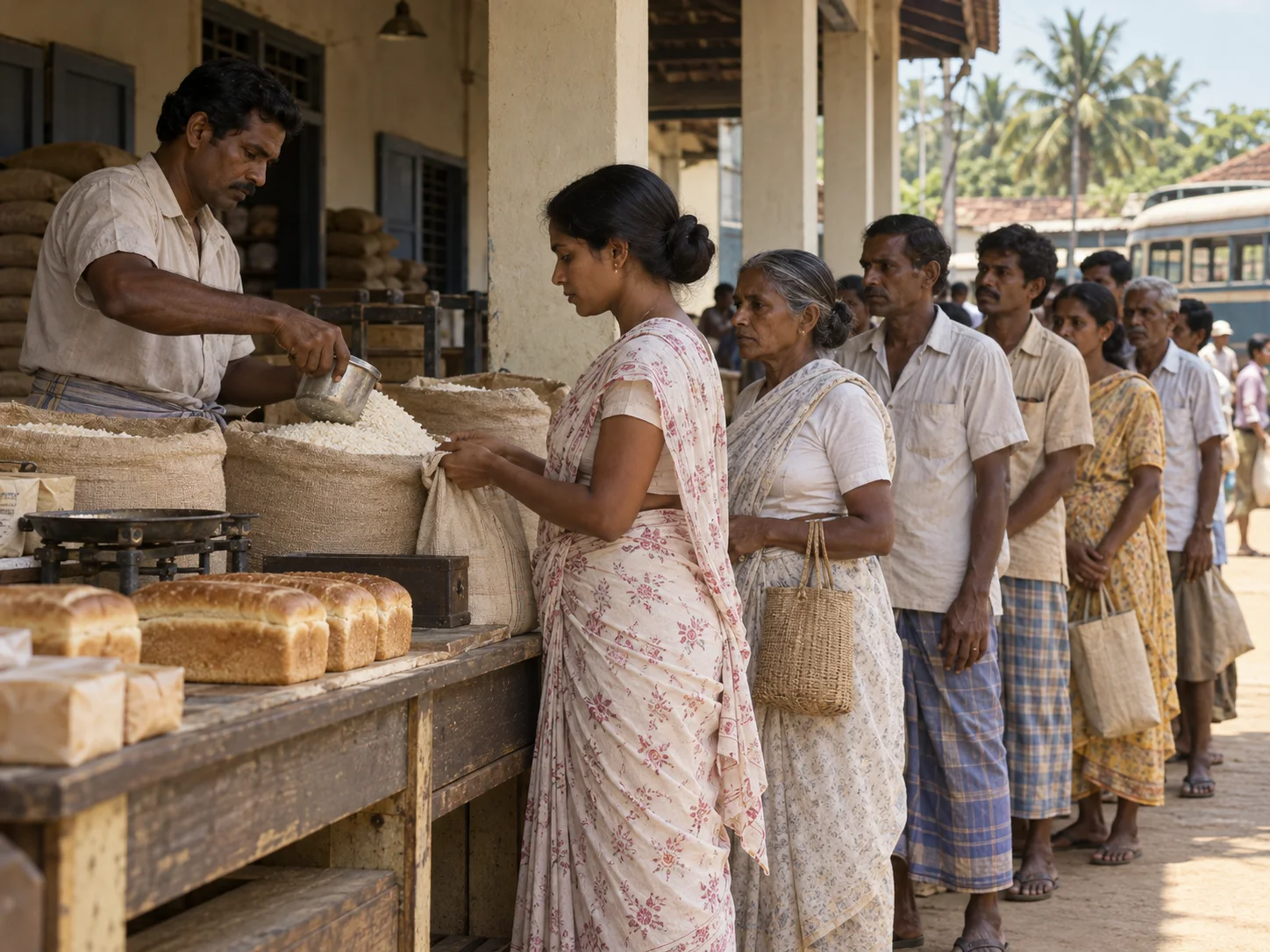
In early-1970s Sri Lanka, rationing covered rice, flour, sugar and other essentials, while long lines for bread and cloth became routine. One recollection describes a university student walking half a kilometre at 5 a.m. to queue for two pints of milk and two loaves. A contemporary 1974 report recorded hundreds waiting in bread lines at dawn.
A ration card granted entitlement to a quantity of food, but it did not guarantee when supplies would reach a shop or how much would remain. A formal right still had to be converted into food by surrendering early-morning time and physical presence. That gap separated the rationing system on paper from daily life.