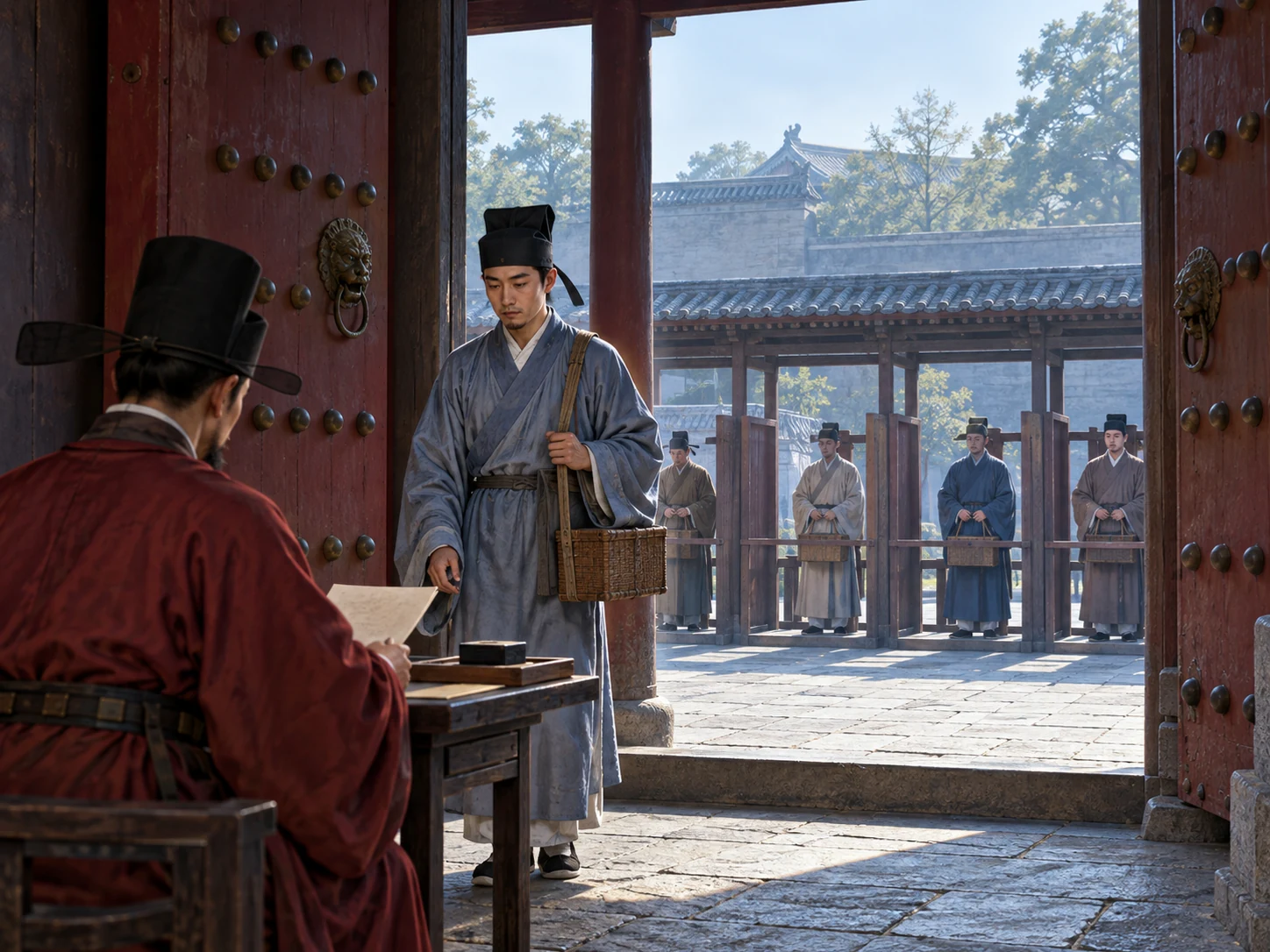
In China's imperial examination system, especially under the Ming and Qing, candidates gathered outside walled examination compounds and entered through controlled identification before occupying individual cells. Princeton historian Benjamin Elman summarises that from roughly 1400 to 1900, millions of men gathered every two or three years outside official compounds across the country. Accounts of the admission procedure describe candidates assembling at the gates with their permitted supplies, entering as names were called, and receiving a paper assigning an examination cell. The system later concealed names and had clerks recopy scripts so handwriting would not reveal identity. The distinctive feature of this ordered wait was that it did more than manage a large crowd. Identification, cell allocation, and safeguards for anonymous marking were carried out sequentially from the gate onward.
China · Ming–Qing period
China | Called by Name through the Imperial Examination Gate