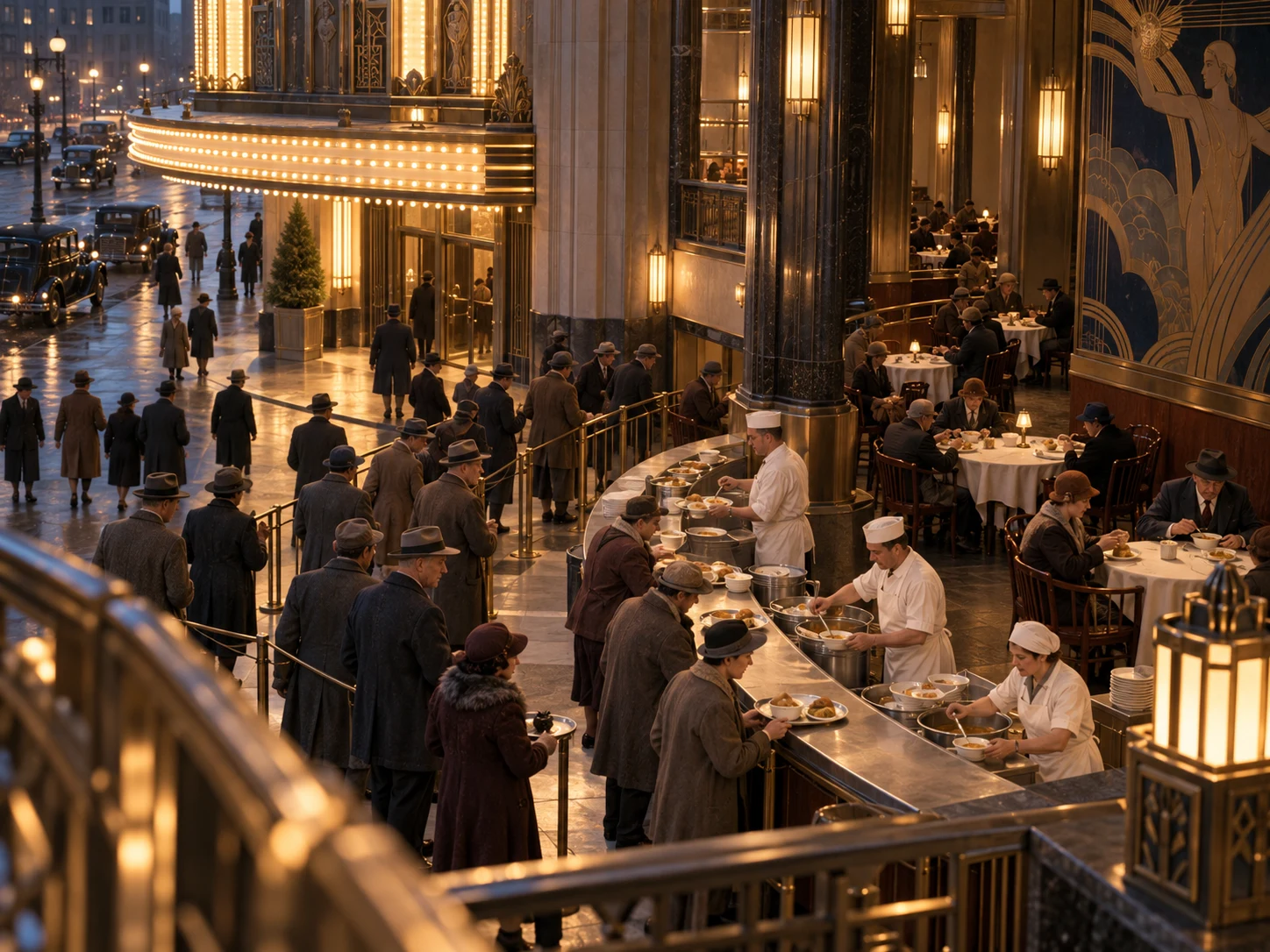
Around 1930, a breadline for five-cent meals ran beside New York’s Hippodrome theater. The Library of Congress caption describes a sign placed partway along the line. Meals had been paid for up to that point; people standing behind the sign had to wait for passers-by to contribute.
In an ordinary queue, advancing usually brings a person closer to a guaranteed product or service. Here, position alone did not secure a meal. The funded boundary could move backward only when new donations arrived. Five cents was a small sum, but without someone else paying it, the rear section of the line remained suspended.
The record does not identify the operator, headcount or waiting time. What it establishes is that the sign did more than give directions: it made visible who had a meal financed and who was still waiting for charity. One line gathered everyone together while dividing it internally into funded places and unfunded ones.