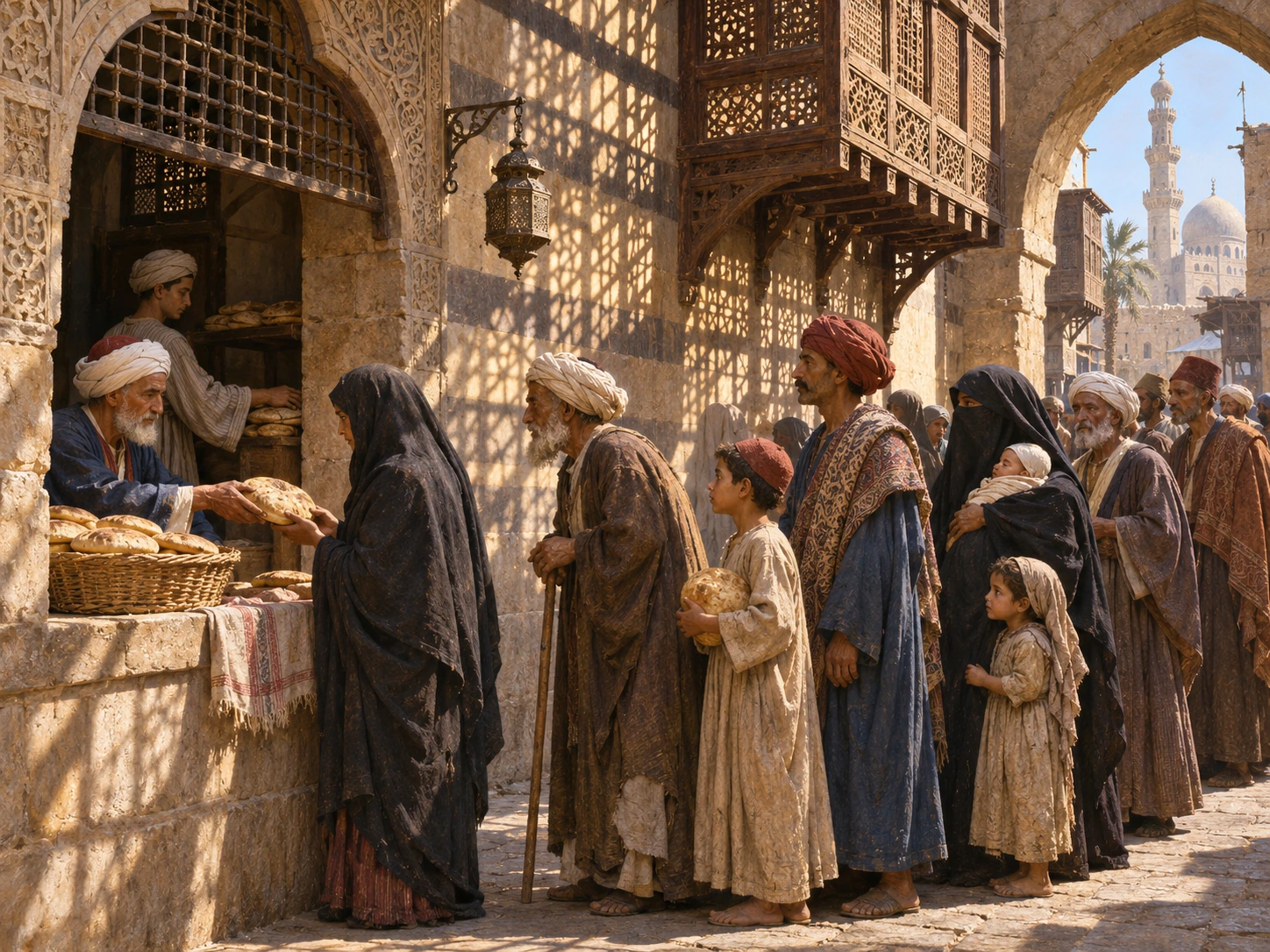
A candidate concerning bread distribution or almsgiving in nineteenth-century Cairo opens a window onto urban food provision and charity. Yet the note about an “order of charitable distribution” does not tell us who stood where, or whether a physical line formed at all. Evidence of bread being distributed is not the same as evidence of people queuing for it.
Distribution depended on resources, procurement, location, and rules governing recipients. Religious endowments and charitable institutions may be relevant to the broader history, but practices at one institution cannot automatically be generalized to an entire city. Hunger is a serious subject; it should not be turned into a reassuring tableau without evidence.
What this entry still needs is a specific contemporary description of distribution and waiting. Until then, neither the length of the queue nor the thoughts of those who received bread should be invented.