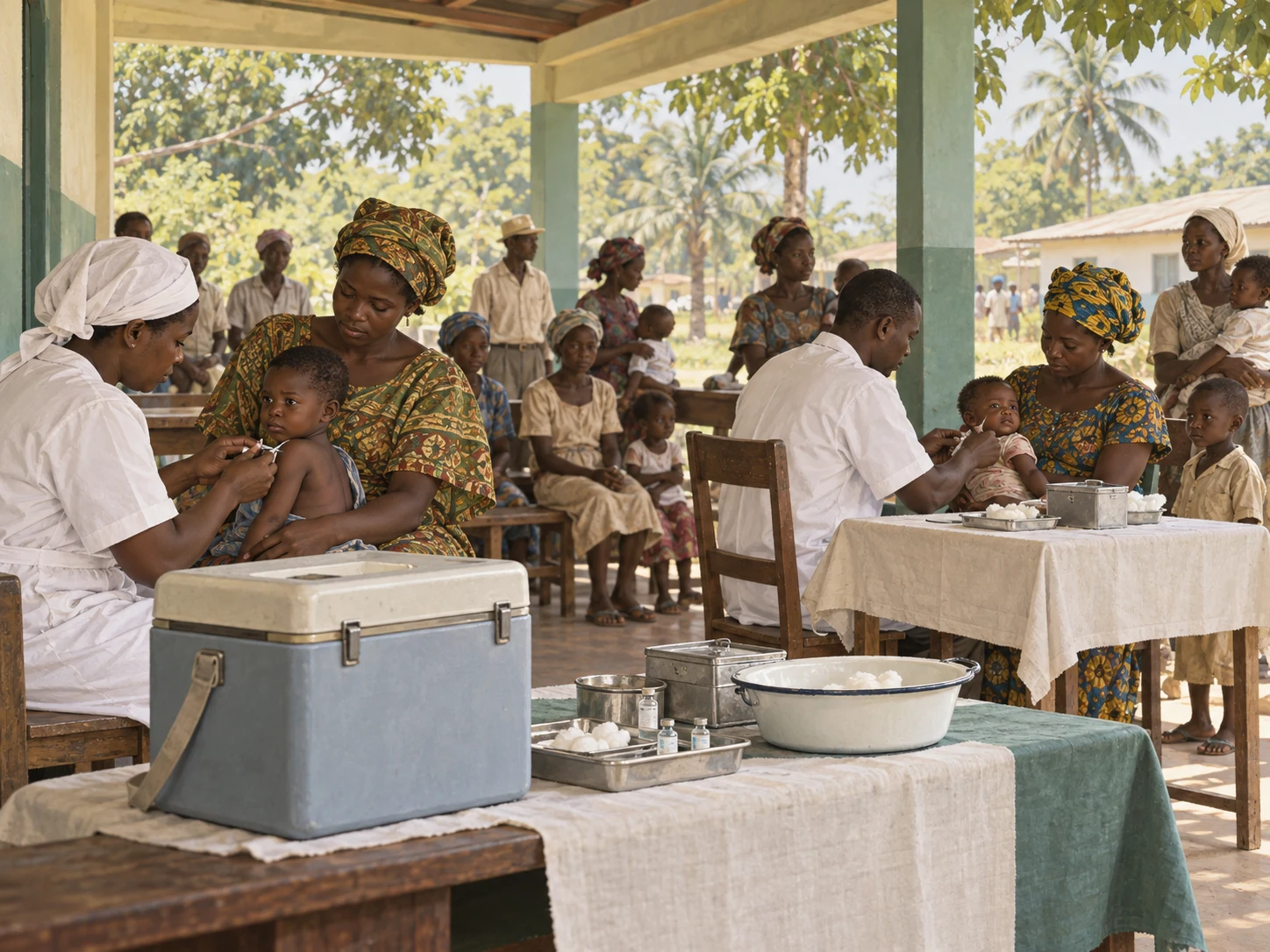
A photograph associated with vaccination can reveal how much public health depends on arrangements beyond the needle: registration, identifying the recipient, organizing a turn, and sometimes observing people afterward. The CDC’s Public Health Image Library preserves visual records that can help us examine where a health system meets an individual body. Yet a picture is not a license to invent a scene. Its caption must establish the place, date and actions shown; it cannot tell us how long anyone waited or what they felt. A history of queues asks not only how many people stood together, but who organized access and who could reach the front.
A CDC vaccination image sits within a longer process of arranging recipients, preparing equipment and recording completed doses. The speed of a campaign cannot be understood from the needle alone.
The key to reading the photograph is not merely whether a syringe is visible, but how the catalogue identifies the people waiting. Where registration, screening, vaccination and observation cannot be distinguished, the stage remains unknown.