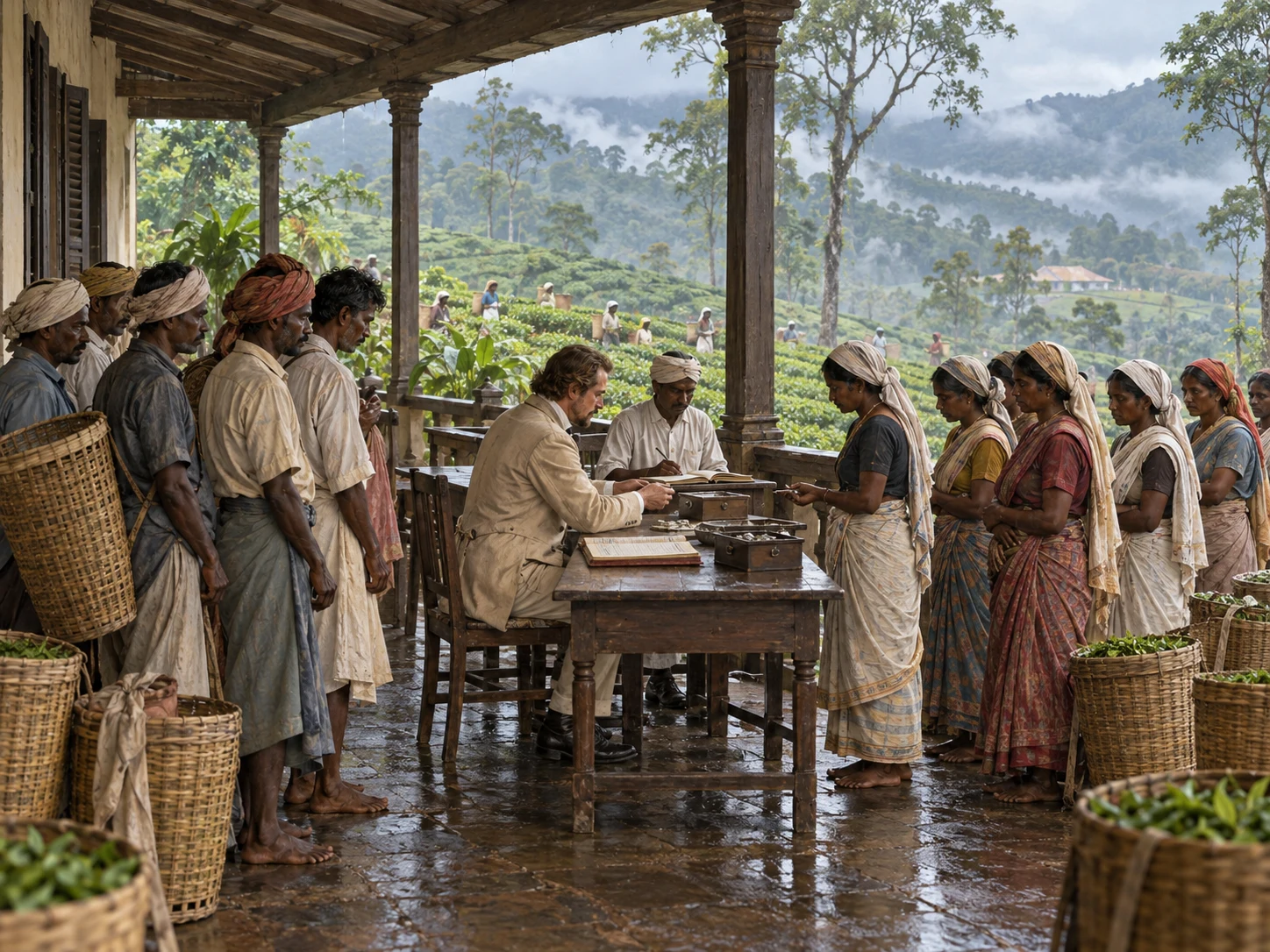
A British Library catalogue record for a photograph of the Ceylon tea industry identifies its subject as the payment of wages to labourers. A European man sits at a desk while workers stand in lines on both sides. The catalogue does not securely establish the plantation or date, so those details remain open, but the physical ordering is explicit: payday has been arranged as two queues converging on the pay desk.
The object at the centre is not a shop counter but the employer’s table. Each worker approaches individually, receives payment and yields the place to the next person. On colonial plantations, wages, housing, medical care and purchasing were often contained within the estate’s administrative system. The photograph’s two orderly lines therefore record more than people waiting for money. They show how a large labour force was made legible and processed one person at a time.