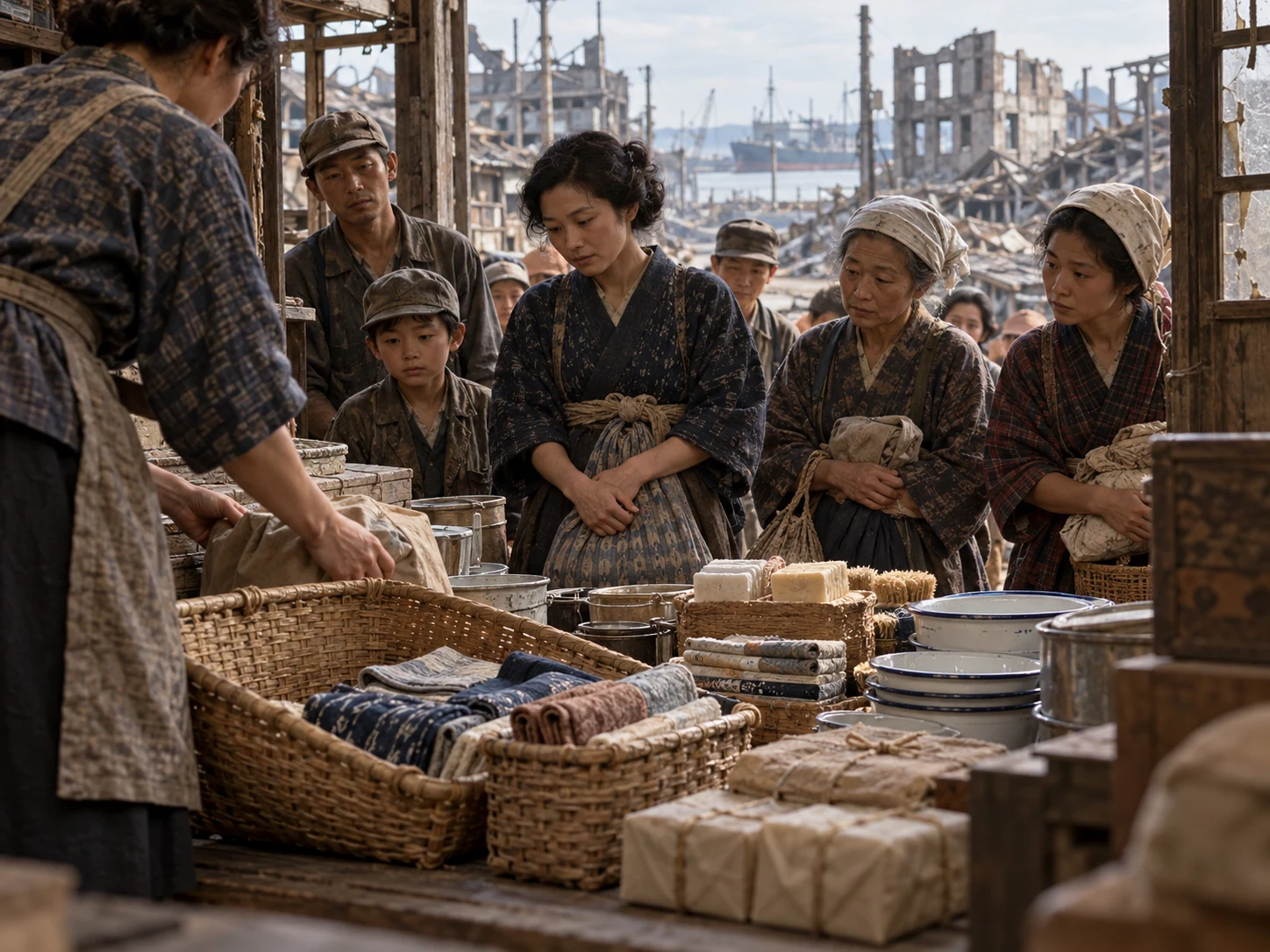
Yokohama, 1945. A photograph by Roy Driver in the Australian War Memorial collection records Japanese residents lining up in an orderly fashion outside shops for provisions. Its catalogue description adds that similar queues formed at tram stops. The end of fighting did not instantly restore ordinary supplies or transport.
These people were not waiting for a novelty. They were trying to obtain the things that kept daily life going. In a city living with scarcity, taking turns became a small mechanism for sharing access to limited goods. The photograph does not identify every item on sale, the length of the wait or what individuals felt, so the article does not invent those details. What it does preserve is a revealing threshold: when urban life starts moving again, society needs not only goods and vehicles, but an agreed order for reaching them.