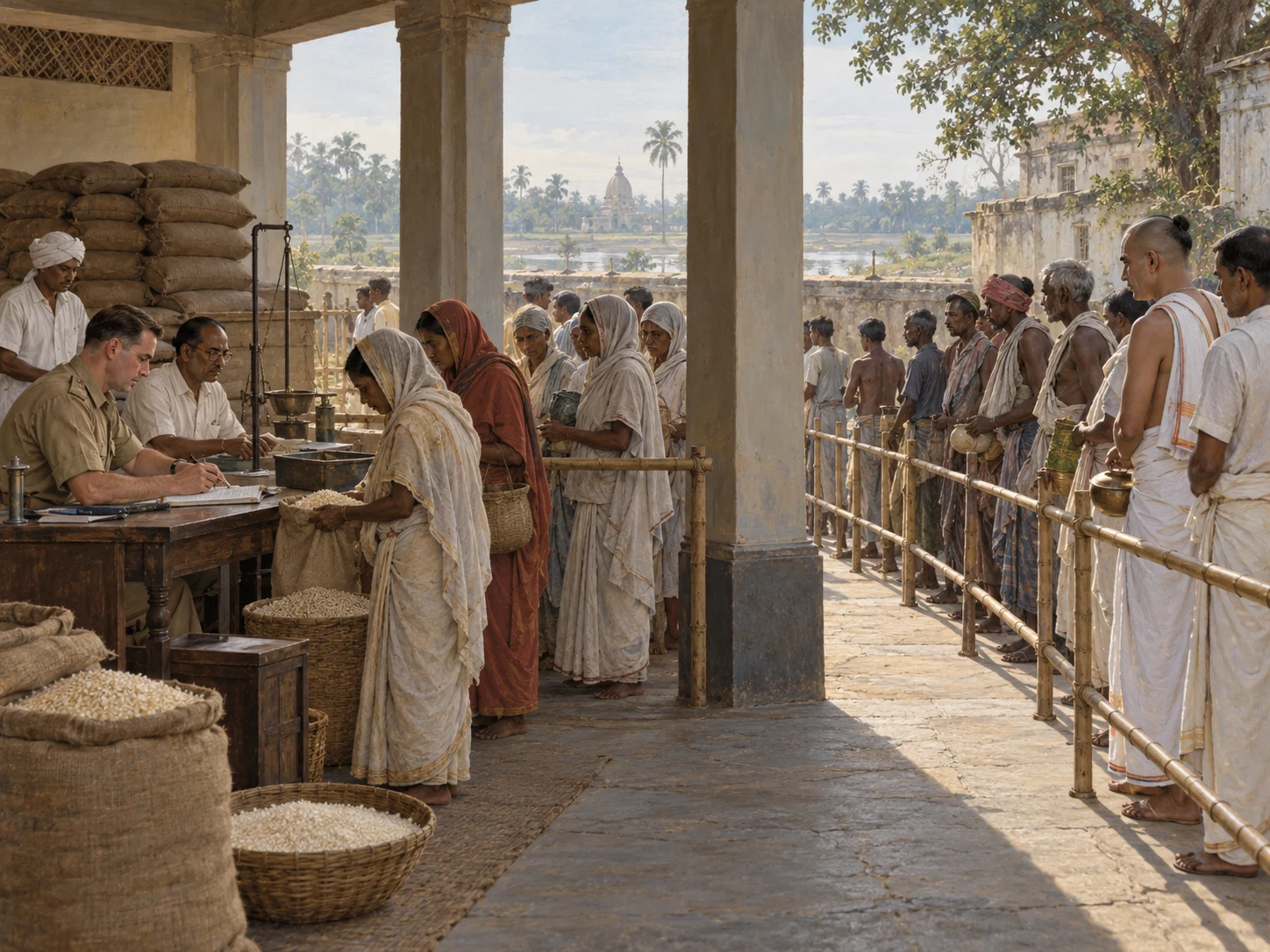
During the Bengal famine of 1943, relief was divided not only by food scarcity but by assumptions about who could be expected to enter a public ration queue. The historical study 'Ending Famine in India' records that a relief committee associated with the Bengal Provincial Hindu Mahasabha served middle-class and high-caste Hindus who felt inhibited by caste and class sensibilities from queuing for food rations; pandits at Sanskrit schools were specifically mentioned. At the same time, wider relief operations dealt with vast numbers of hungry people through public kitchens and ordinary distributions. The distinctive feature of this queue is that it was both a mechanism for allocating scarce food and a social boundary: status discouraged some people from public waiting and helped produce a separate channel of aid. This account does not turn famine endurance into an uplifting story. It shows how class and caste entered the design of relief itself.
India · 1943
Bengal, 1943 | Relief Was Split by Who Felt Able to Join the Ration Queue