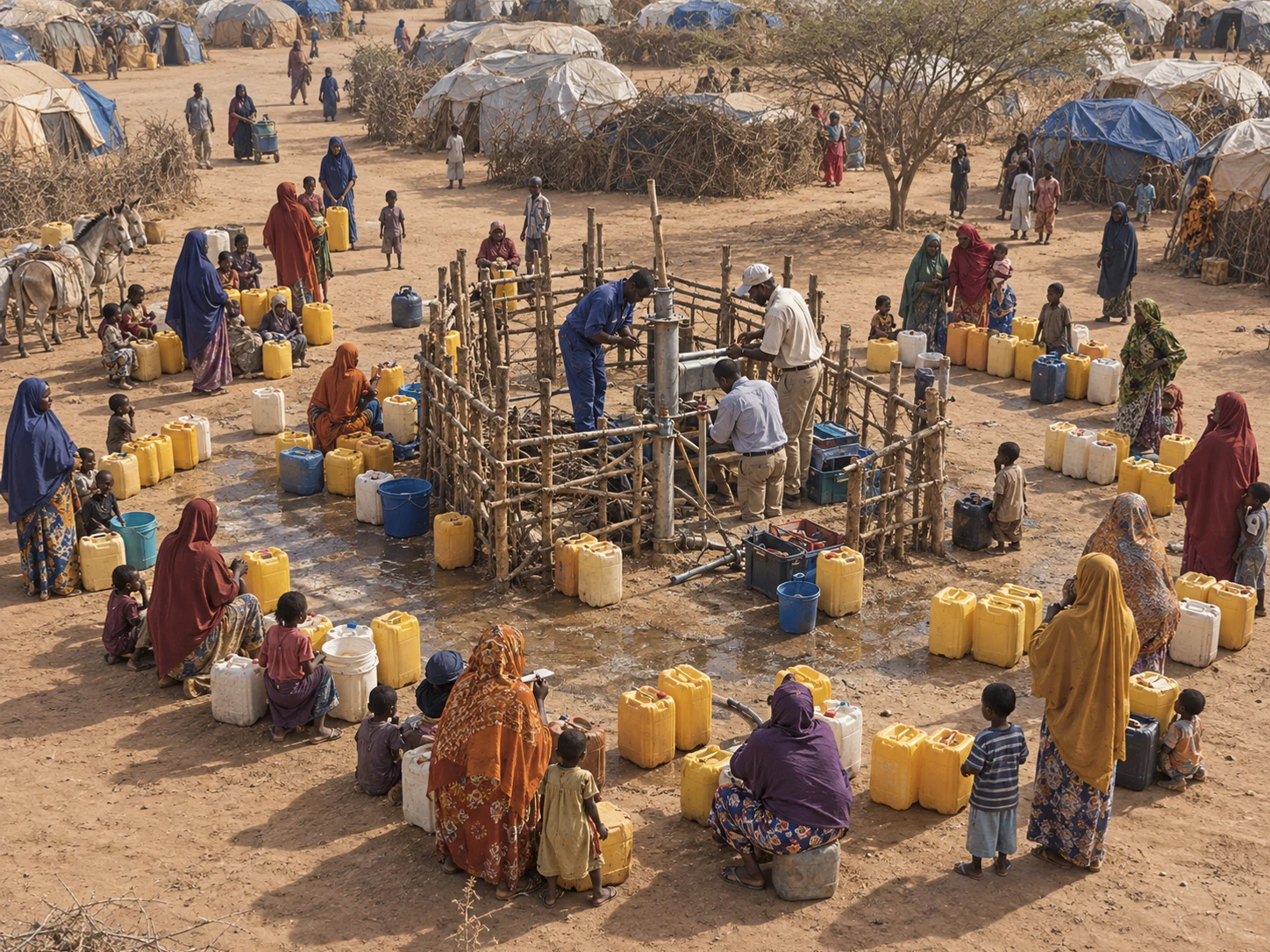
By late 2008, about 230,000 people lived in the three refugee camps at Dadaab in north-eastern Kenya. In Ifo, hundreds of new arrivals waited outside UNHCR registration offices each morning, while women and children queued daily for water under the burning sun. Supply and pump capacity had not kept pace: one tap formerly used by 200 families was serving roughly twice that number.
More than 60,000 Somalis had crossed into Kenya that year, fleeing conflict compounded by drought and food insecurity. The camps had run out of plots for new shelters, and water scarcity also affected waste management and firefighting. Disputes over limited water were reported.
The order at the tap was more than a line for a utility. When land and pumps could not absorb displacement, growth in the camp population became time spent waiting to fill a single container.