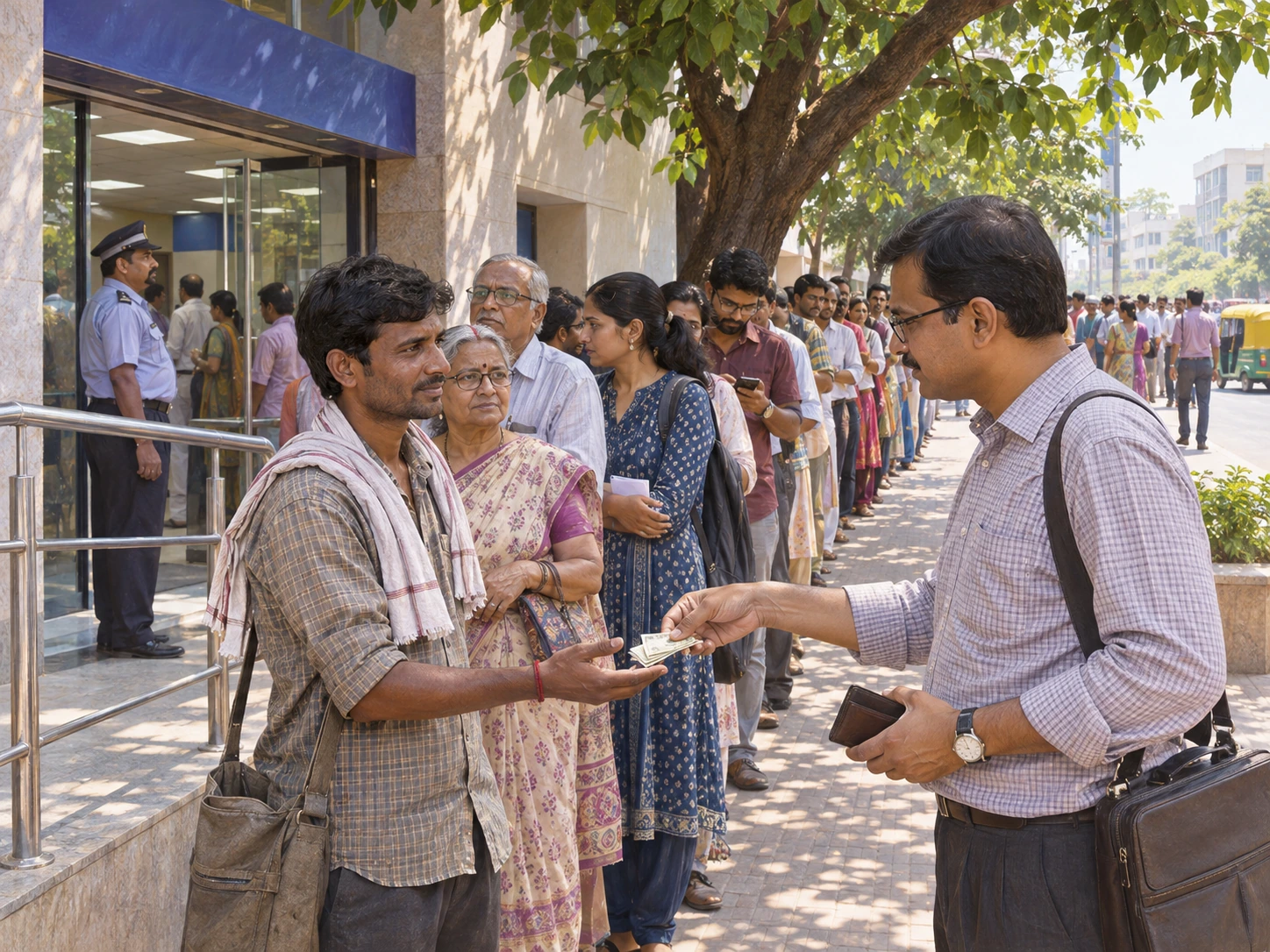
After India's high-value banknotes were withdrawn, standing in a bank or ATM line became a purchasable service. The Times of India reported in November 2016 that the Delhi concierge company Done Thing had begun offering queueing on 10 November at 100 rupees per hour. Firms including Wishup and Book My Chotu sent staff to hold a place and alert the customer when the turn approached. The customer still had to appear for identification and the transaction, but much of the immobile wait could be transferred to someone else.
Queue outsourcing exposed the price of time. For a worker or small-business owner, losing several earning hours might cost more than the fee. The substitute, meanwhile, sold those hours as labour. A line may look equal because everyone advances in order, yet the burden differs when some people can purchase another person's waiting. Nor did the payment guarantee cash: an ATM could still be empty by the time the front was reached. The revealing feature was not merely the novelty of a concierge service. Currency scarcity converted the normally hidden difference between those able to wait and those unable to wait into an explicit market price.
The substitute generally held a place and alerted the customer rather than taking over the bank card, PIN or identity check. This division preserved the personal financial transaction while detaching the physical wait. A single queue was split into two components: a procedure that still belonged to the account holder and time that could be bought from someone else.