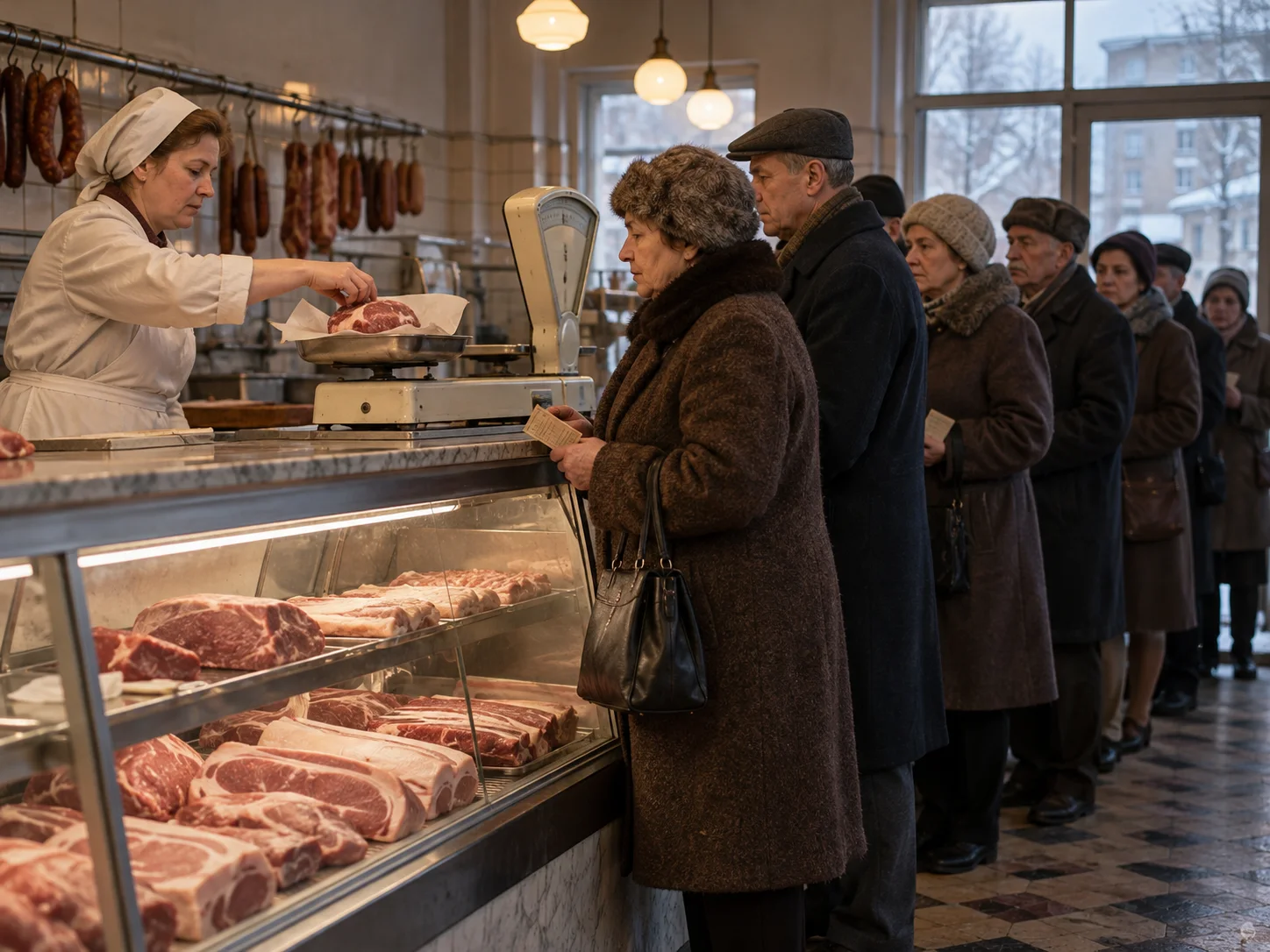
Poland’s meat shortages in the early 1980s made an ordinary shopping trip uncertain. Rationing could define how much a household was entitled to buy, but it could not guarantee that a shop would have meat when customers arrived. Time and information became resources alongside money.
A ration card was meant to distribute scarcity according to a rule. Yet possessing a card and carrying food home were different things. Where queues formed, they exposed another inequality: who heard about deliveries first, and who could leave work or care duties to wait.
It is tempting to treat these queues as quaint evidence of an inconvenient past. But the object of waiting was not a luxury: it was the possibility of making an ordinary meal. A Polish government archival record documents everyday meat-shop queues in 1980, while leaving the individual shop unnamed.
The defining feature of A Ration Card Cannot Promise Meat is the way a specific procedure turned 食肉店の配給待ち into ordered waiting. The line was not background scenery: it determined access, timing and the burden placed on the people involved. The revised account keeps those mechanics visible and separates the documented scene from assumptions that the source does not support.