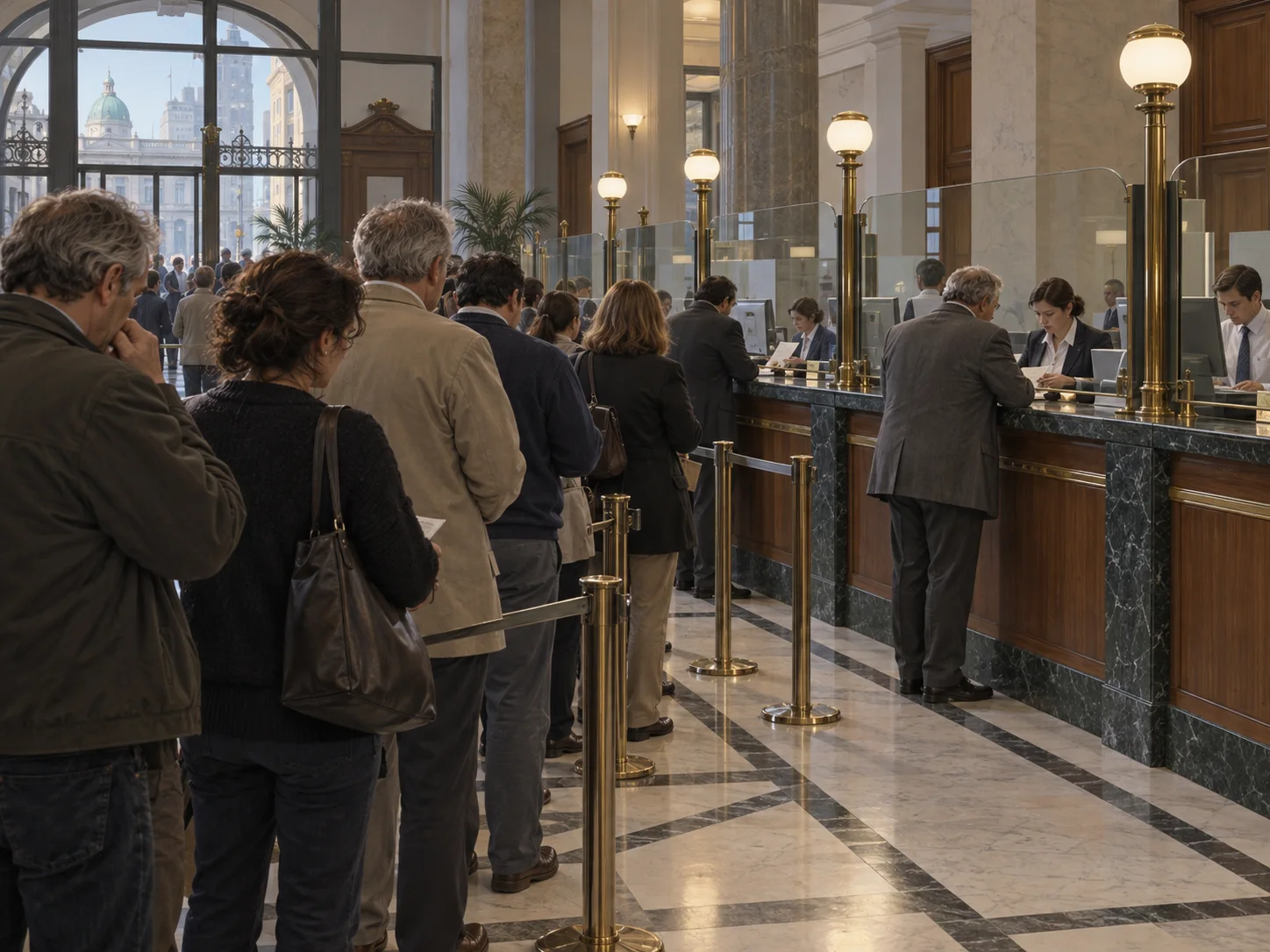
On 31 December 2001, residents of Buenos Aires waited in line to enter a bank and withdraw cash. The caption to a Reuters photograph connects the place, date and purpose in a single direct record. Banks were scheduled to remain open from 10 a.m. until 8 p.m. The extended hours were not an ordinary convenience. They were part of an attempt to calm angry depositors during an economic and political crisis.
Earlier that month, the government had restricted cash withdrawals from bank accounts. The measure became known as the corralito. A Yale case study of Argentina's banking crisis explains that deposit withdrawals accelerated sharply at the end of November and that a decree issued on 1 December restricted withdrawals from demand deposits for an initial ninety days. People could have money recorded in an account yet be unable to turn it freely into the cash needed for daily life. The line at the bank entrance was therefore more than routine congestion: it was the order in which depositors could try to reach their own funds.
Argentina's interim president had resigned the previous night, adding political uncertainty to the financial emergency. A photograph cannot tell us every reason carried by every person in the line. It does, however, establish the shared act: waiting to withdraw cash. A procedure that ordinarily meant collecting money already deposited had become a struggle to protect household life. Across different worlds, waiting one's turn is familiar. What this line reveals is how sharply the meaning of that wait changes when confidence in the financial system breaks down.