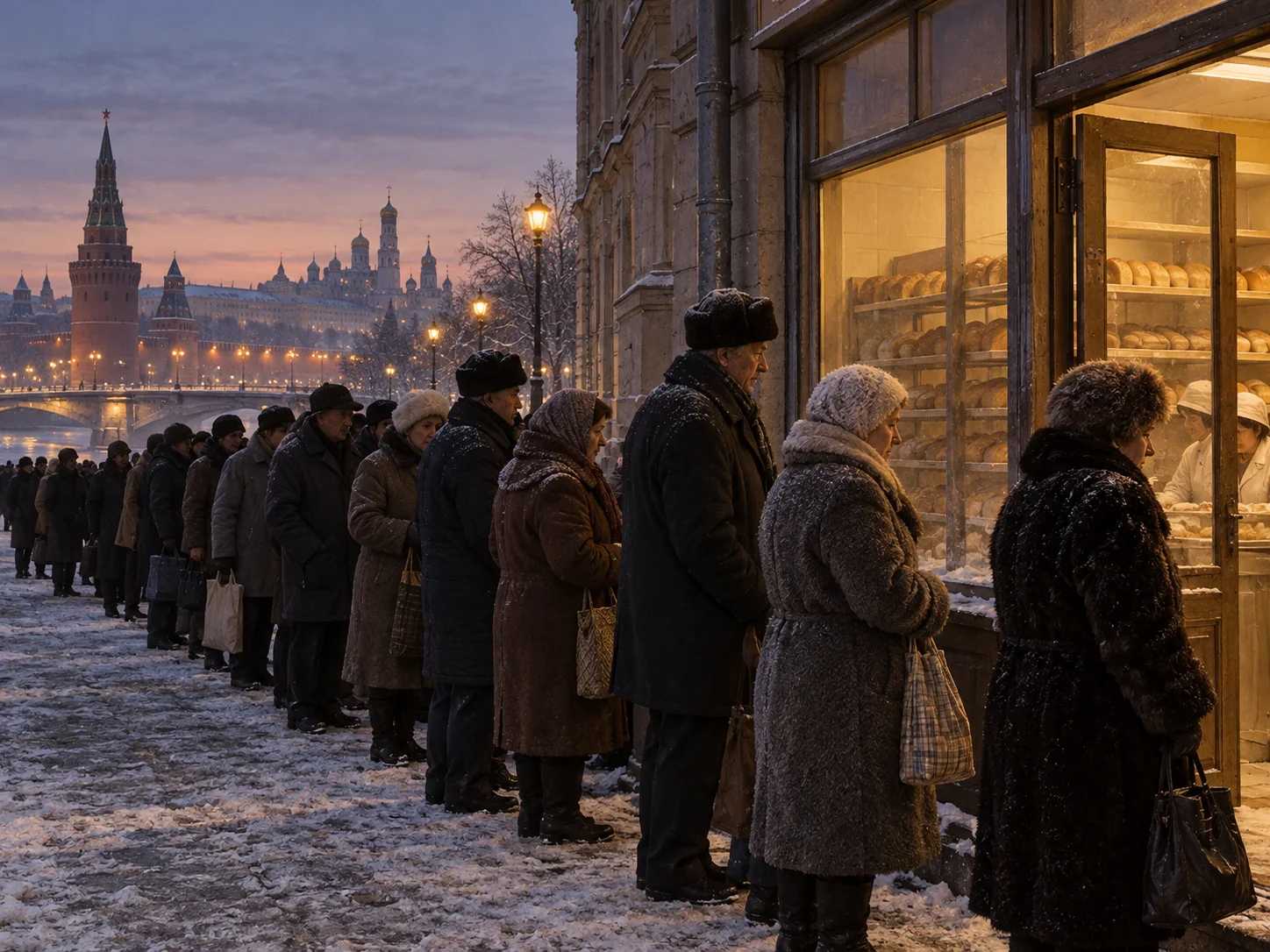
On 3 September 1990, Soviet citizens lined up for bread at stores across Moscow for the first time in years. People were accustomed to queues for bananas, ration coupons for sugar and informal payments for meat, but cheap, fresh bread had remained dependable. The Los Angeles Times reported that many could not remember comparable bread lines since before Nikita Khrushchev left office in 1964. One electrician visited four shops before finding a loaf. At Bread Store No. 150, customers accused saleswomen of holding back the last white loaves, while groups outside argued about shortages and reform. Bread was not simply one more missing product. It had served as the remaining everyday benchmark of provision. Once even bread required searching and queuing, confidence in perestroika was tested not in a policy speech but at the shop counter.
Soviet Union · 1990
When Moscow Could No Longer Count on Bread