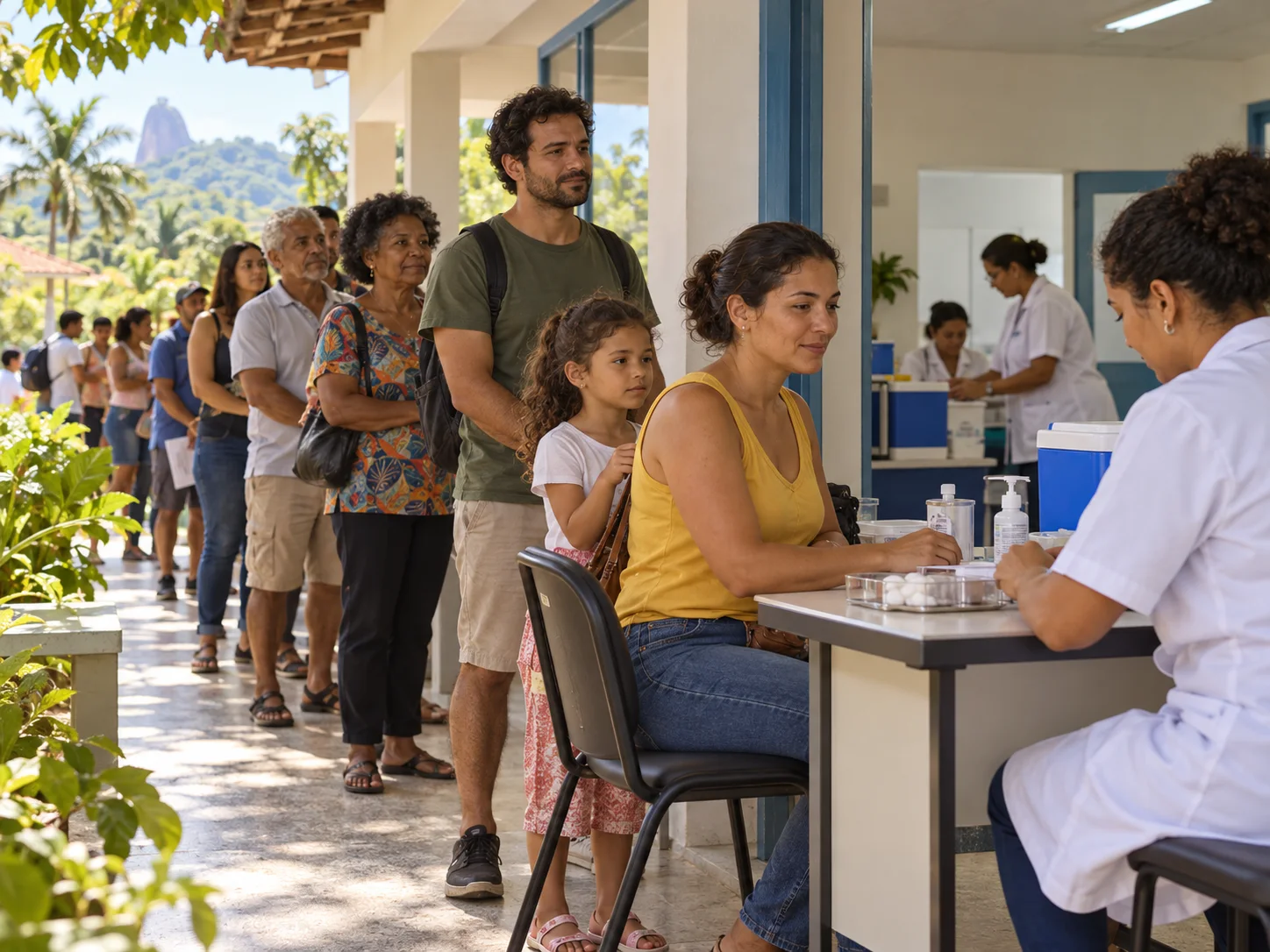
In January 2018, people in Brazil's major states formed lines at vaccination posts and waited for hours for yellow-fever shots. Deaths were rising, and the World Health Organization had extended its vaccination recommendation to travelers visiting the whole state of São Paulo. The queues marked a moment when a disease often associated with forested regions came close enough to large urban populations to change preventive behavior at once.
What distinguishes this queue is that the object of the wait was not a consumer good but a time-sensitive public-health intervention. The Pan American Health Organization reported that Brazil secured 20 million syringes for fractional-dose vaccination and was working toward protecting 77.5 million people by 2019. The hours-long lines therefore joined outbreak news, travel advice and mass vaccination logistics in one visible place.