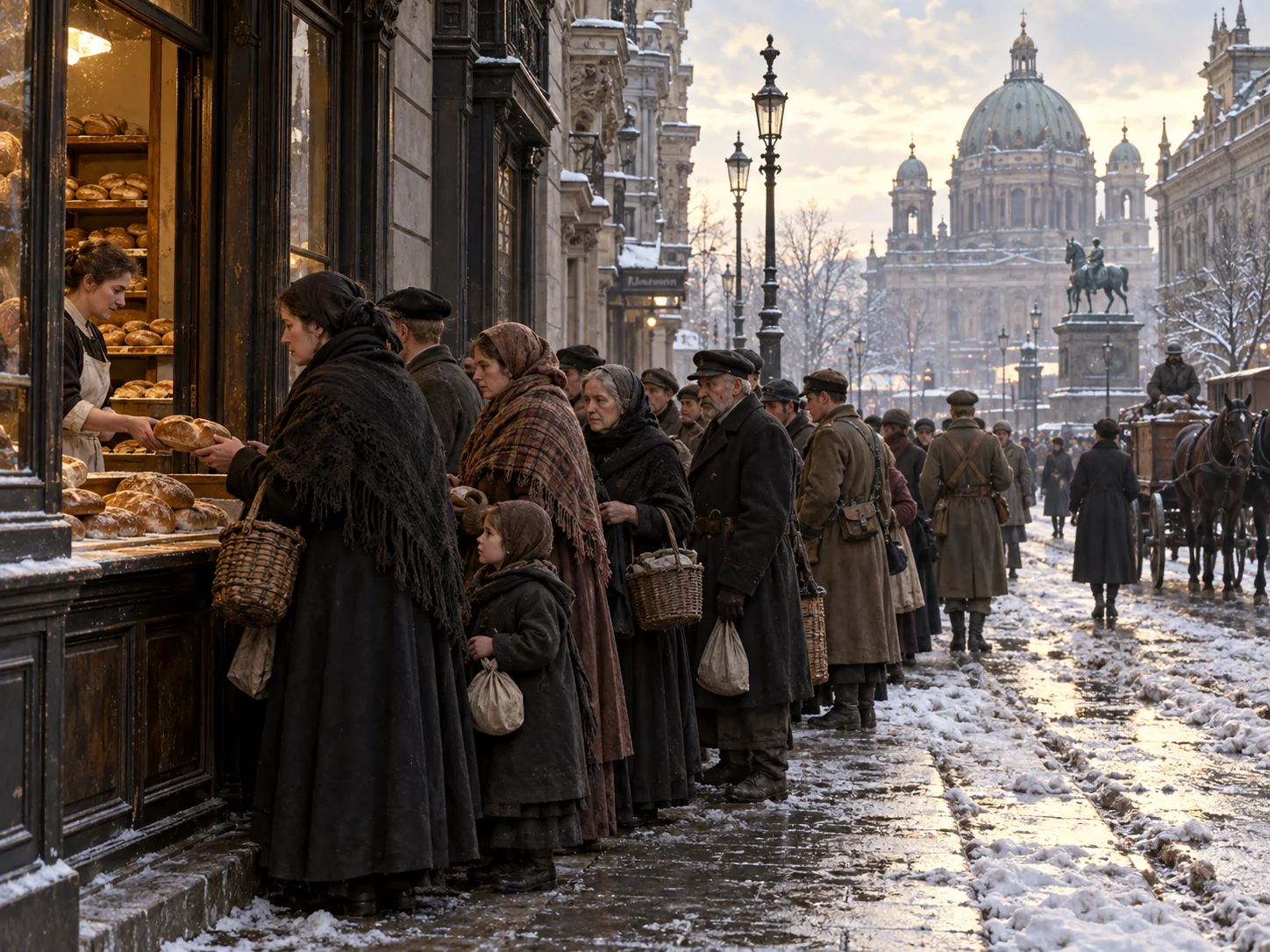
In wartime Germany, food scarcity became visible in shop lines. An eyewitness account published in an American newspaper in 1918 describes late 1915, when shops limited butter to half a pound per person and customers waited in queues controlled by police.
Butter, meat, milk, egg, soap and grocery cards followed. Buyers registered with designated shops, and cards tied each ration to a person and place of purchase. The writer said the system stopped standing in line for goods. The Library of Congress also preserves a photographic record catalogued as “Bread lines, Germany,” dated between 1908 and 1919.
Rationing did not simply organise a queue. It moved order and entitlement onto paper before the customer reached the shop. The distinctive change was not an end to wartime waiting, but its conversion into registration, assigned retailers and measured coupons embedded in daily life.