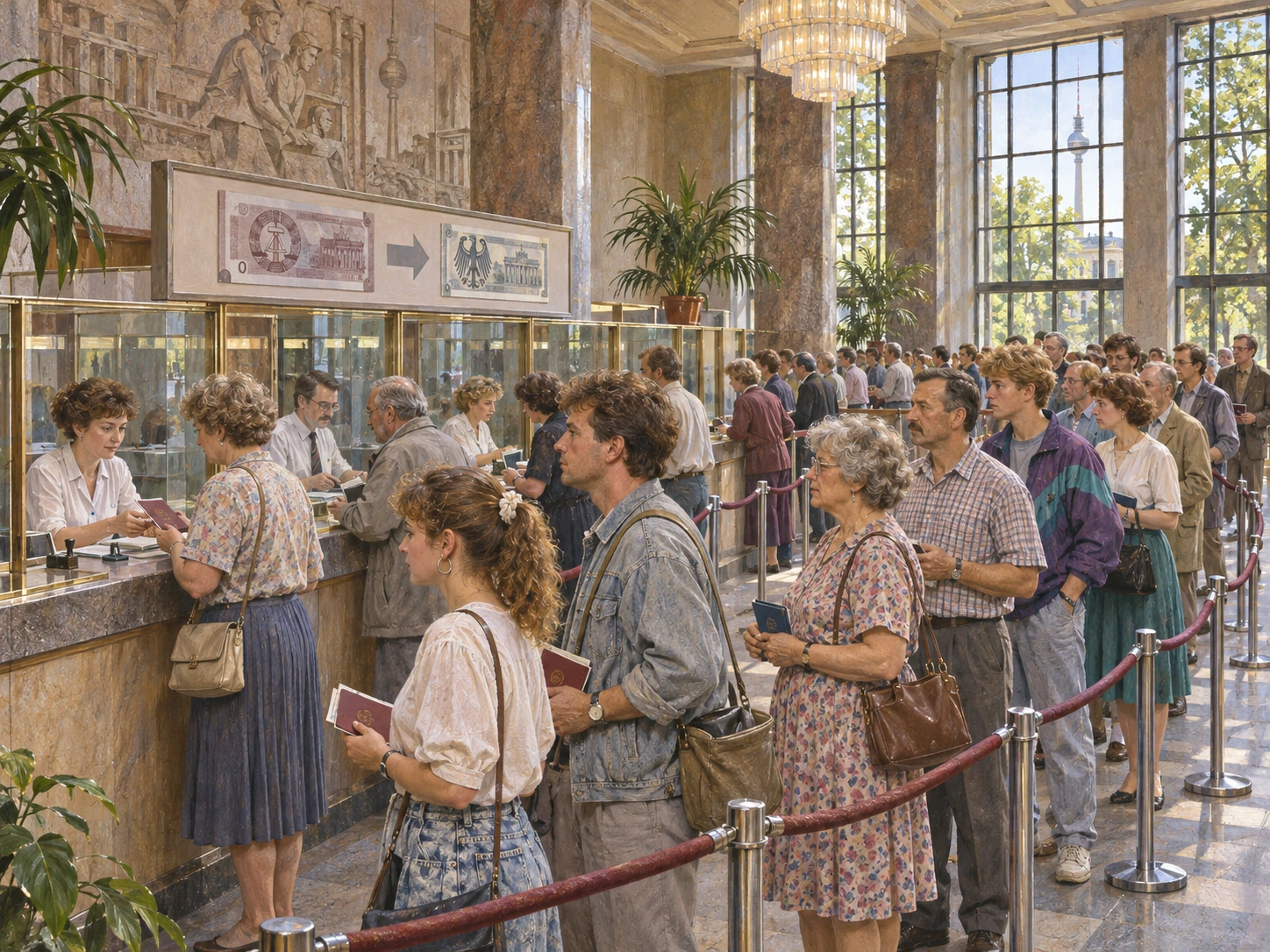
At midnight on 1 July 1990, an estimated 10,000 people gathered at a Deutsche Bank branch on Alexanderplatz in East Berlin, seeking to be among the first to receive West German Deutsche Marks. Long queues appeared at banks across East Germany as two economies separated for more than forty years changed to a common currency at the counter.
Under monetary, economic and social union, wages, pensions and rents were generally converted one to one. Savings received age-based one-to-one limits, with different rates above them. The Bundesbank had transported large quantities of notes and coins eastward in preparation.
This line awaited more than an exchange transaction. It was a chance to experience unification in a wallet before political unity was complete. The institutional boundary of midnight became visible as human order outside a bank door.