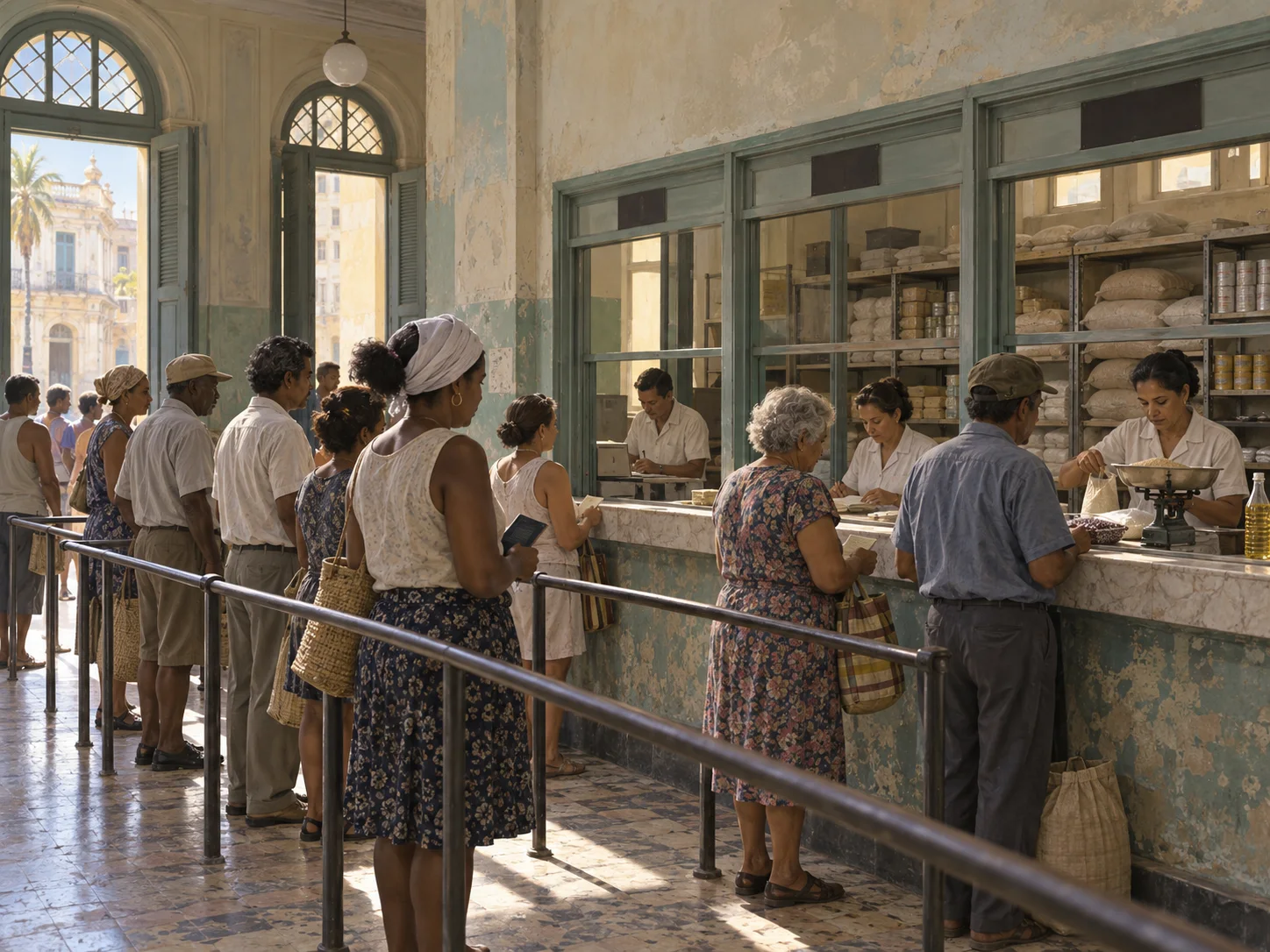
Cuba's post-Soviet Special Period changed not only what families ate but how they spent their time. Research on households records that in the early 1990s a typical family devoted about fifteen hours each week to food queues. A ration book established eligibility, but it could not guarantee when goods would arrive or how much a shop would receive.
Queueing work was not shared equally. It became part of domestic labour, carried especially by women. People known as colistas even held or sold places in line, turning waiting time into something that could be exchanged.
This is not a story that romanticises endurance. The rationing system promised a right to buy, not the presence of food on a shelf. The queue was where households paid, in hours, for gaps in the national supply system.