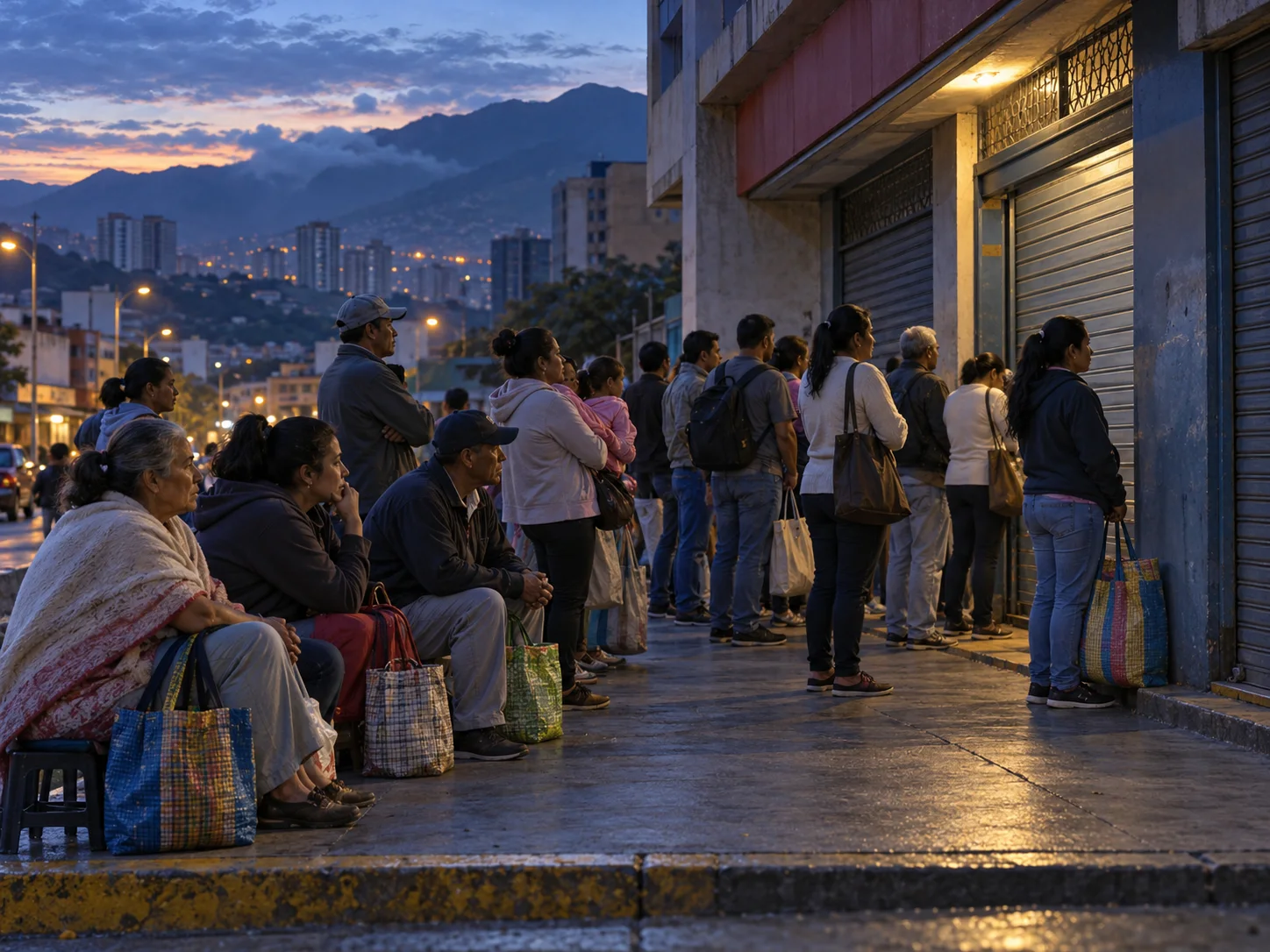
On 9 July 2016, residents of Caracas formed a line to buy basic food at low prices. A Reuters photograph records people waiting under a new government distribution system. Other reporting that year described a queue of several hundred wrapping around a state-run Bicentenario supermarket.
Price-controlled goods could be cheap on paper and absent from shelves in practice. Access depended not only on income, but on learning when a delivery arrived and having hours available to wait.
The line should not be romanticised as communal endurance. Time spent seeking staples displaced paid work and care at home. A system designed to lower the monetary price of food imposed another cost outside the shop: the customer's day.