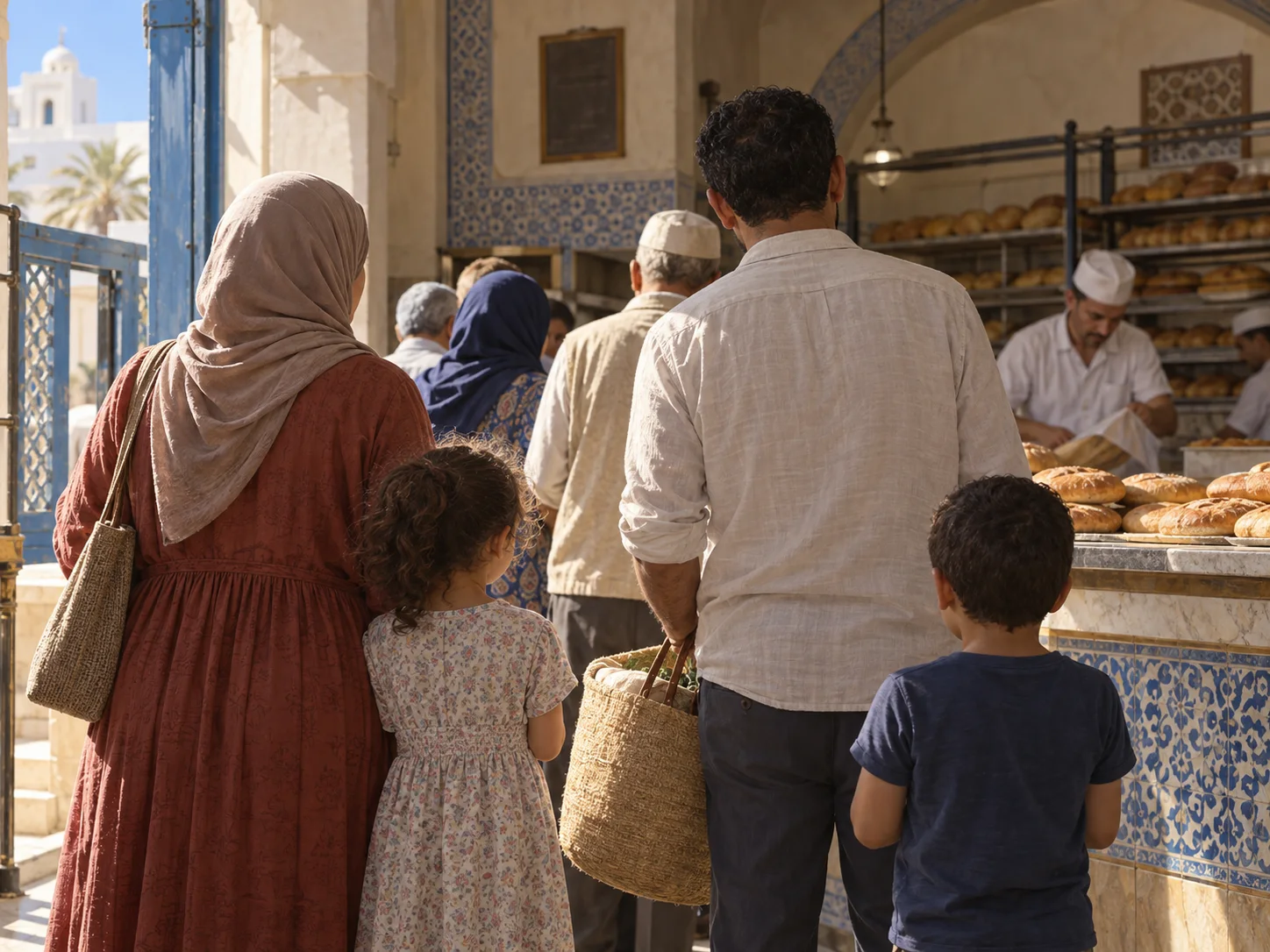
In May 2023, residents waited in a long queue outside a bakery in Hay al-Khadra near Tunis. Supplies of white flour had become erratic for several days, disrupting production and forcing some bakeries to close. Mahmoud Matwi, a retiree still working in textiles, eventually secured bread for his children after a prolonged wait.
The shortage was linked not only to disruption in grain markets following Russia's invasion of Ukraine but also to dwindling foreign-currency reserves and public-finance pressure. An economist noted that reserve coverage had fallen from 125 days a year earlier to 95 days.
No single cause made this bakery line. Imported grain, foreign exchange, subsidies, and payments to suppliers formed a chain that ended as time spent waiting for a few loaves for a household table.