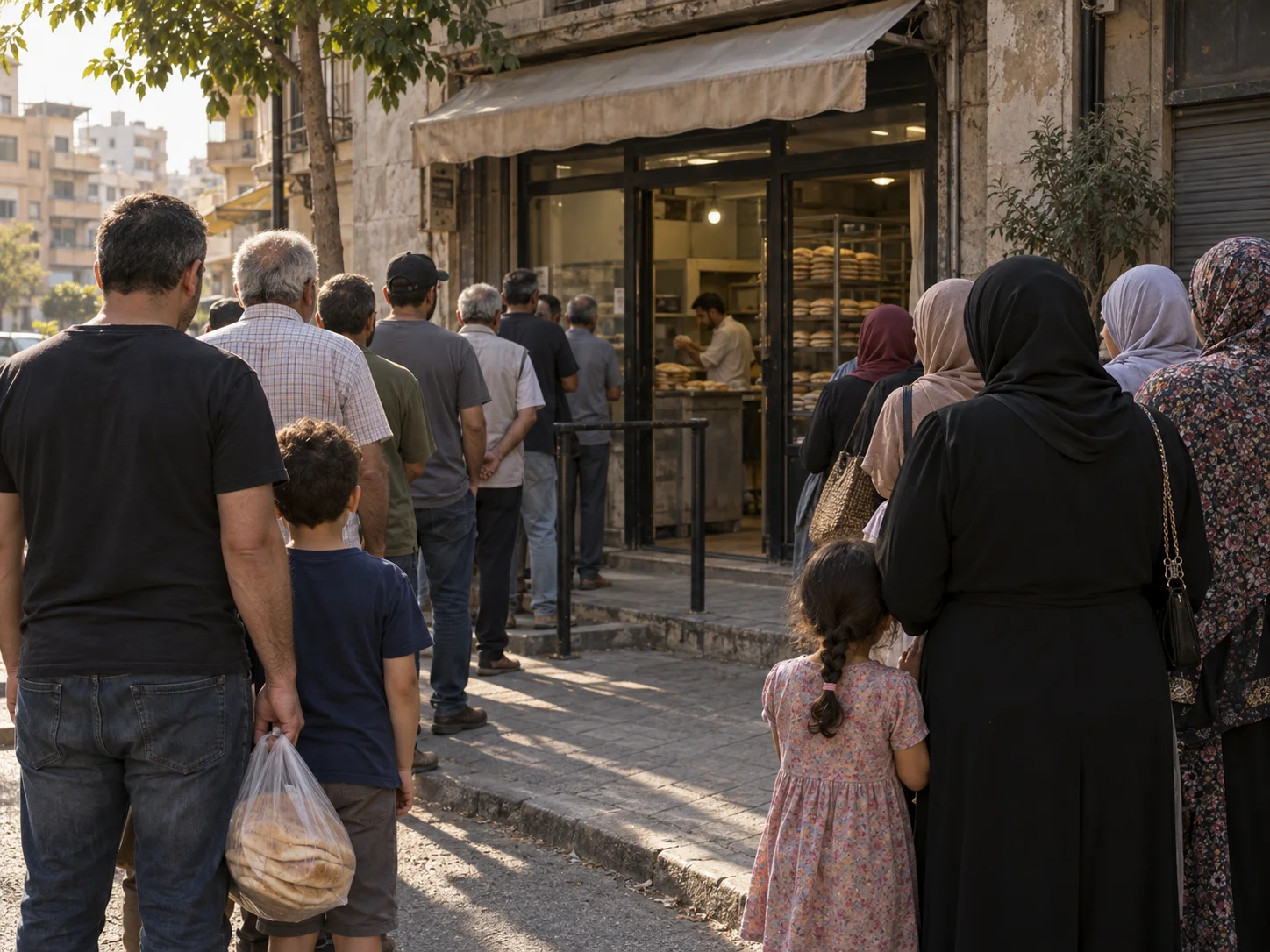
In July 2022, long lines formed outside bakeries across Lebanon. At one bakery in Sidon, staff separated men and women into different queues. A woman in the female line said she waited every day to feed her children. Some people reserved positions early in the morning or sent several family members to increase the number of bundles they could buy. There was a way around the line, but it cost more: bread priced at 16,000 Lebanese pounds per bundle at the bakery sold for 30,000 behind the shop and up to 40,000 by delivery.
Ordinary white bread relied on a wheat subsidy financed by the central bank at the official exchange rate. Fear that removal of the subsidy could lift the price to 30,000–35,000 pounds intensified demand. The government promised that 50,000 tonnes of wheat would arrive, while disputes broke out at bakery doors. The queue allocated shortage, but it also created a market dividing those able to wait from those able to buy back their time.