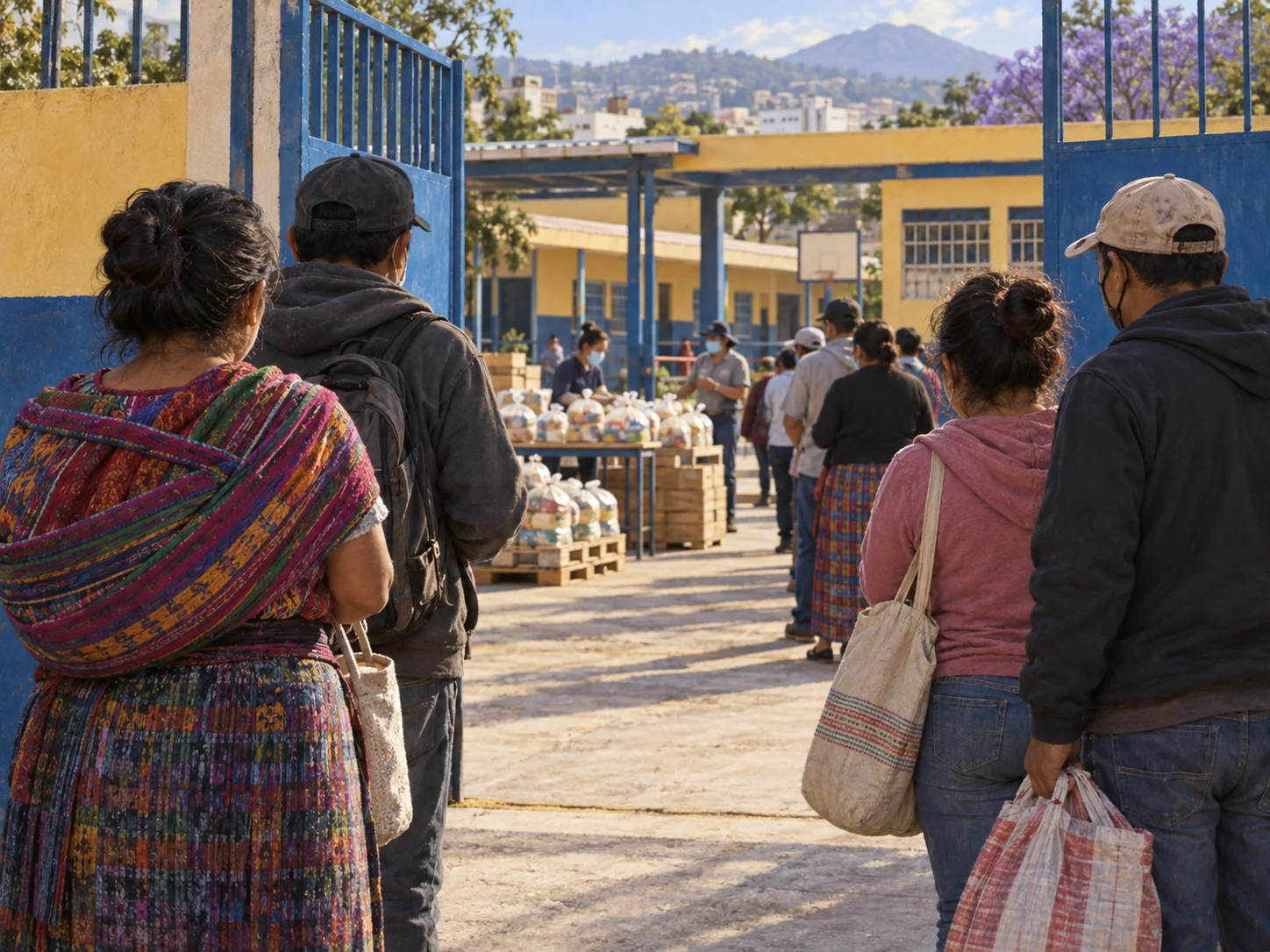
In May 2020, a long line of masked parents wrapped around a school in Zone 5 of Guatemala City. Children were absent because of COVID-19 closures. Their parents waited for the doors to open at 8 a.m. so they could collect food from the school-meal programme. Inside, they separated into smaller lines by grade and stood in marked spaces set two metres apart.
School meals are normally built into the timetable of a teaching day. Once classrooms were empty, getting food to households required parents, rather than the children who would eat it, to enter the sequence. UNICEF described a school without children because the purpose of the programme remained while its route was reversed.
What distinguishes this queue is that distance needed for infection control and proximity needed for food distribution had to coexist. One line outside the gate divided into several grade-based lines inside. It was a design for keeping people apart while preserving the sequence that connected food with children.