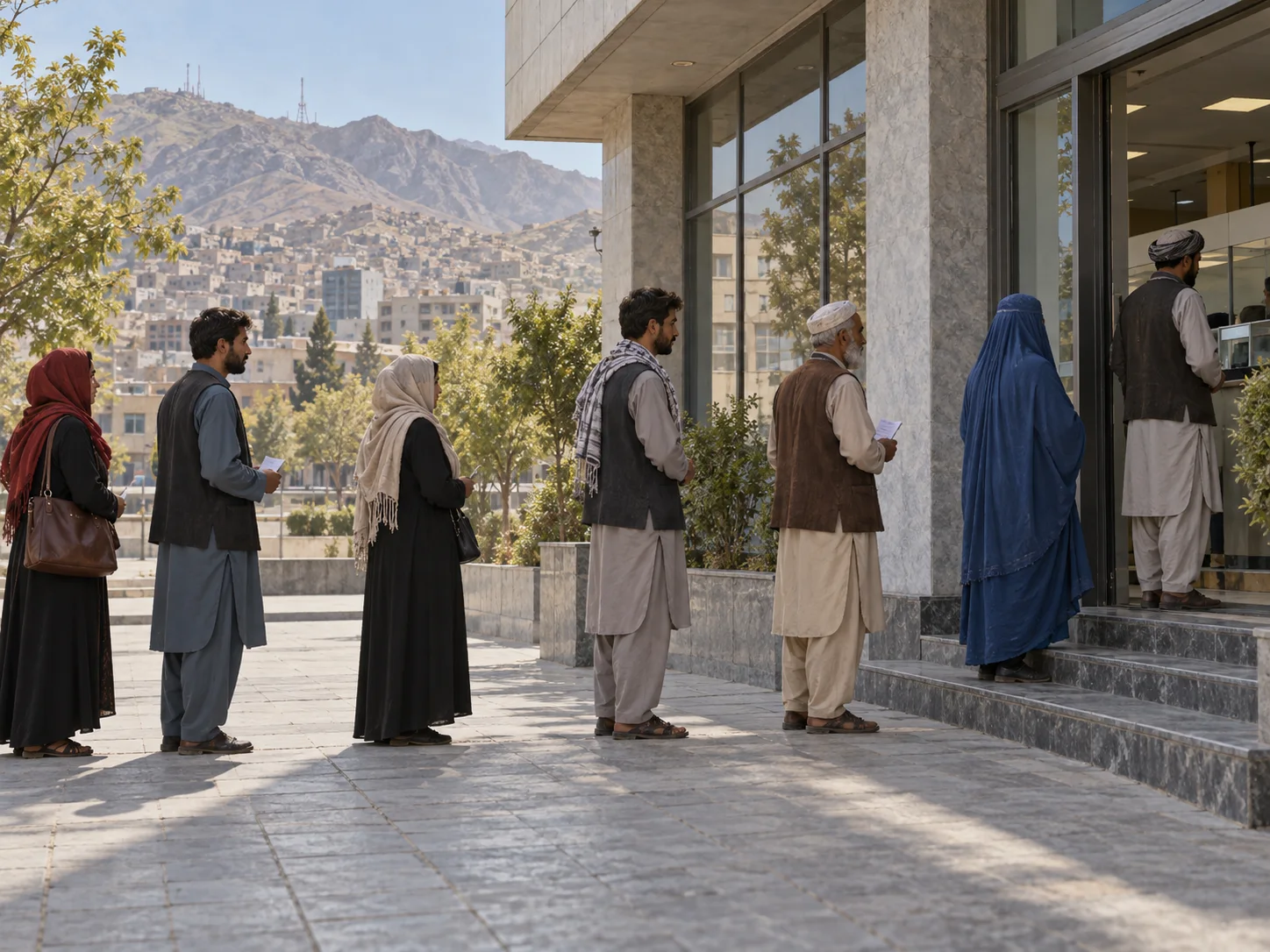
After the Taliban took control of Kabul in August 2021, banks closed and reopened unevenly while residents formed long lines for cash. Al Jazeera's report on 25 August interviewed a customer who had waited four hours to withdraw money from his own account. An AFP photograph from 31 August recorded people queuing for banks to open, and by September thousands were lining up under withdrawal caps.
What was scarce in this line was not necessarily the balance shown in an account, but the route that converted it into banknotes. Frozen foreign reserves, weak bank liquidity, closures and weekly withdrawal limits built a wall of time between a digital figure and cash that could buy food in a market. Wages and savings could exist while remaining inaccessible until a person passed through the order at a counter or ATM.
A bank queue turns a financial crisis into a physical constraint. Hours of waiting did not guarantee that cash would still be available. The ordinary act of receiving one's own money came to depend on the day's luck and one's position in line.