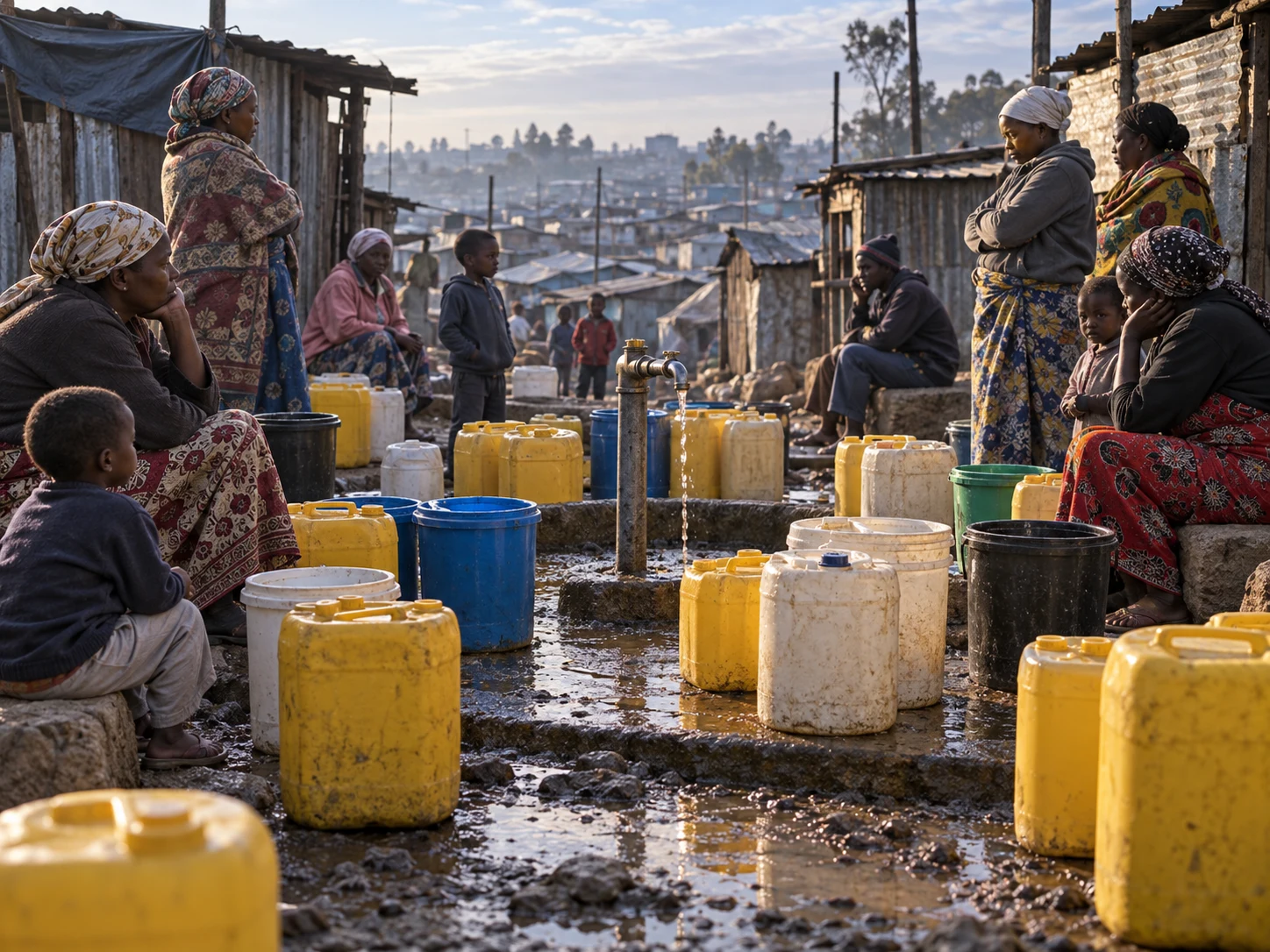
In Nairobi's Mukuru settlement, water from a household tap was long far from guaranteed. Fragile informal pipes, disconnections and low pressure concentrated residents at a limited number of collection points.
A case study of water-service reform in Mukuru explicitly records high prices, repeated interruptions and long queues when water pressure was low. This is not a photograph from another settlement being borrowed for the story. It is evidence tied to Mukuru's own supply network and to people waiting their turn to fill containers.
Reporting in 2021 described water vending machines that let residents fill several 20-litre jerrycans a day. One user emphasised that there was no queue. The importance of the machines was therefore not novelty alone, but their reduction of waiting created by intermittent, concentrated supply.
When many households must reach the same water point, a container is both a tool of daily life and a visible marker of turn. Shortening the line gives people back time for everything else their day requires.