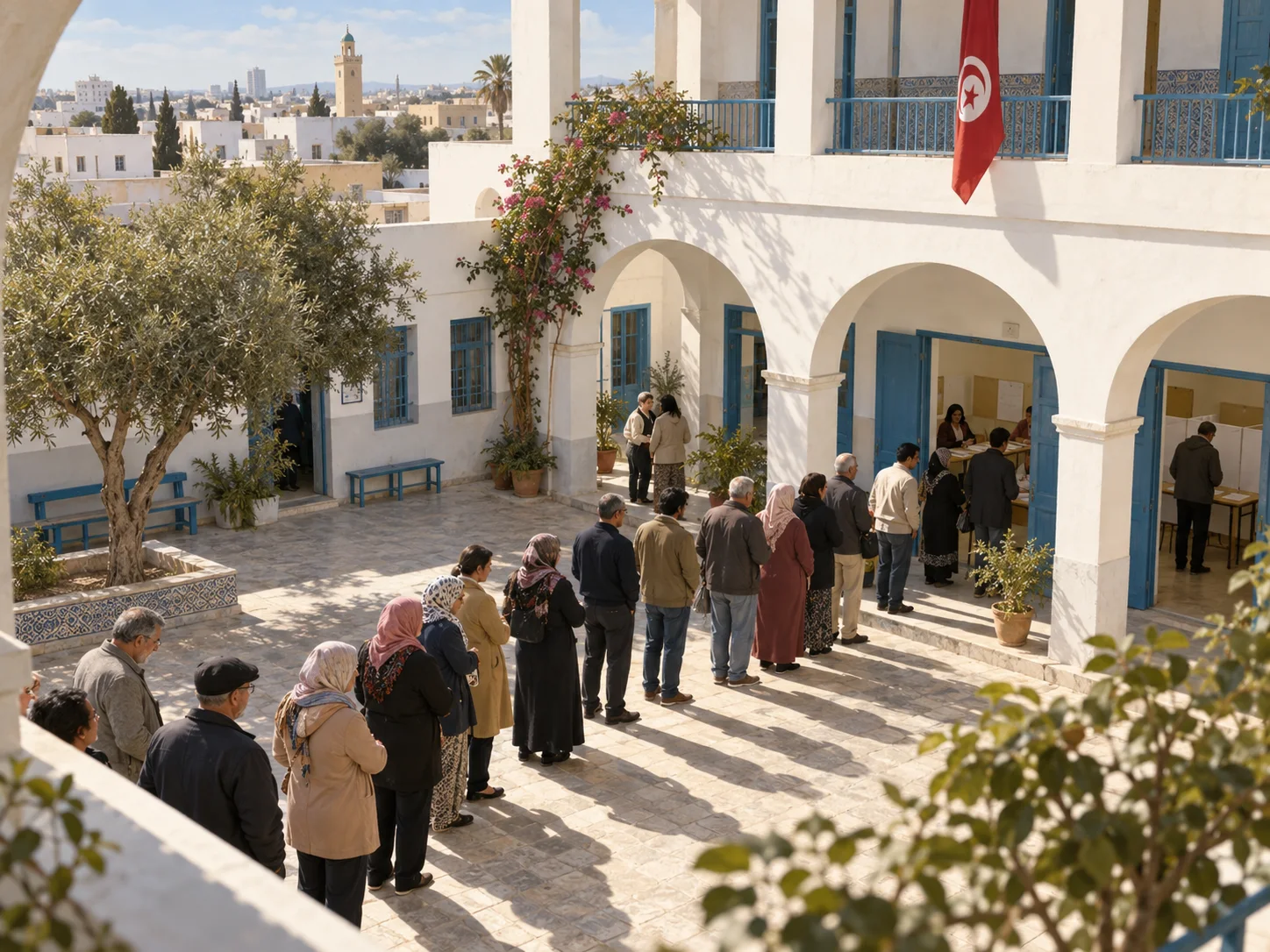
In October 2011, Tunisia voted for a constituent assembly after the fall of President Zine El Abidine Ben Ali. The election would help determine who shaped a new constitutional order. Waiting to vote therefore meant more than completing a routine civic procedure: it offered a way to register a political choice during a period of uncertainty.
People in the same polling-place line could hold sharply different views. The ballot is secret, and sharing a queue does not imply agreement. What voters share is a process: identification, receiving a ballot, and making a choice individually. One strength of an election is not that everyone thinks alike, but that competing choices can be counted within a common procedure.
Revolutions are often pictured as crowds in public squares. Voting works differently. A crowd must become a sequence of individual decisions. Alongside the loud images of political change stands a quieter one: people waiting for their turn to have a say.
The defining feature of After the Revolution, a Turn at the Ballot Box is the way a specific procedure turned 革命後初の制憲議会選挙 into ordered waiting. The line was not background scenery: it determined access, timing and the burden placed on the people involved. The revised account keeps those mechanics visible and separates the documented scene from assumptions that the source does not support.