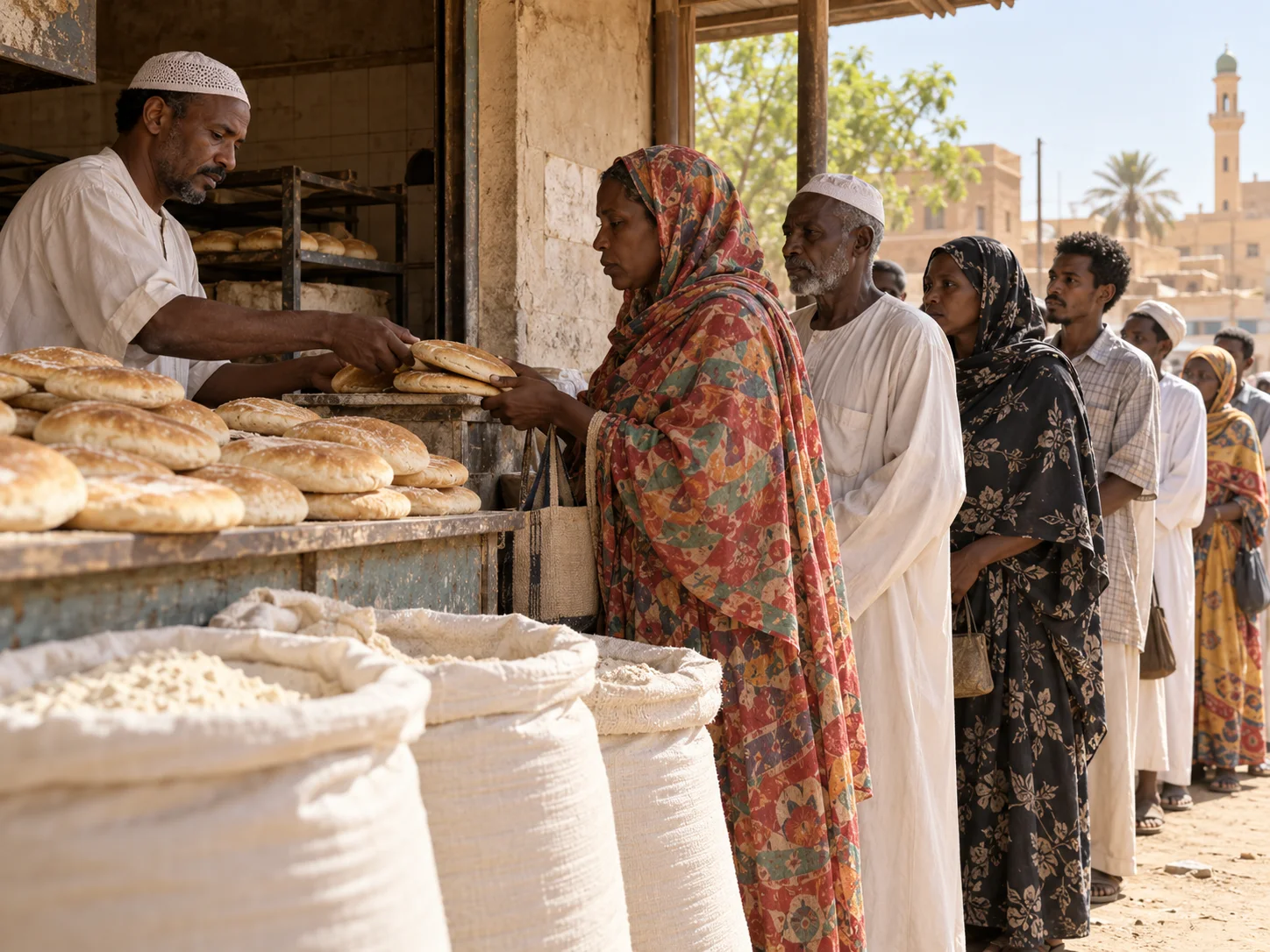
In August 2018, dozens of people stood outside the Modern Bakery in Banet, a neighbourhood of Omdurman across the Nile from Khartoum. Reuters spoke to Abdullah Mahmoud, a 53-year-old day labourer who said he had been waiting for two hours and had been there since morning without receiving bread. Fatima Yassin, standing in a separate queue for women, described bread as unavailable while other necessities had become expensive. Similar lines appeared in towns near the capital.
The shortage did not begin at the bakery door. When South Sudan seceded in 2011, Sudan lost roughly three-quarters of its oil output and a vital source of foreign currency. After devaluations of the Sudanese pound, a black market for dollars increasingly displaced the formal exchange system. Private wheat traders had to obtain expensive foreign currency to pay for imports while the government expected flour to be sold at an official price based on a very different exchange rate. One Khartoum bakery owner told Reuters that he had received no flour since Monday and had stopped operating.
Sudan imported two million tonnes of wheat in 2017 while producing 445,000 tonnes domestically. That imbalance made an everyday loaf dependent on oil revenue, exchange rates, import finance and controlled flour prices. The transaction at the counter might have taken seconds, but the queue outside the Modern Bakery marked the final break in a much longer supply chain. People were not merely waiting for a shop to open. They were waiting at the point where a national currency crisis became the absence of bread. Bread prices had doubled in January after subsidies were removed, triggering demonstrations. Reuters saw no comparable protest during the August shortage, but the line still connected price policy with physical supply.