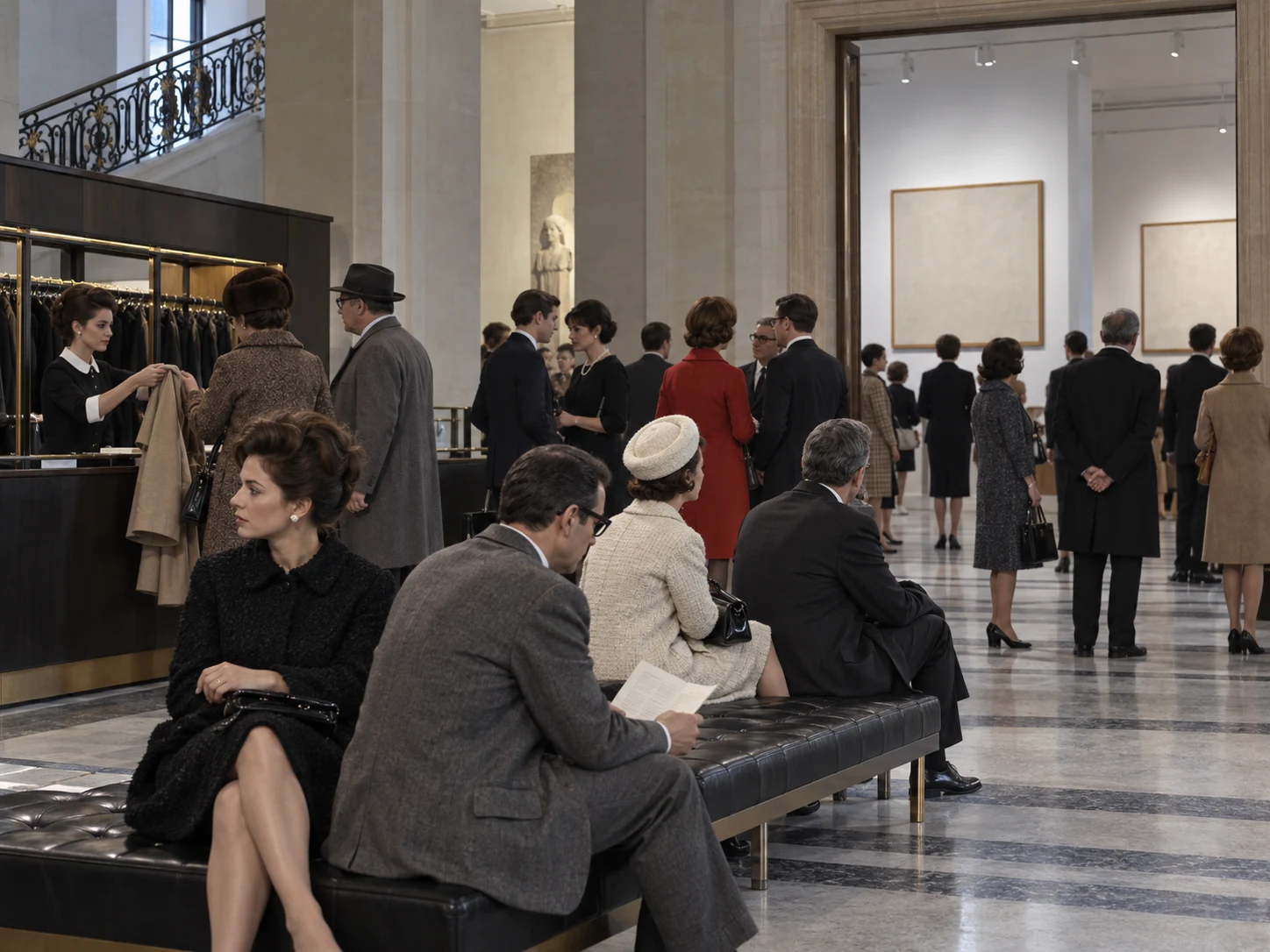
In February 1967, visitors queued outside the Grand Palais in Paris for a Pablo Picasso exhibition. A photograph published by the Rmn–Grand Palais explicitly identifies the scene as the “Queue for the Pablo Picasso exhibition.” This was more than generic museum congestion. People were waiting to see the work of a living artist presented on the scale of art history.
A major retrospective brings different decades and styles into one route through a building. The wait outside became the first stage of that shared route. The institution records 347,000 visitors to the exhibition. The photograph does not establish how long any one person waited, but it does show how powerfully Picasso’s name could mobilise the Paris public in the 1960s.
A museum queue is not a line to own the object at its end. It is a way for strangers to take turns entering the same encounter with original works. At the Grand Palais, the line captured the moment when paintings once treated as radical had become a mass public experience.