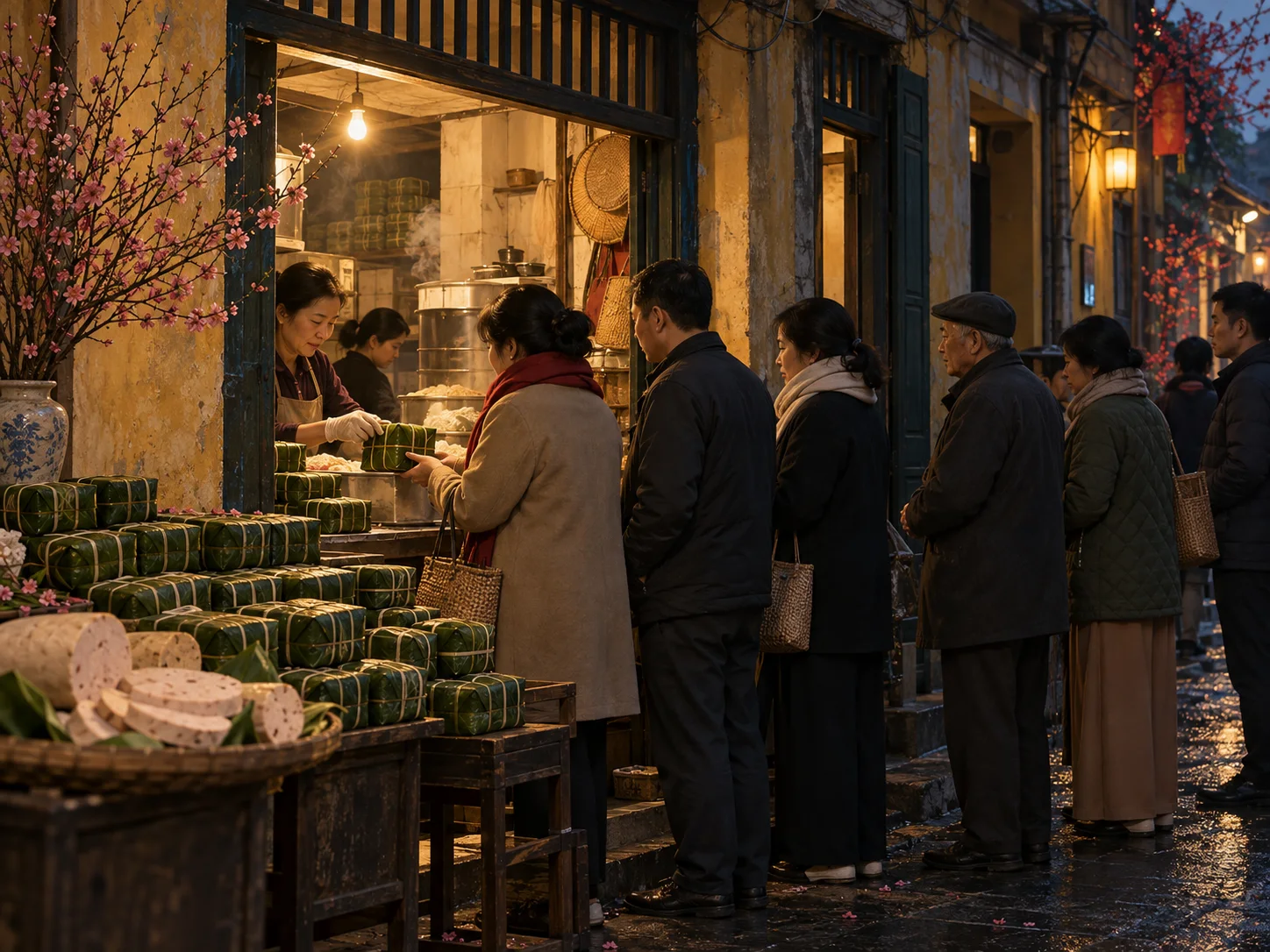
Quốc Hương, on Hàng Bông Street in Hanoi’s Old Quarter, operates behind a shopfront only about two metres wide. A January 2025 VnExpress report says that before Tết, long lines form for bánh chưng, giò, chả, and other traditional foods. Because production is limited, customers may place orders even before the fifteenth day of the twelfth lunar month. At another old shop, Vạn Lợi, only pre-packed goods are sold during the holiday rush, and customers either wait a long time or buy online.
This queue is shaped not only by demand but by the physical and productive scale of the old city. A business with a history approaching two centuries cannot suddenly widen its façade or multiply handmade output. Hanoi residents joke that although the subsidy era ended long ago, it still seems present at Quốc Hương. The joke captures the queue’s distinctive tension: contemporary consumers use advance orders and online alternatives, yet the narrow shopfront still evokes an older memory of scarce goods and fixed distribution. Waiting for Tết food places inherited taste, limited craft production, and urban architecture in the same line.