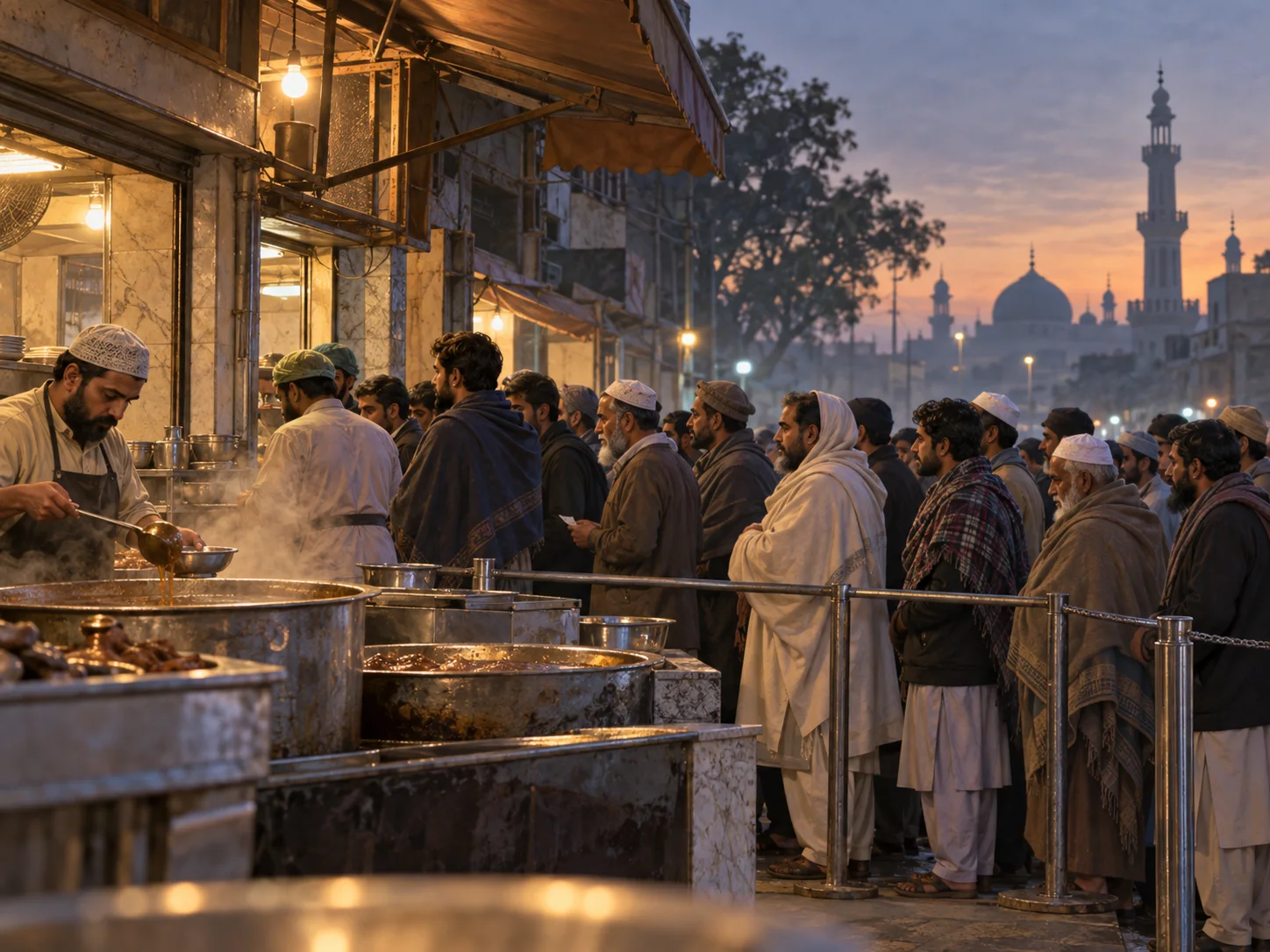
During Ramadan in Rawalpindi, the roughly fifty-year-old sehri market in Kartarpura operates from 8 p.m. until the pre-dawn meal. A 2024 report describes about fifty shops along a street approximately fifteen feet wide and 950 feet long, with visitors and traffic choking the area after 2 a.m. At Kaalay ki nihari, itself in business for fifty years, customers must first obtain tokens before buying. Families travel from Islamabad for nihari, naan, paratha, chickpea dishes, and lassi. An earlier on-site account also records a long queue outside the famous nihari shop. What distinguishes this wait is the use of a token to split intense demand into two stages during the narrow hours before fasting begins. The night market prepares people for the start of the day, and the numbered order helps fit a sought-after meal into a schedule governed by dawn.
Pakistan · 2024-3
Pakistan | A Token before the Pre-Dawn Nihari