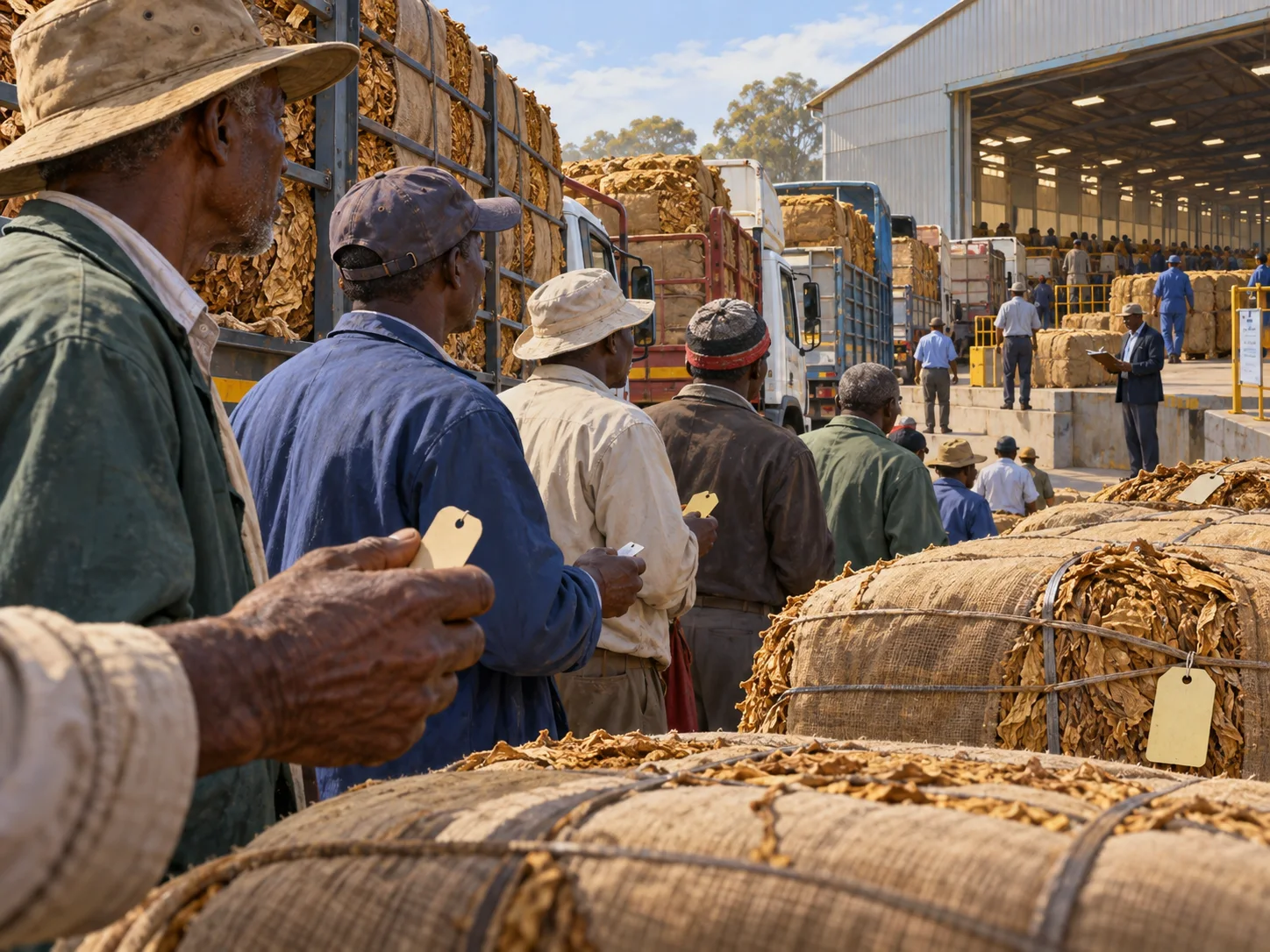
In 2018, the truck queue for a tobacco auction floor in Harare, Zimbabwe, stretched for more than two kilometres through the Willowvale industrial area, with more vehicles expected by 4 a.m. Farmers could remain at the floors for as long as two weeks before their tobacco became money.
The delay created a secondary economy. Food vendors, packaging sellers, transporters and handcart operators treated the queue as their market. Although the floor accepted bales around the clock for next-day sales, admission and processing delays extended farmers' stays. The line was both a bottleneck in an export industry and a seasonal marketplace of its own.