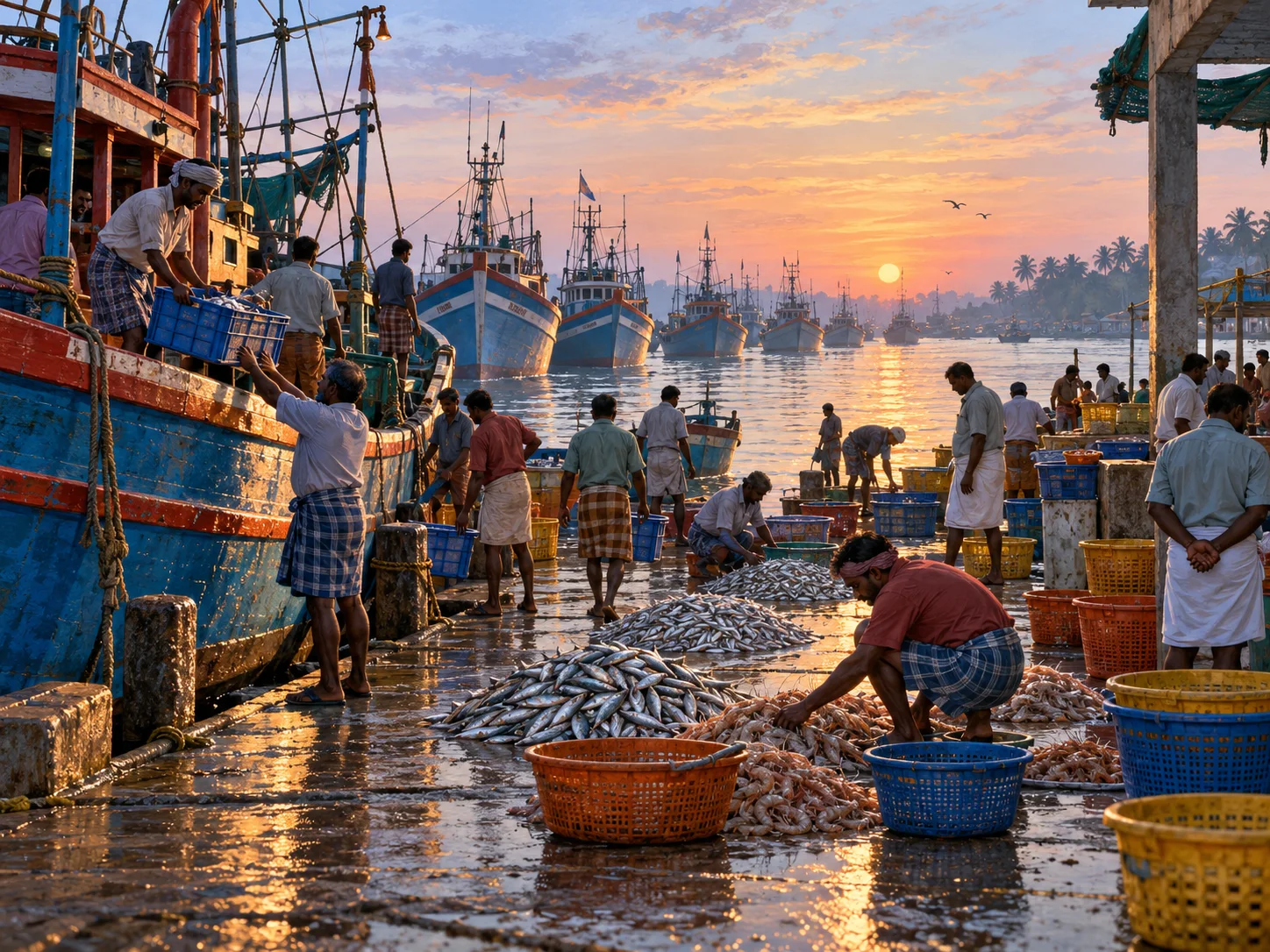
At dawn on Vypeen Island in Kerala, southern India, fishing boats stack along a private harbour and the first prawns are unloaded into neat auction piles. An on-site report describes buyers closing around the lots as an auctioneer races through numbers; prawns, sardines, threadfin bream, mackerel, tuna, squid, and deep-sea prawns sell in succession. Meanwhile the longliner St Nicholas waits patiently for its turn. Only after the small fish have cleared the auction area are its yellowfin tuna and, finally, roughly twenty-kilogram sailfish hauled out one by one with an iron hook. What distinguishes this ordered wait is that customers do not line up at a counter. Boats and catches acquire a sequence because they must share landing and auction space. In a market where freshness shapes value, the waiting subject is not only the crew but also the fish still inside the hold.
India · 2015
A Kerala Fishing Harbour | A Longliner Waits until the Small-Fish Auctions Clear