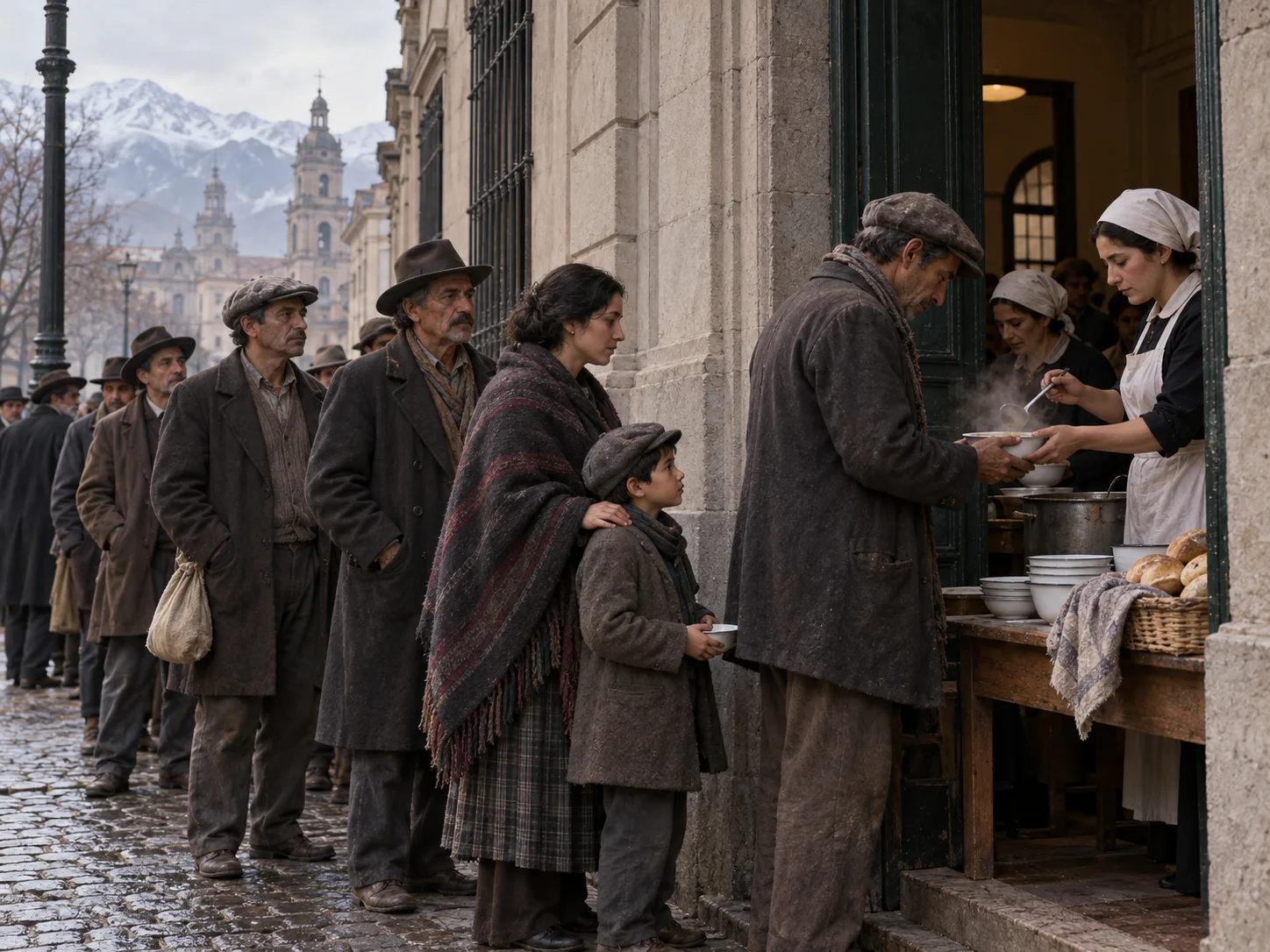
In July 1932, the Chilean magazine Zig-Zag published photographs of ollas comunes—communal pots—feeding unemployed people. Digitised by the National Library of Chile, the images show people gathered and waiting for meals during the country’s severe Depression. Nitrate and copper exports had collapsed, and unemployed workers were moving from northern mining districts toward cities.
A communal pot was not simply a charitable cafeteria. Municipal authorities, unions, neighbourhood groups and religious organisations could contribute food, labour and cooking. A pot and serving point had limited capacity, so the line became a practical record of who had not yet received a portion.
Bowls may have looked alike, but the routes to them were not. Mine closures, migration and responsibility for dependants converged at one serving place. The queue documents unemployed people not only as a passive crowd, but also as part of a local attempt to turn shortage into collective work.
The communal-pot queue exposed unemployment in public, but it also organised a shared response to hunger. In the 1932 photograph, a global economic collapse has been reduced to the practical unit of one meal served at a time.