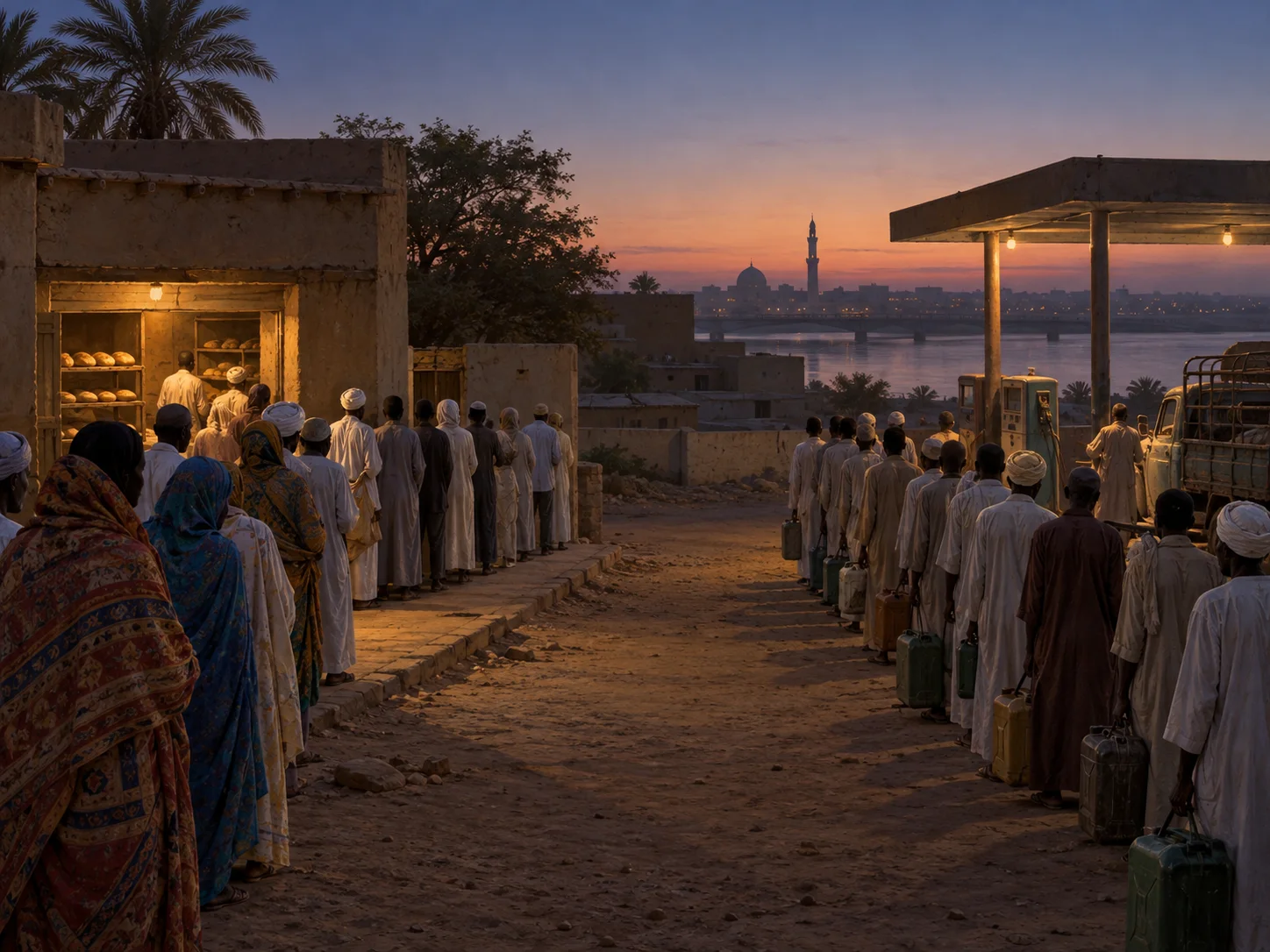
In early 1985, shortages of bread and gasoline dominated daily life in Khartoum. The Washington Post described an economy of mafi—Arabic for “there is none.” Residents went to bakeries and filling stations where deliveries might appear and waited for a share of limited supply.
Foreign debt, a lack of hard currency, fuel scarcity, drought and refugees from neighbouring countries converged. The government closed schools partly to save fuel and partly to prevent young people gathering. Anger over scarcity and price rises moved into street demonstrations and contributed to the political crisis that ended the Nimeiri government in April.
Contemporary reporting establishes shortage and protest but does not provide reliable lengths or waiting times for a particular shop, so this article does not invent them. What can be said is that the order for bread or fuel became a measure of confidence in the state. When supplies ended before the line did, the answer “there is none” acquired political force.
Bakeries and filling stations sold different goods but were tied to the same shortage of foreign exchange. Moving among several lines translated macroeconomic crisis into a household timetable.
Quality check: The Washington Post’s on-the-ground report dated 17 February 1985 documents bread and fuel shortages in Khartoum together with the actual purchase queues.