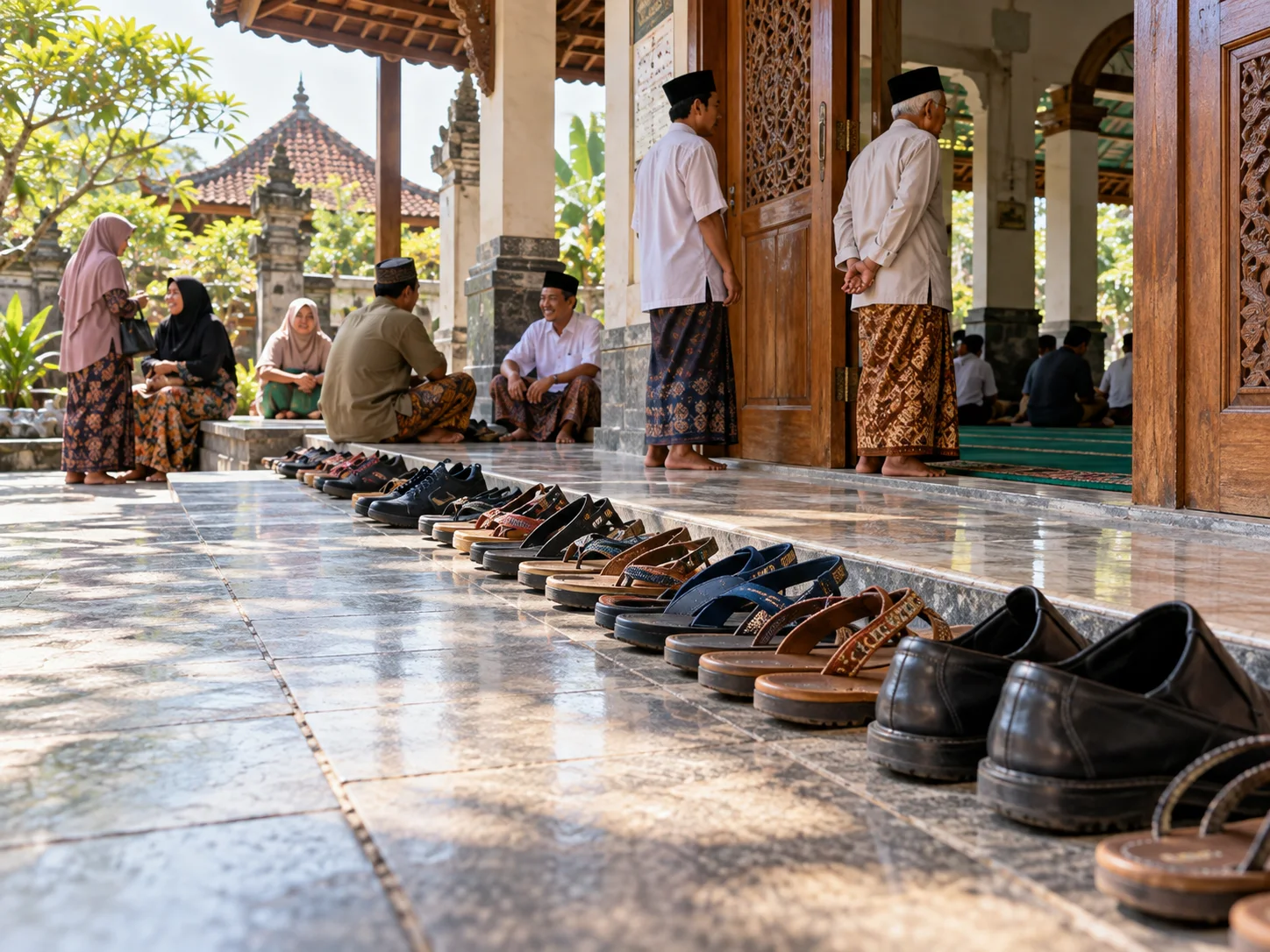
At an Indonesian COVID-19 vaccination site in 2021, a photograph went viral because sandals, rather than people, formed the line. Before registration opened, visitors placed their footwear in order and waited elsewhere, often in shade. In a society where removing shoes is familiar, each object could serve as a readable marker connected to an owner.
A queue needs to preserve arrival order, but it does not necessarily need to keep every body on the same patch of ground. Shoes allowed people to avoid heat and close crowding while leaving their positions behind. The arrangement depended on trust: a moved sandal or an owner who failed to return could produce conflict.
Without a ticket machine, participants had externalised the line using an ordinary possession. A sandal was not an official claim. Yet if everyone present accepted its meaning, it could preserve sequence. The scene made a simple point unusually visible: a queue is not a particular shape of people, but a shared answer to the question of who comes next.
The sandals preserved arrival order without requiring bodies to remain fixed in the heat. Before an official ticket system began, footwear showed who came next and allowed its owner to wait a short distance away.