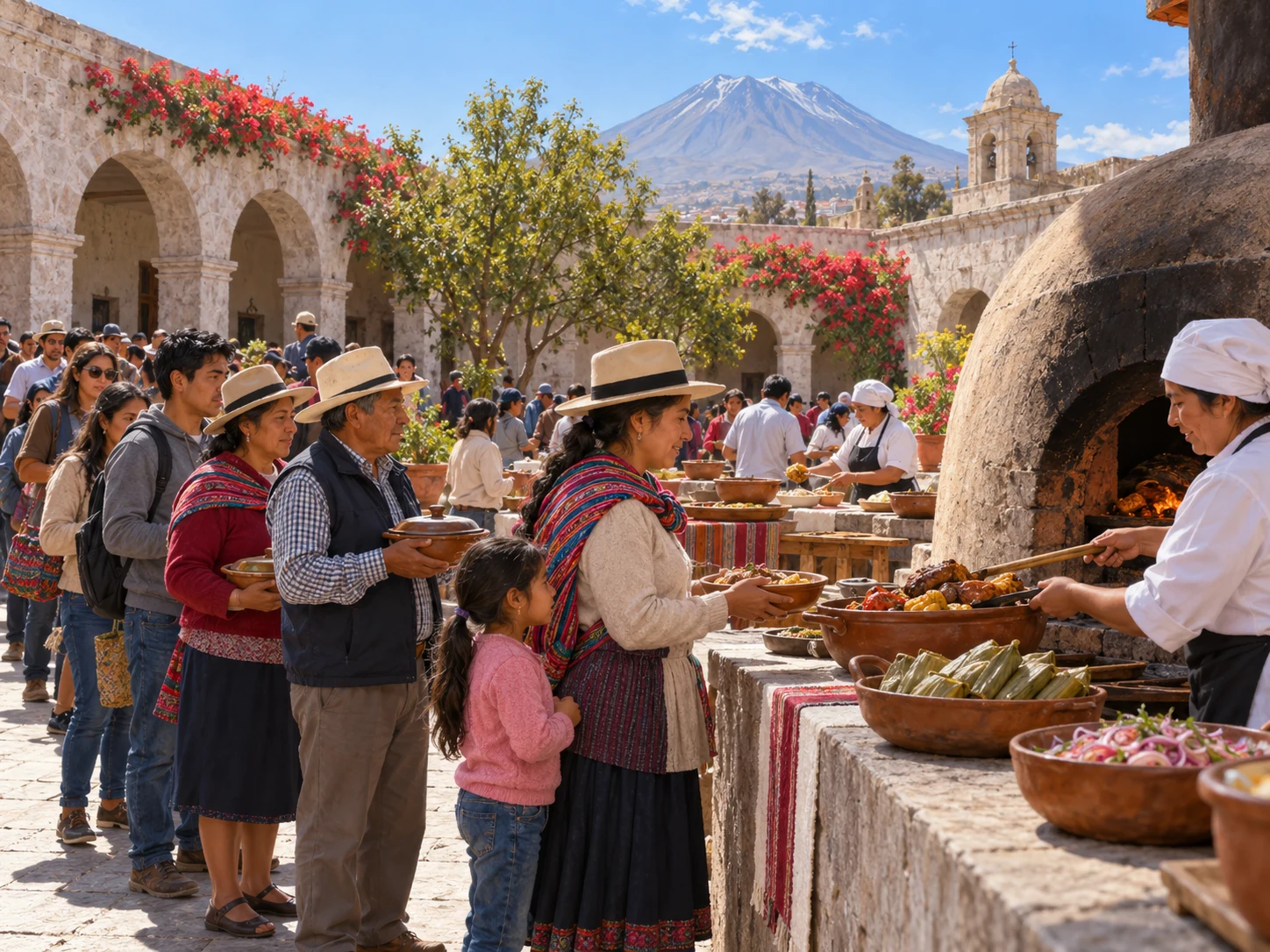
In August 2025, visitors to the Chicha Festival in Arequipa, a city in Peru's southern Andes, had to buy a food ticket at a single payment point before collecting a dish from one of the stands. Peru's state news agency Andina reported that this arrangement produced a long line: people first waited to purchase the ticket and then moved to a stand to pick up their food. Payment and collection formed two distinct stages of the same meal.
Chicha, a maize-based drink, is closely associated with Arequipa's culinary culture. Families, children and older people attended the festival, but visitors complained that the eating tables provided in previous years had not been installed. The single ticket point added another bottleneck. Before anyone could choose where to collect a dish, they had to wait for the small piece of paper that authorized the purchase.
The scene shows that waiting for food is not determined by cooking speed alone. Even when several stalls are serving, a single payment point can narrow the entire flow of people. Visitors who came to share regional food with relatives first shared something else: a place in the same line. The festival and flavours are particular to Arequipa, yet the mechanism is familiar elsewhere. The design of an entrance can turn abundance beyond it into waiting in front of it.