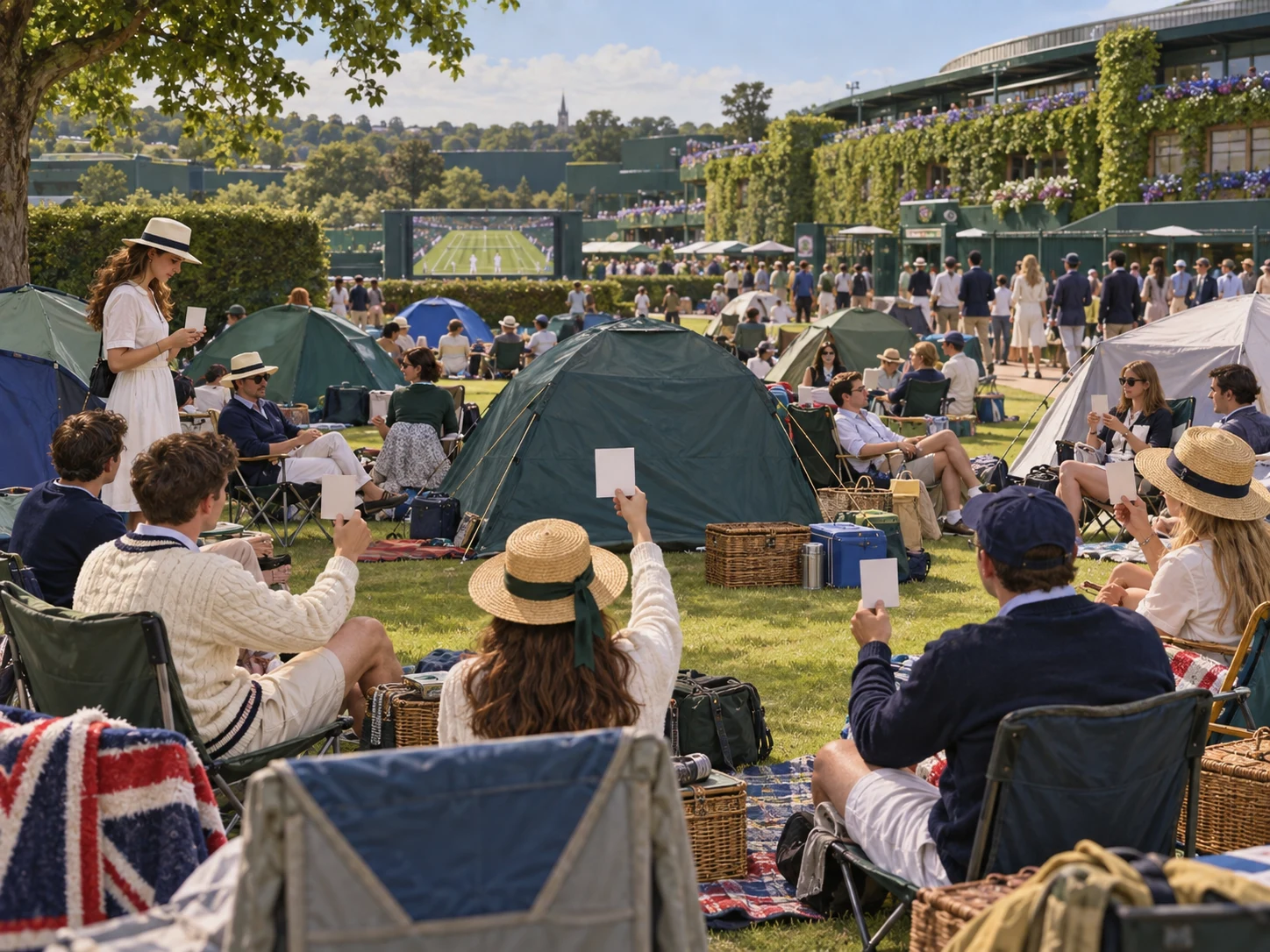
At Wimbledon, the line for same-day tickets is formal enough to carry a proper name: The Queue. According to the tournament’s official guidance, it begins in Wimbledon Park, where arrivals receive a dated and numbered Queue Card. The card is more than a souvenir. It records a person’s place, must be kept until the ticket-sales structure, cannot be transferred, and does not allow one person to reserve a spot for somebody else. A limited number of Show Court and Grounds tickets are sold at one per person, so the line starts the previous evening and grows early in the morning. Overnight visitors may bring only two-person tents. At 6 a.m., stewards wake campers so that equipment can be packed away and the queue re-formed; from 7:30 a.m., wristbands are issued from the front, matching the exact number of available Centre, No.1 and No.2 Court tickets. Toilets, water-refill points, food outlets, first aid and left-luggage facilities turn the park into temporary queue infrastructure. Even so, a Queue Card does not guarantee entry once the Grounds reach capacity, and absences for refreshments or toilets should not exceed 30 minutes. Waiting here is not an accidental crowd outside a gate. It is a carefully administered route to a scarce ticket, with its own documents, timetable and rules. For 2026, the official page says 500 Centre Court tickets are offered daily except during the final four days, with 500 each for No.1 and No.2 Courts while those courts are in play. The Grounds open at 10 a.m.; after capacity is reached, entry may resume only as other spectators leave. Position, inventory and capacity are therefore separate gates.
United Kingdom · Present day
The Numbered Card That Holds Wimbledon’s Place in Line