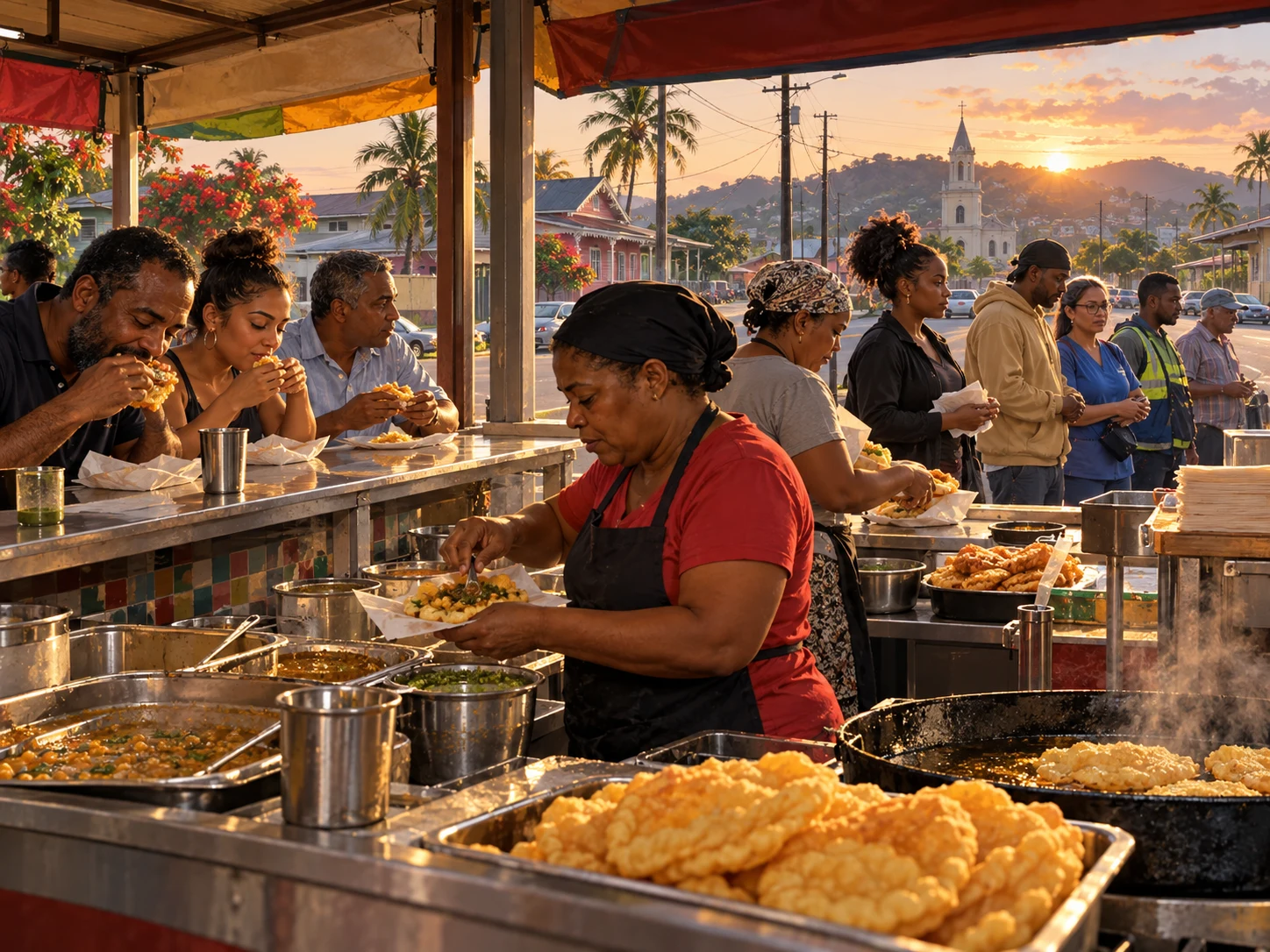
On weekday mornings in Trinidad and Tobago, a doubles vendor will often have two lines: one for people eating at the stall and another for takeaway orders. A 2026 local account says vendors may begin around 6 a.m. and sell out by 8. Schoolchildren and people on their way to work share the wait before receiving curried chickpeas between two pieces of bara, finished with chutney and pepper to order. The food is traced to Emamool Deen and his wife in Princes Town in the 1930s and spread because it was quick, affordable, and easy to eat by hand. What makes this queue distinctive is that the method of eating—not merely popularity—divides the order into two streams. The same breakfast comes from the same stall, but time spent eating there and time spent carrying it away are managed as different kinds of demand.
Trinidad & Tobago · Present day
Trinidad and Tobago | Two Morning Queues at One Doubles Stall