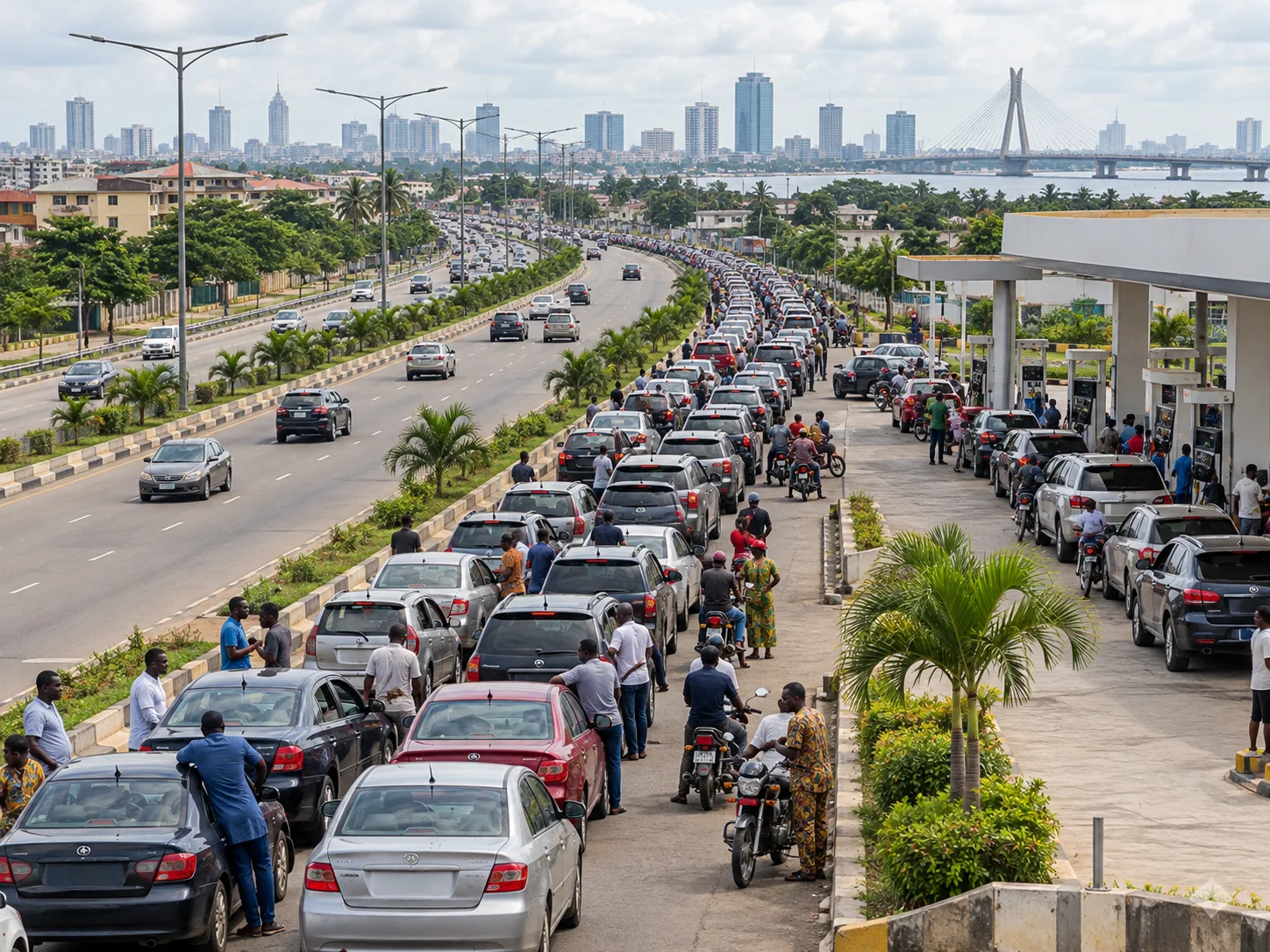
On 30 April 2024, queues for fuel in Abuja, Lagos and other Nigerian cities stretched as far as three kilometres. Some motorists had parked near filling stations overnight to buy early, and in places private cars and taxis occupied half the road. Abuja taxi driver Farouk Ibrahim said he had been unable to work since morning while searching for fuel and worried about taking home money for his family's next meal.
Authorities blamed logistical supply disruptions. Although Nigeria is a major crude producer, weak domestic refining left the country dependent on imported gasoline. At some Abuja stations, prices rose more than 15 percent above the usual 675 naira per litre. Because electricity supply is unreliable, fuel was needed not only for vehicles but also for generators powering businesses.
Cars were not the only things halted by the queue. A driver's daily income, public-transport fares and electricity for small businesses all converged on the same pump.