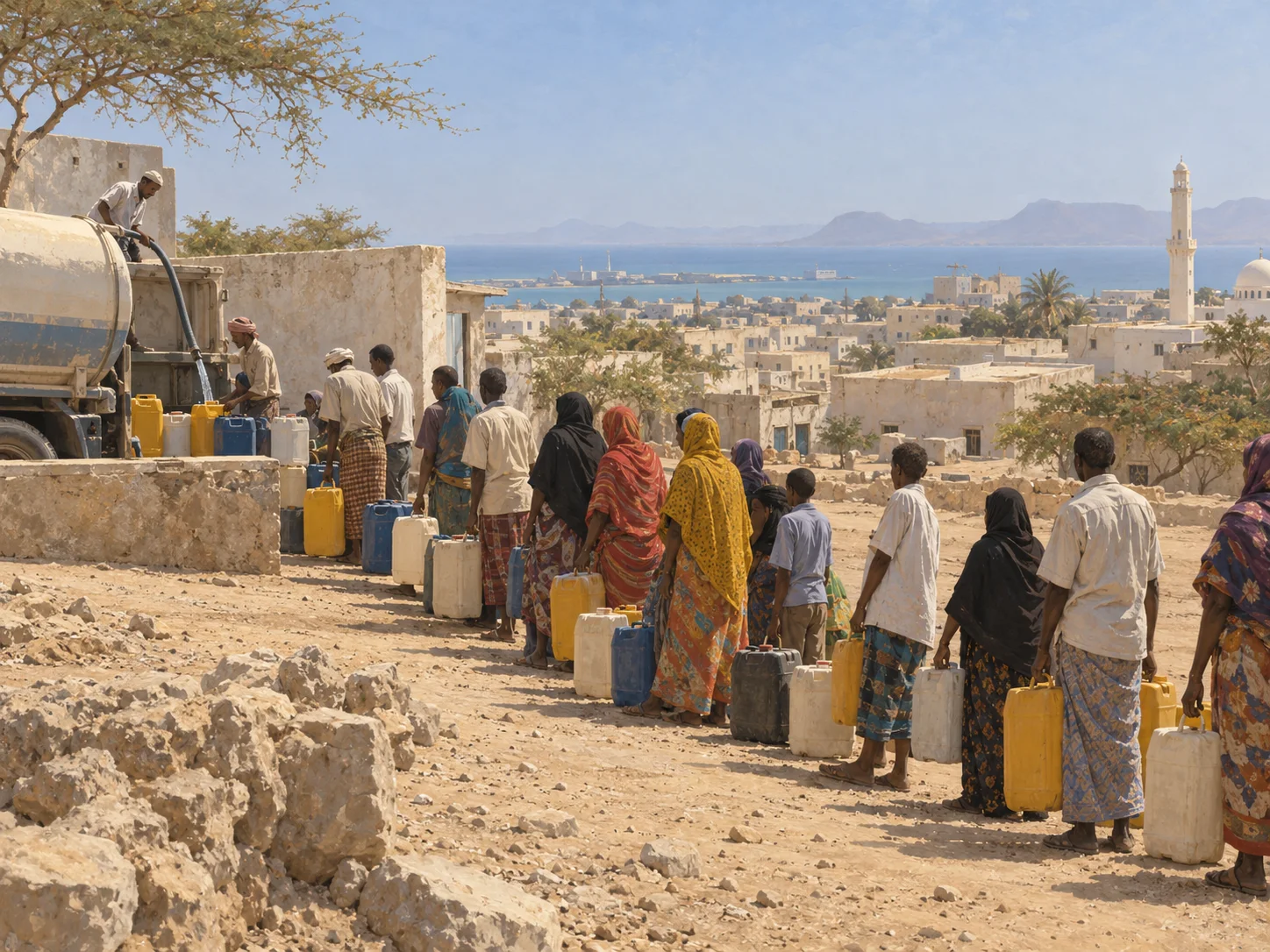
During the 2011 drought, women and children queued at a UNICEF-supported water-distribution point in an informal settlement near Djibouti City. UNICEF’s caption described Djibouti as one of the world’s most water-scarce countries and among those worst affected by the Horn of Africa drought. About 120,000 people were then facing severe shortages of food, health care, drinking water and sanitation.
The end of the line offered no choice of product, only water to be carried home. A distribution point relieved scarcity while concentrating supply in one place and time. The waiting of women and children—often responsible for obtaining household water—showed how a regional drought became a daily domestic schedule.