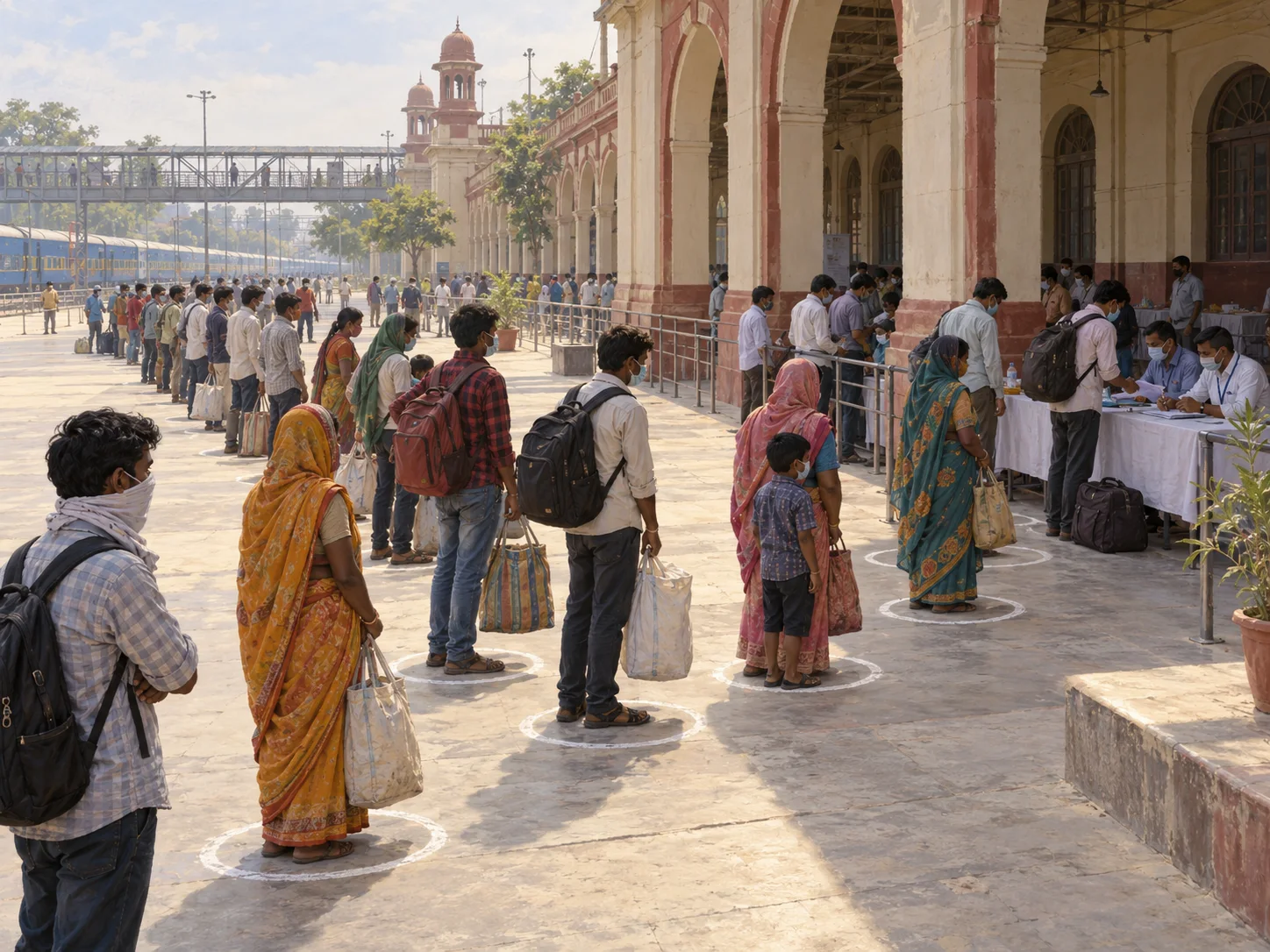
In May 2020, thousands of migrant workers gathered at the Ramlila ground in Ghaziabad, northern India, to register for special trains home. Losing work and income during lockdown did not mean that a person could simply walk into a station. Interstate travel required names to be recorded, health checks to be organised and passengers to be assigned to particular services. The first barrier stood before the ticket counter.
India began running Shramik special trains on 1 May, but demand to return home was far larger than the available capacity. Workers waited with their belongings to register, then waited again for a departure to be confirmed. The speed of travel depended not only on rolling stock, but on lists and coordination between state governments.
The striking fact was that transport existed while many people still could not move. Their journeys began before they reached a platform. Waiting for eligibility created another distance between the city that no longer supported them and the homes they were trying to reach.
The wait in the square was not yet for a train. It was for eligibility to be entered on a list. Because permission to travel was decided before anyone reached the platform, the journey home began at a registration desk.