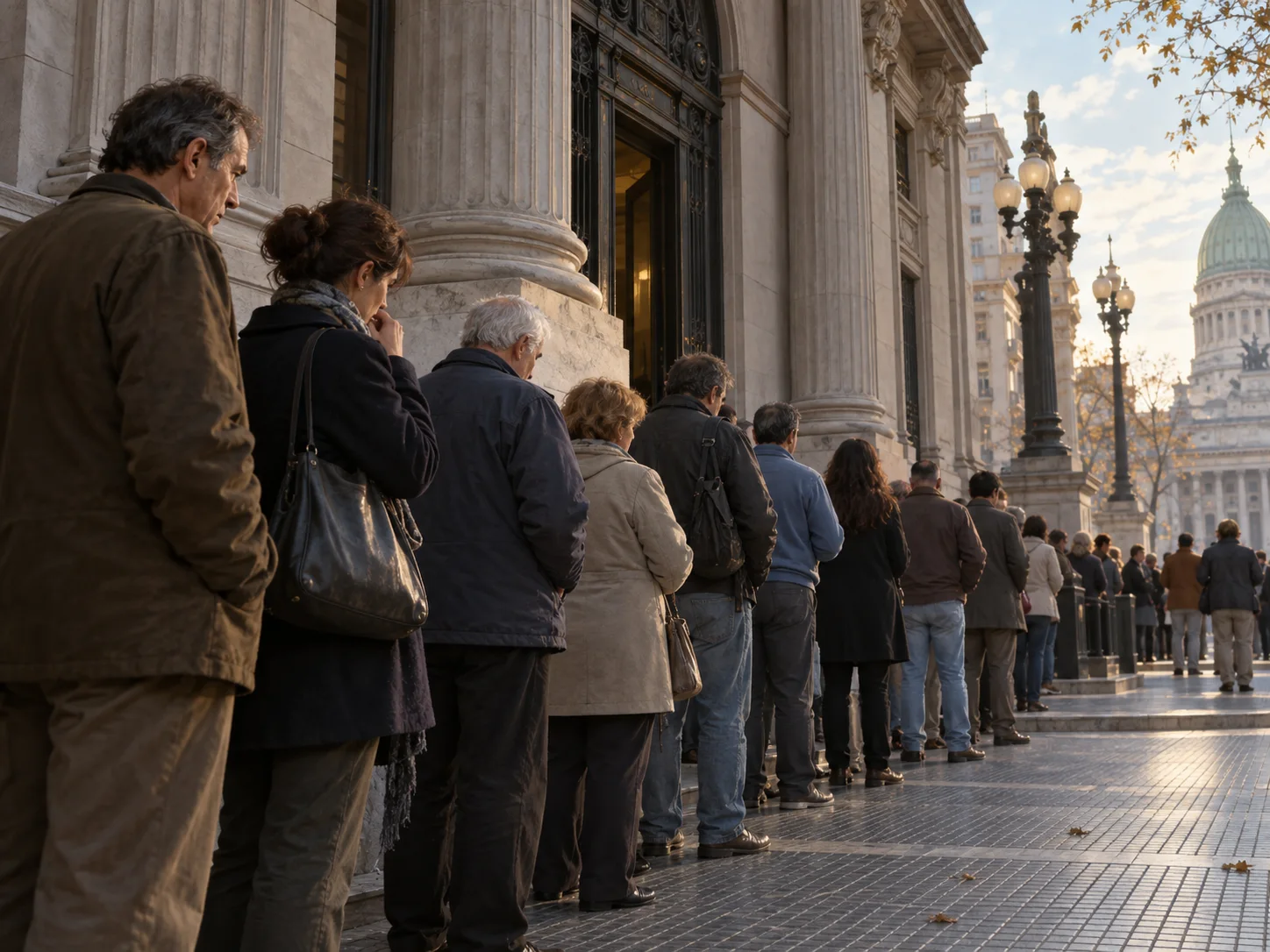
On 31 December 2001, Buenos Aires residents queued to enter a bank and withdraw cash. A Reuters photograph identifies the date and explains that banks were ordered to open from 10 a.m. until 8 p.m. as an interim government tried to calm public anger. The withdrawal restriction introduced at the start of December capped cash access at the equivalent of $250 a week. It was intended to stop deposit flight and protect the banking system, but for customers it separated the balance shown on an account from the banknotes available for rent, food or wages.
The measures became known as the corralito, a “little enclosure.” Reaching the counter did not mean a depositor could take home all of their money. The policy pushed payments through banks while imposing especially heavy costs on cash-paid workers and small businesses. The economy minister resigned on 19 December and the president followed on the 20th, yet the deposit problem remained at year’s end. The line outside the bank captures a paradox: a policy designed to prevent a run on banks created another form of waiting around them. Customers were waiting not only for a door to open, but to learn how much of their own money the system would recognise as cash that day.