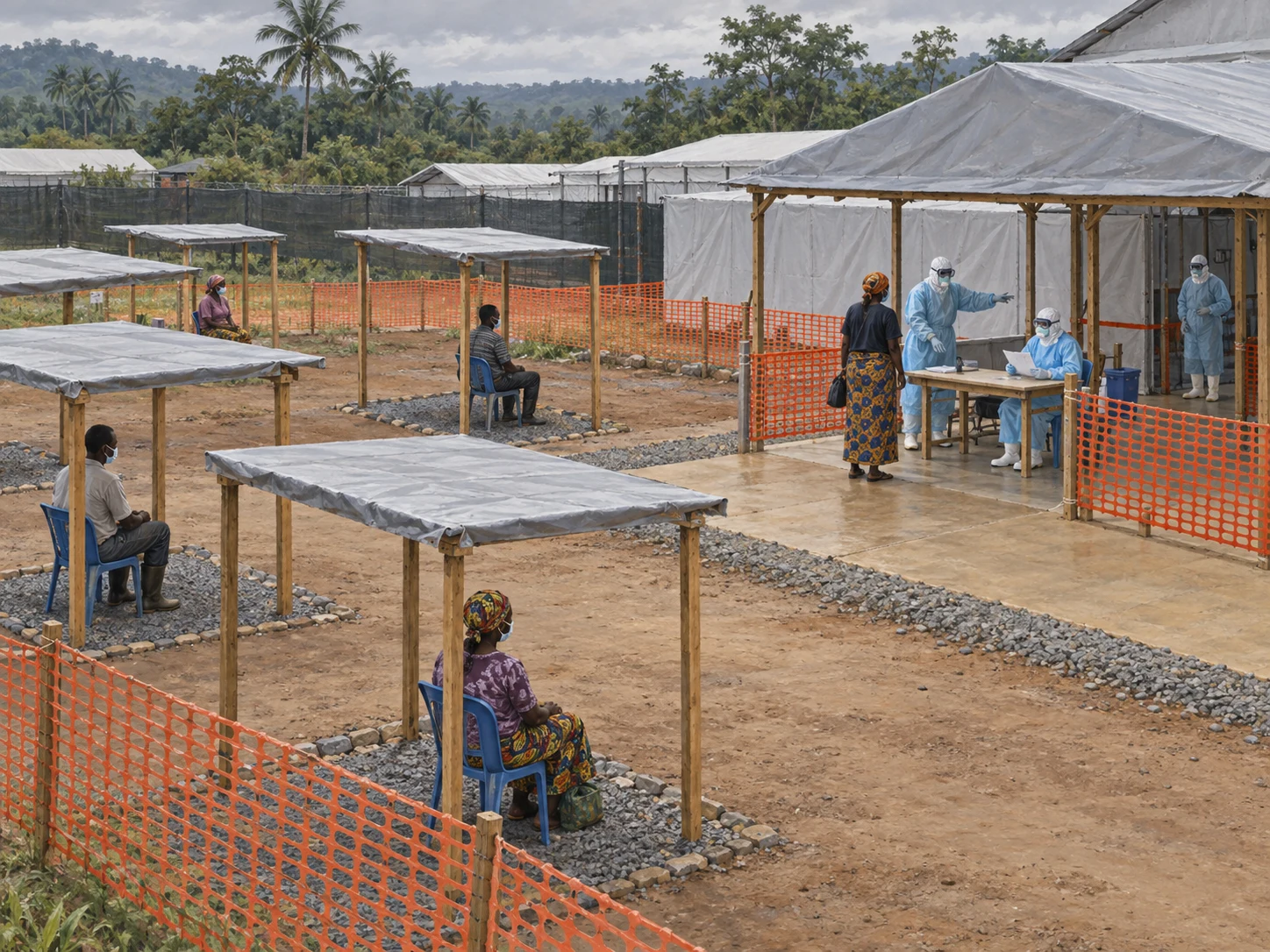
In August 2014, patients waited in a courtyard to be tested at an Ebola treatment centre in Monrovia, Liberia. Contemporary reporting described facilities filling rapidly and people deteriorating while they waited. This was not an ordinary reception line: suspected infection, test results, isolation capacity and available beds determined what could happen next.
Ebola-era waiting shows that a more orderly queue is not always a safer one. Bringing people close together could increase the danger of transmission, yet assessment and admission still required sequence. The scene concentrates a painful public-health problem into one place: how to preserve fair access when the act of waiting together can itself cause harm.