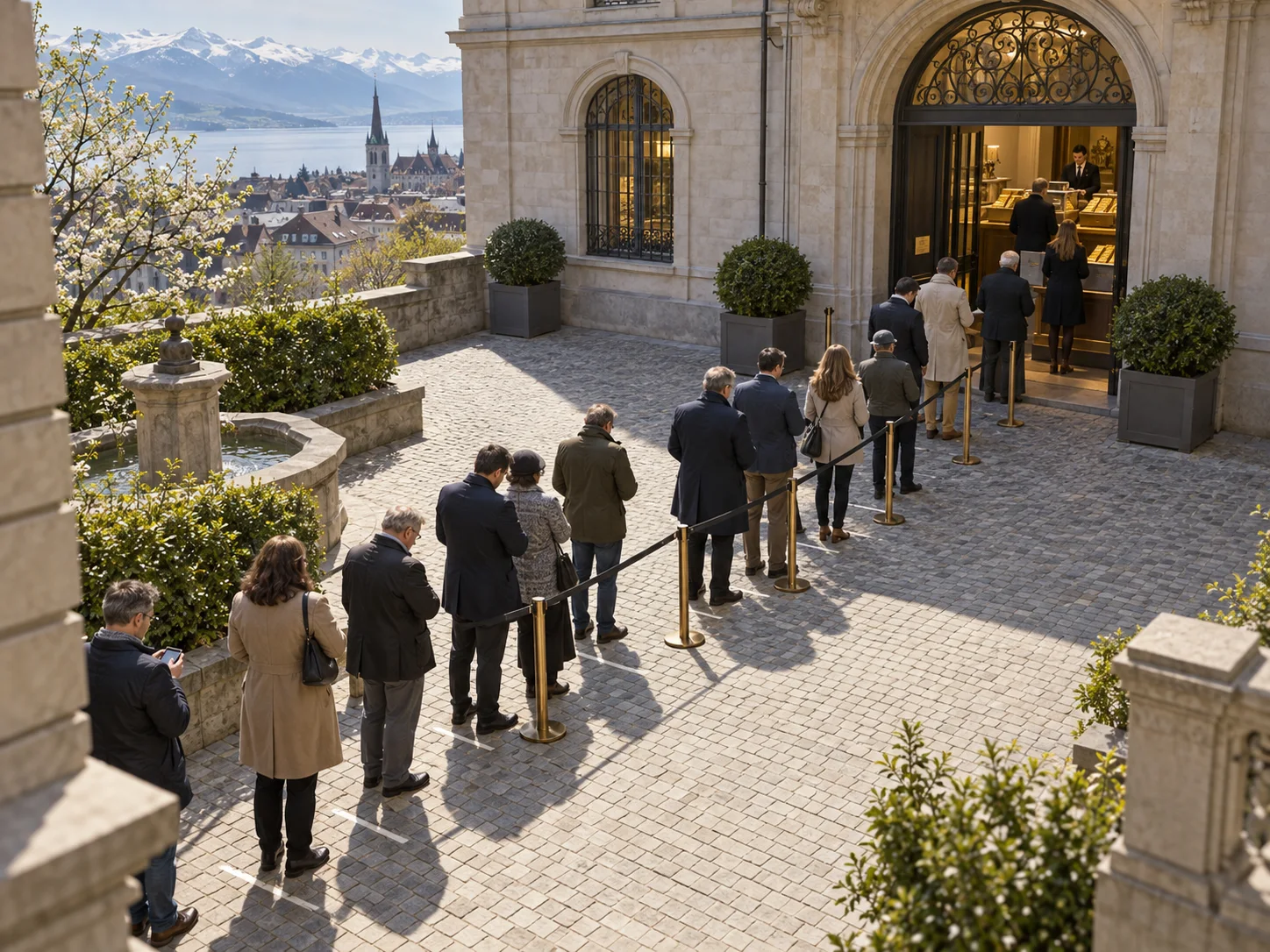
In March 2020, a long queue formed outside the Degussa precious-metals shop in central Zurich. Customers wanted physical gold bars and coins as the coronavirus crisis unsettled financial markets. Orders rose to roughly thirty times their usual level, and the shop had to close its doors from the following day.
The buyers were not seeking a financial product whose price existed only on a screen. They wanted metal they could take away. Yet European refineries were shutting and transport was being disrupted. At the moment demand surged, gold revealed itself not only as a symbol of value but also as merchandise dependent on manufacturing and logistics.
What distinguishes this queue is the way economic anxiety became physical waiting. Faced with an invisible virus and hard-to-see market risk, people stood outside a shop for their turn to buy something whose weight they could measure in their hands.