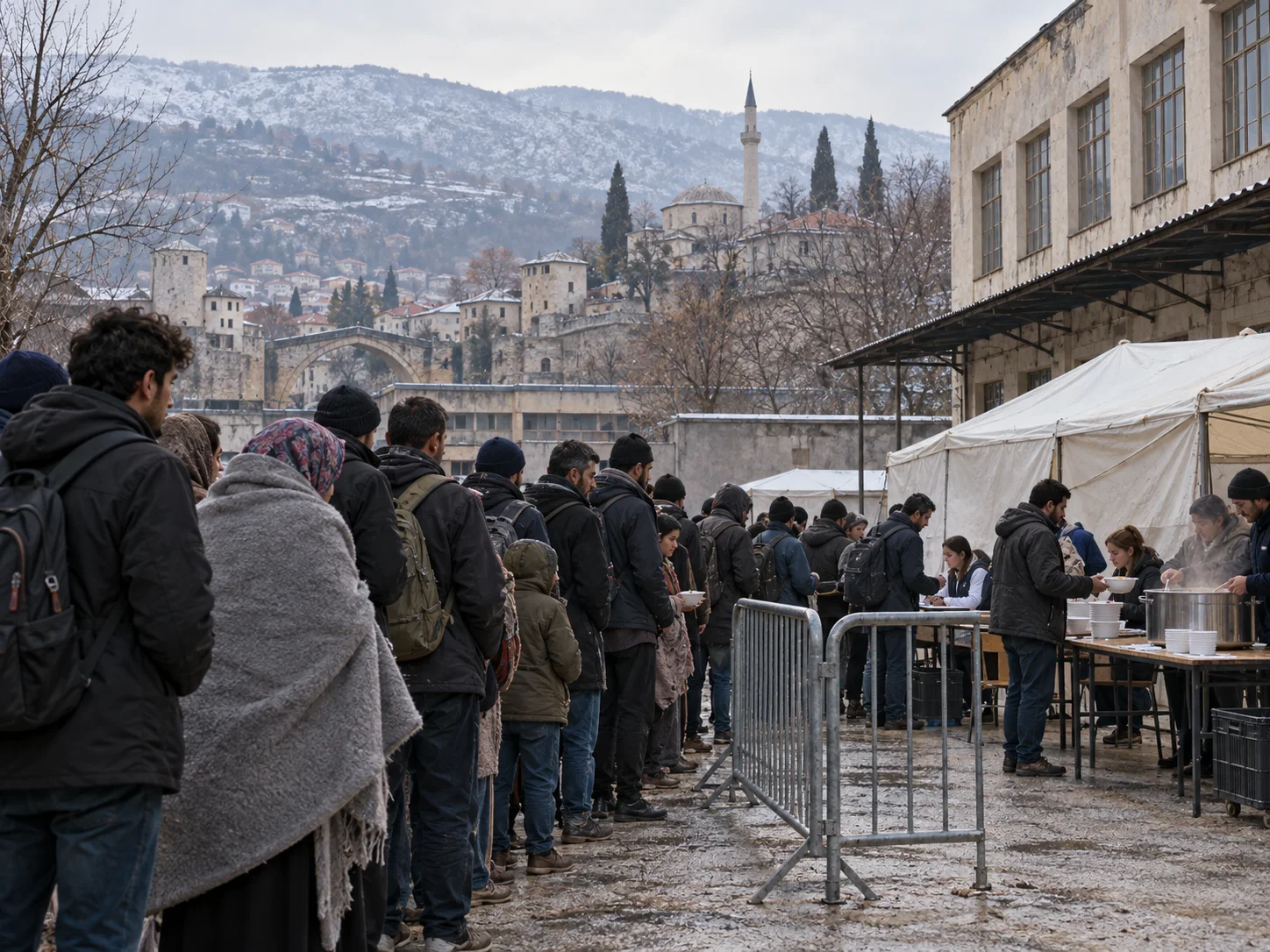
In Bosnia and Herzegovina in 2018, migrants and refugees formed long lines at food-distribution points. A United Nations operational update for November explicitly reported that long waiting lines and waiting times at the Bira reception centre were causing fights and creating protection and security concerns. In Sarajevo, agencies also considered delivering food packages to smaller locations so that people would not have to walk to distribution points and queue outside.
The revealing feature of this queue is that it became more than a sign of crowding: it measured the design of the aid system itself. Providing food was not enough. Dining-space capacity, distance to distribution points, winter weather and the speed at which people could be served all determined whether assistance created another burden.
A later UNHCR story from a reception centre near Sarajevo also documented refugees and migrants lining up outside as they waited for their next meal. Food queues exist around the world, but this one showed that the quality of assistance is visible not only in what is given, but also in how people are made to wait for it.