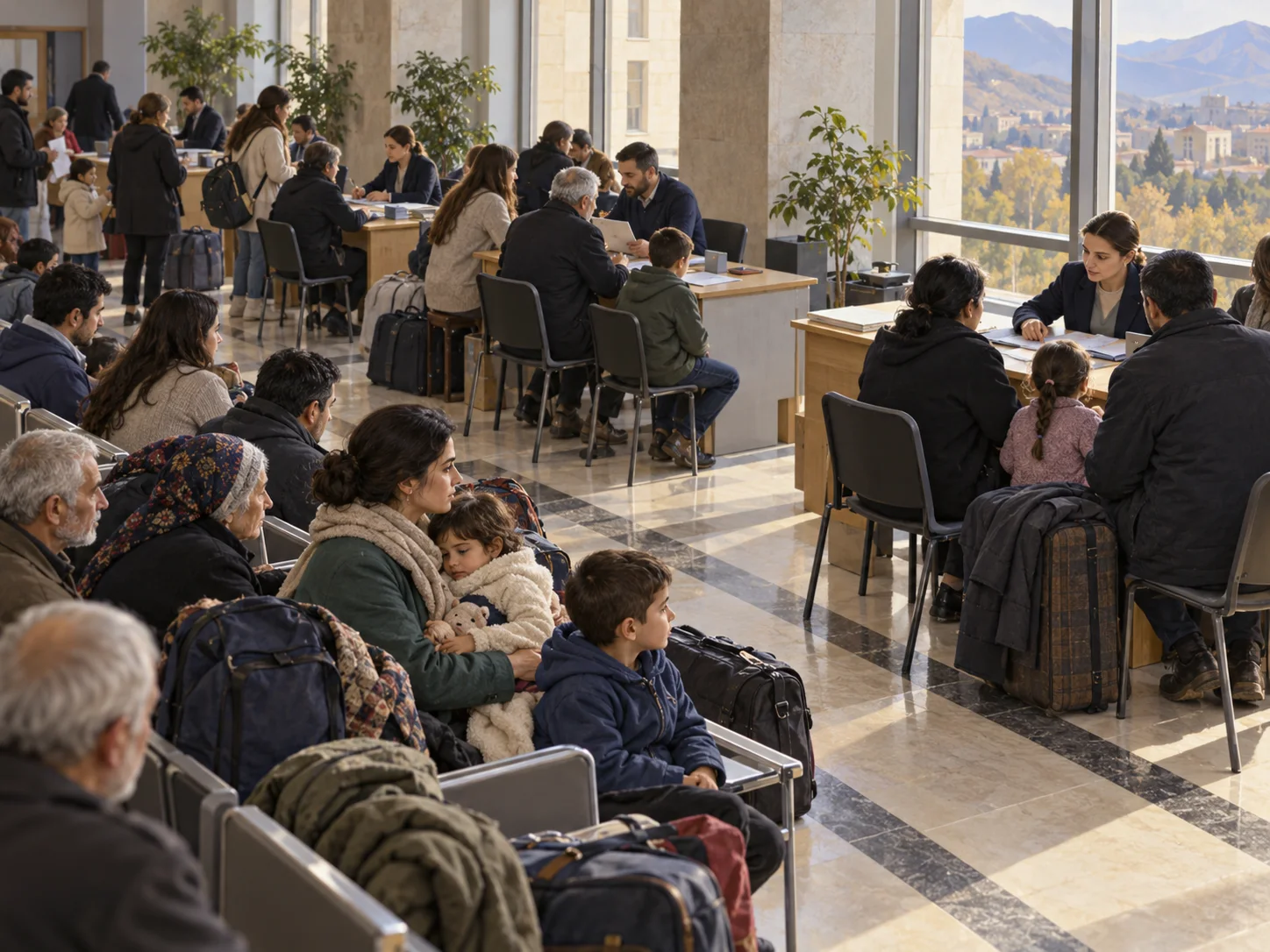
In September 2023, people fleeing Nagorno-Karabakh for Armenia spent days in lines of vehicles on the mountain road to the border. After arriving, cars carrying refugees also lined up in Goris while families waited to be allocated accommodation. UNHCR documented refugees waiting at a distribution centre in Goris and reported that the Armenian government had established registration points at the border.
Registration in this queue was not simply a way to count arrivals. It was an entry point for assessing protection and assistance needs and connecting families with food and temporary shelter. By 29 September, UNHCR said that more than 88,700 refugees had arrived in less than a week. A movement on the scale of a population was compressed into one road and a limited network of reception points.
The lines should not be romanticized as proof of an efficient response. People were waiting after leaving familiar homes, exhausted and uncertain. The border traffic jam, registration, distribution and allocation of accommodation may look like separate forms of waiting, but together they formed one sequence deciding where a family could next be safe.