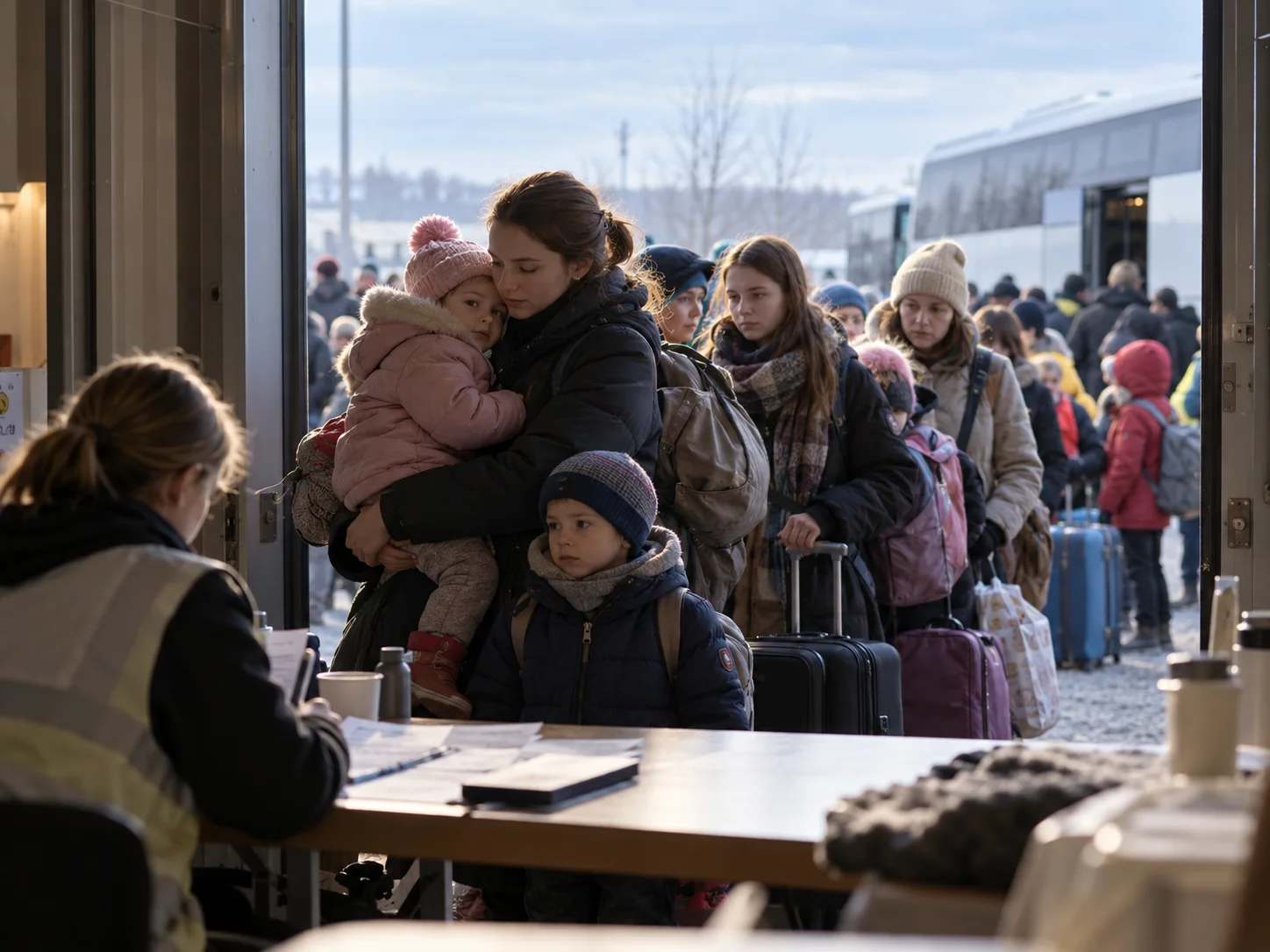
In March 2022, at the Palanca border crossing in southeastern Moldova, people fleeing Ukraine waited while their belongings were loaded onto buses. A transfer organized by UNHCR, IOM and the Moldovan and Romanian governments prioritized 250 people, including older refugees, families with young children and women travelling alone. Their destination was Huși in Romania, about 230 kilometres away.
This was not an ordinary bus that anyone could board by buying a ticket and arriving first. Limited transport capacity was allocated according to protection needs. Border formalities and boarding order were connected, moving refugees onward from Moldova, whose reception resources were under severe pressure.
Escape from war is not one continuous journey. People reach a border on foot or by car, pass checks, have their names and luggage accounted for, and then wait for another bus. What distinguishes this line is that its order was tied not only to arrival time but also to age, family circumstances and vulnerability.