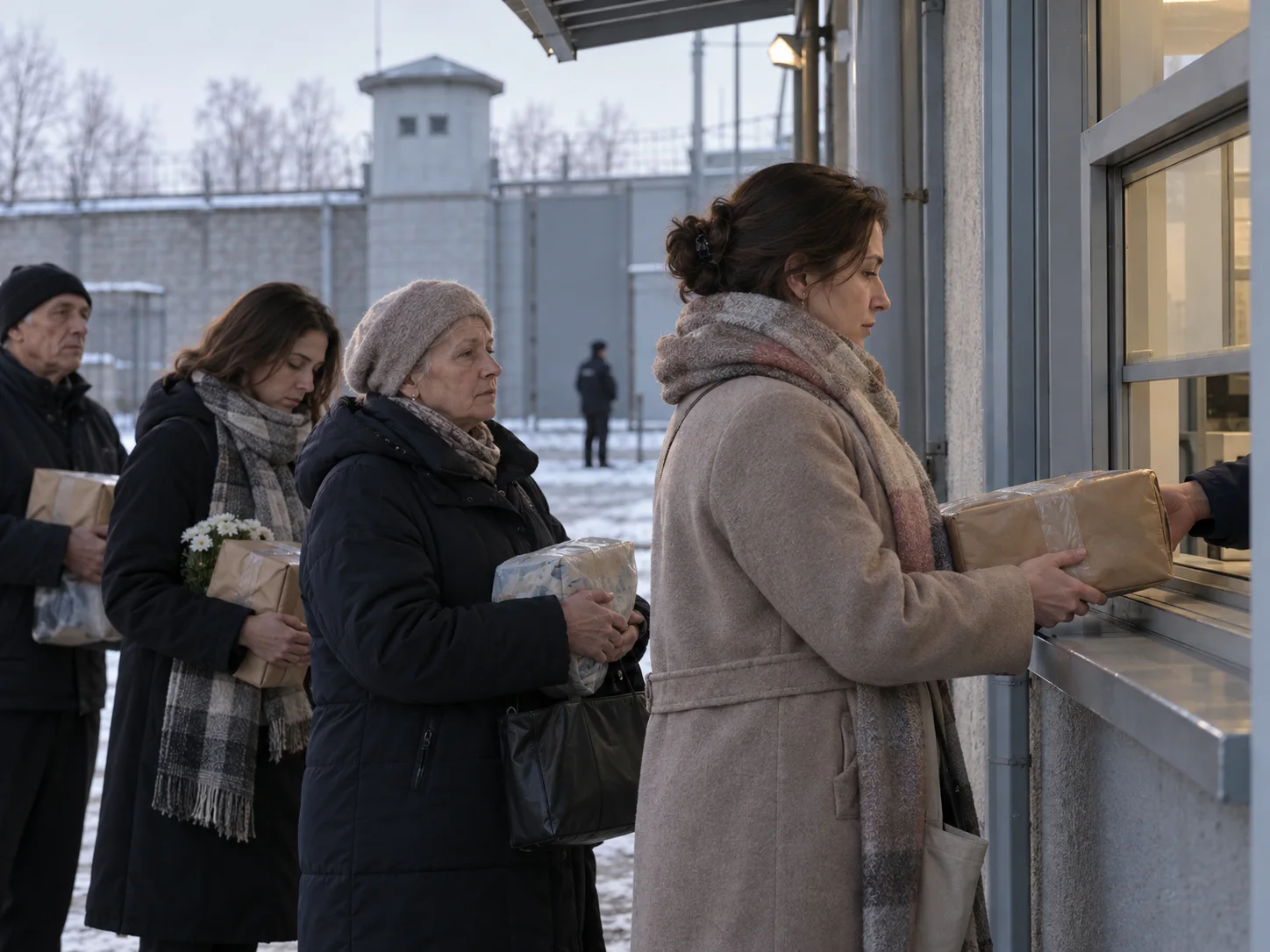
In the autumn of 2020, people in Minsk, Belarus, spent the night in line outside a detention centre to deliver food and clothing to detained relatives and friends. From October, the authorities accepted parcels only on Thursdays, concentrating a week's demand into a single opening. Even after waiting, senders could not be certain that a package would reach the intended person.
The purpose of the queue was neither a visit nor a release procedure. It was to pass basic goods from life outside to someone in custody. Amid the protests and repression that followed the August 2020 presidential election, an estimated 25,000 people had been arrested. Restricting deliveries to one day transformed family support into the work of securing a place overnight.
This line cannot be reduced to an uplifting story of solidarity. The people waiting show the strength of support, but they also reveal the burden of a detention system that made even a parcel uncertain. Waiting itself became part of the control extending beyond the prison wall.